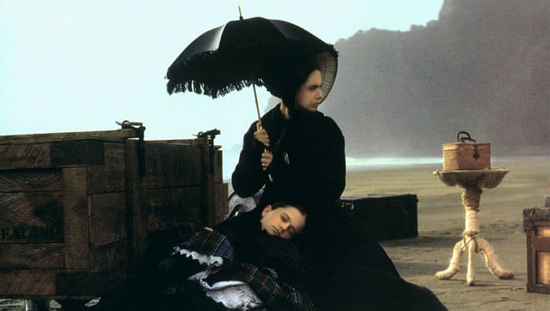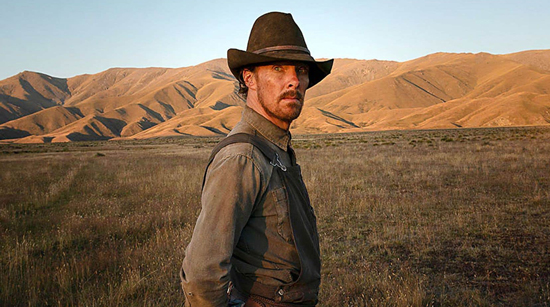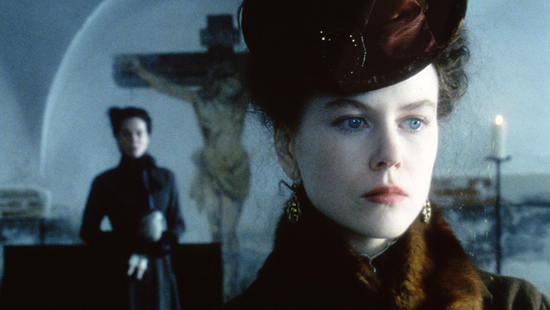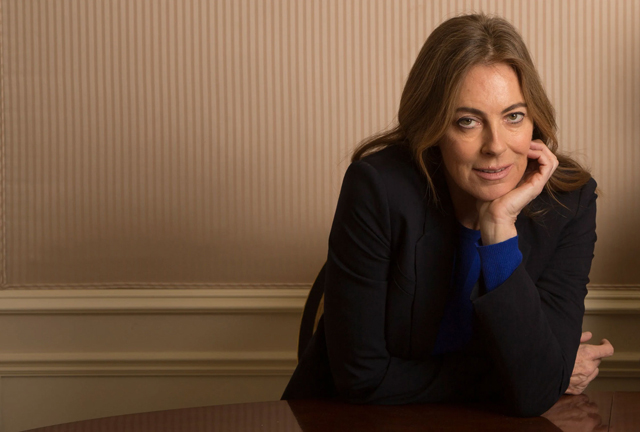
History was made at the 2010 Oscar ceremony when, for the first time ever, the prestigious Best Director award went to a woman. There have been female directors for almost all of cinema history, but sadly most of them were overlooked by the Academy. It was often because women directors were often looked down upon by the industry establishment. “Women directors make women pictures,” was often the refrain that went across Hollywood over the first half century of industry, but that was a stigma that often was not true. Sure you had your Nora Ephron’s and Nancy Myers’ making movies that catered to a female audience. But there were also directors like Amy Heckerling, Elaine May, and Jane Campion who were making movies that reached a wide ranging audience that went beyond just female tastes. And then there was Kathryn Bigelow, the women who finally broke through the Oscar glass ceiling in the Best Director category. Bigelow by contrast was the complete opposite of her female contemporaries in the directing profession. She made movies that were harsh, gritty, and action packed; traits that you would more quickly associate with appealing to male audiences. I’m sure that a lot of men out there may be surprised to learn that their favorite action movies were helmed by a woman, but Kathryn Bigelow indeed was behind some of the most successful action movies of the last 40 years. And this wasn’t a case of her trying to placate her talents in order to pander to a male audience in order to get ahead in show business. Her vision as a director just so happens to fit into the types of movies that we normally would classify as masculine in nature. She has an exceptional eye when it comes to filming action, often shooting it in a documentary like style that puts us the audience right in the middle of it. This was something she excelled at with her early popcorn action movie work, but in her later years, she would focus her style into more dramatic and historical work; a shift that ultimately led her to success at the Oscars.
Born and raised in the southern end of the San Francisco Bay area, Kathryn Bigelow initially channeled her creative expression through painting. She attended the San Francisco Art Institute, which then led to a Independent Study Program at the Whitney Museum of Art in New York City. She struggled to find consistent work during her time in New York before enrolling in a graduate program at Columbia University. She eventually found her way into Columbia’s film program where she ended up finding her calling at last. She created what would be her first short film as a director called The Set-Up (1978), which she submitted as her thesis project for her MFA. The Set-Up was very well received after Bigelow submitted the film to a number of festivals, and this eventually got her the chance to direct a feature film. She would co-direct a biker movie with her Columbia classmate Monty Montgomery called The Loveless, which wouldn’t just be her debut on the big screen, but also that of a young theater actor named Willem Dafoe. She would get the chance to solo direct her next film, the horror infused vampire flick Near Dark (1987). In between that and her third film, Blue Steel (1990), she would end up marrying another rising star filmmaker from the 80’s named James Cameron. Cameron would also act as the producer of her next film, which would end up being the movie that would launch her career to the next level, Point Break (1991), starring Patrick Swayze and Keanu Reeves. But, Bigelow and Cameron’s relationship was not meant to last as they divorced after only two years. Still, Cameron still helped Bigelow get her next film off the ground, the gritty sci-fi flick Strange Days (1995). After 2002’s poorly received K-19: The Widowmaker, Bigelow would take long break from filmmaking to decide where to go with her career in the next decade. Her search for a challenging project eventually led to a script from Iraq War correspondent turned screenwriter Mark Boal about the dangerous work of explosive disarmament in a war zone. The movie that would come out of this paring of script and director would be The Hurt Locker, which won Kathryn her historic Oscar, along with the award for Best Picture. This would then lead to an era for Bigelow where she went from action genre director to prestige director of serious, gritty dramas. Even still, traces of her style from her early days of a filmmaker still inform her style today, and what follows are some of the trademarks that have defined her as a unique and groundbreaking director.
1.
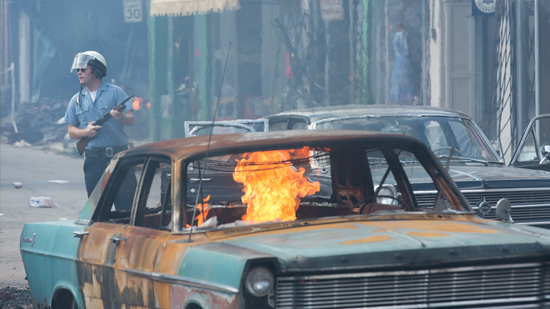
EXPERIENTIAL ACTION
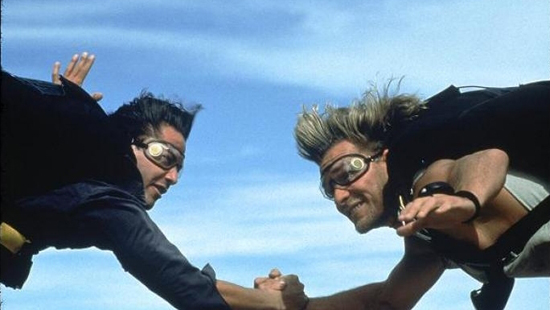
One thing that defines a Kathryn Bigelow movie above all else is the way she films action. She has never been a lock it down kind of filmmaker. In every movie she makes, she has the camera constantly moving around, often handheld, even in the quieter scenes of her movie. Her intention is to put the audience in the experience of a scene, which means creating a sense of velocity and momentum through quick edits and an always moving camera. This is a trick used by many action filmmakers, but few have the skill that Kathryn Bigelow has in creating a rhythm in these scenes. The post-bank robbery chase through a neighborhood in Point Break is a great example of the way Kathryn is able to create that heart-pounding sense of adrenaline in a scene as we the audience are often following right behind the bank robbers as they run from one alleyway to another. This scene made extensive use of a new kind of portable Steadicam, that allowed the cameraman to keep pace and run right behind the actors while still rolling film. She would go one step further with Strange Days, where the actors themselves were wearing helmet cams in some scenes, which put the audience right in the POV of the characters themselves. Even in her later dramatic work, Bigelow still incorporates this kind of experiential filmmaking. Even in a movie like Zero Dark Thirty (2012), where half of the movie involves scenes taking place in war room meetings, the camera is still always in movement, albeit subtly. Kathryn wants us to be present in the room with the characters, and that means making the POV of the camera act the same way that the human eye does, always wandering to catch new information. Her most recent film, the triadic doomsday scenario thriller A House of Dynamite (2025) also follows this sense of experiential filmmaking, where she has some of the actors filming themselves through selfie cams on their phone as they take a meeting call while they are walking. It’s a filmmaking trait that unites all the movies she has made, and it’s been the her most easily definable trademark.
2.
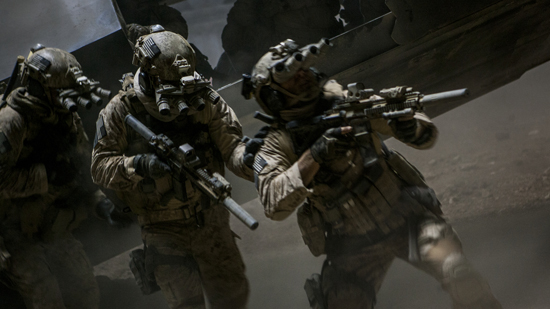
GRITTY, UNFLINCHING VIOLENCE
Most action filmmakers like to portray violence in their movies, but Kathryn Bigelow makes you feel the violence in hers. She doesn’t glorify violence, but instead tries to maximize the impact you as an audience feels when it happens on screen. She makes every bullet impact resonate, usually by making them so viscerally loud in each scene. She blends the use of silence and the breaking of that silence through chaotic violence magnificently, and it’s all the more immersive given that she rarely underscores her scenes of violence with any dramatic music. She also rarely uses slo-mo to heighten the violence in her movies, the obvious exception being the big explosion at the beginning of The Hurt Locker, which was probably intended to feel surreal. The reason why she doesn’t try to employ any fancy tricks of the trade in shooting her action scenes is because she wants to maintain a sense of authenticity in her films. This is especially true in her latter films, which take a more documentarian approach to their often true to life subject matters. Perhaps the greatest example of her true to life approach to portraying violence is found in the climatic battle scene of Zero Dark Thirty, which dramatizes the famous raid on Osama Bin Laden’s compound by Seal Team Six. In that closing 30 minute scene, Kathryn Bigelow masterfully utilizes builds tension through the balancing of the rising and lowering of violence shown on screen. The moments when bullets are blazing are impressive enough, but it’s the near silence in between that really is expertly handled, as it raises you anticipation for the next outburst of violence to come as the soldiers move deeper into the compound. It’s a masterclass of action filmmaking in that pivotal scene, as we indeed feel like we are in the middle of this historical moment in time, witnessing the true harrowing mission that Seal Team Six undertook. It’s also what makes the violent outbursts feel so visceral in movies like The Hurt Locker and Detroit (2017) as well. She’s also not one to shy away from how ugly violence can be, especially when we see moments of torture in Zero Dark Thirty, or as they called it in the midst of the War on Terror, “enhanced interrogation.” For Kathryn Bigelow, she wants the violence to be a shock to the system, and not a thing to glorify for the sake of popcorn entertainment.
3.
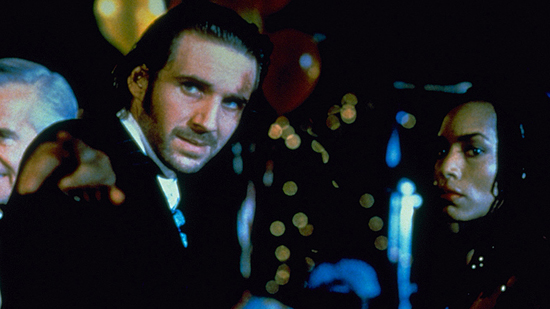
THE HEAT OF THE NIGHT
Kathryn’s movies also feature their fair share of night time scenes. But what is unique about the way that she films these scenes is that she makes the night still feel as hot as it does during the day. There’s a sweltering like atmosphere to the scenes that take place at night in her movies. A lot of this has to do with the way she has her scenes lit. There’s an orange like glowing filter to these scenes, which gives the impression of heat. You can certainly feel this in movies like Strange Days, which uses warm hues through most of it’s nighttime scenes. While most of The Hurt Locker is set during the day, the few nighttime scenes also carry over the feeling of it’s still being very sweltering, which it probably was for the cast and crew. They filmed the movie in the Kingdom of Jordan where temperatures climbed up to 130 degrees Fahrenheit, and it probably didn’t dip down that much once the sun went down either. But perhaps the movie that best illustrates just how well Kathryn Bigelow’s use of warm hues in night time scenes plays a role in setting the mood of a scene is in Detroit. Kathryn’s tense thriller set during the 1968 Detroit Riots depicts a historically gruesome chapter of the event involving the Algiers Motel Massacre. The movie mostly takes place over the course of one grueling, tension filled night in the middle of a hot summer season. The sweltering heat hitting the city during that night is perfectly captured through the warm hues of cinematographer Barry Ackroyd’s lighting, and it helps to raise the tension of the scene to a boiling point. We get the impression of it being a hot day even if it wasn’t one for the actors, and it helps to enhance the immersion of the experience. But, Kathryn can also juxtapose these moments with scenes of cool lighting to emphasize a shift in the atmosphere of a scene. Compare the warm scenes in the middle east with those of the cold, sterile offices of the CIA building. Night time scenes in Kathryn Bigelow movies often are where harsher, more violent moments happen, and in her films violence and heat often coincide as a part of the experience.
4.
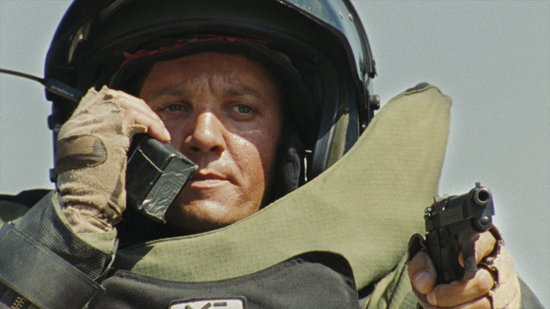
COMPLICATED, OBSESSIVE CHARACTERS
In a lot of Kathryn’s movies, there often seems to be a focus on characters that are consumed with some kind of obsessive behavior. Jeremy Renner’s Staff Sergeant William James in The Hurt Locker is perhaps the best example of this in one of her films. The Hurt Locker is pretty much a character study of what motivates someone to do one of the most dangerous jobs in the world. William James’s primary job in combat is to disarm Improvised Explosive Devices, or IEDs, before they are detonated from afar to damage and/or destroy American military targets. He dons the protective but restrictive suit, the titular “hurt locker” and walks right up to danger like it’s nothing to him. Kathryn Bigelow and screenwriter Mark Boal clearly were fascinated by the mentality of a person who would do that kind of job on a daily basis, and Jeremy Renner plays the part perfectly. He’s clearly great at his job, and he becomes a little cocky because of it, but we also see that his obsessive behavior when it comes to doing his job puts a wedge between him and everyone else. Without this line of work, he has nothing else. The same kind of fascinating exploration into the obsessive mentality of a person on a mission can be found with Jessica Chastain’s Maya in Zero Dark Thirty. Maya, who was a fictionalized character made from an amalgamation of a number of real life people who helped track down Osama Bin Laden, is also a fascinating character defined by her singular obsession to find the mastermind behind 9/11. She’s also Kathryn Bigelow’s sole female protagonist in any of her movies, which is an interesting thematic choice for the movie. But even in her more genre heavy films, the idea of people being motivated by singular obsessions was something that still showed up in the narratives. Patrick Swayze’s Bodhi in Point Break is a fine example, as his motivation in life is to chase after thrills, even when it involves robbing banks. It’s not surprising that Kathryn Bigelow cites psychology as one of her secondary interests beyond filmmaking. She wants to explore why her characters go to such extreme lengths in addition to showing us the extreme things that they do.
5.
PURPOSEFUL STORYTELLING
Kathryn Bigelow would probably tell you that she doesn’t intend to make films that deliver stated messages; instead choosing to let the film act as it’s own sense of truth. This led to some criticism of Zero Dark Thirty, where critics took issue with the fact that her movie didn’t come out harder against the American military’s use of torture in the interrogations of enemy combatants. While Kathryn does show the ugliness of such practices in the movie, she refrains from making any statements for or against it’s usage as a part of the gathering of information about Bin Laden’s whereabouts. She could have made a movie where she took a stand, but that’s not what Zero Dark Thirty is. The movie is very much a chronicle of how we finally got Bin Laden after a decade at war. The movie takes a journalistic approach and not an editorial one. She wanted us to see the process and make the judgments on our own. That’s been the purpose in her storytelling; presenting something as close to the truth as possible, both the good and the bad. The Hurt Locker was one of the first movies to really address the toll on soldiers in the then still on-going Iraq War, but she did so with a personal story about one man’s own experience. Even in her earlier work, she managed to subvert genre tropes by adding unexpected layers to her characters’ stories. Point Break flips the Cops vs. Robbers storyline on it’s head by making the story more about the power of male bonding, and how that ends up complicating a police officer’s undercover mission. Detroit may show one harrowing night of tension and slaughter, but it also spells out the cruelty of institutional racism that still hasn’t fully gone away since the days of the Detroit Riots. By making her movies experiential, Kathryn is able to let the movies speak for themselves about issues that matter, and prevents them from turning into lectures. Authenticity is what matters to her the most in her filmmaking, even when it complicates the message of a movie, and it’s shows a level faith that she puts on her audience to understand the deeper meanings of the stories. A lot of other filmmakers would try too hard to hammer home the message, and Kathryn instead allows the messages of her movies to be a warranted biproduct of the experiences she creates.
It’s a good thing that Kathryn Bigelow is no longer alone as a female winner of the Best Director award, having now been joined by Chloe Zhao (Nomadland) and Jane Campion (The Power of the Dog) in recent years. But for a while, she was the sole winner of that coveted award. And frankly, I don’t believe it’s a historical accolade that she ever intentionally sought after. Kathryn Bigelow, for most of her career, has never really made what one would consider Oscar-type movies. She was a genre film director, dabbling mostly in action with a little bit of horror and sci-fi here and there. Her first attempt at making a serious drama (K-19: The Widowmaker) flopped so hard that it probably made many doubt that she would even be considered a serious filmmaker. But, with The Hurt Locker, no only did her instincts as a filmmaker finally coincide with the preferences of the Motion Picture Academy, but she has since maintained that reputation as a serious filmmaker in all her movies after. She probably would’ve been content just being a consistently working filmmaker who had no Oscar to her name, but fate seemed to fall her way and she made history in doing so as well. Probably the sweetest bit of irony is that she won the Oscar by beating out her ex-husband James Cameron, who was nominated that same year for Avatar (2009). The best thing to come from her Oscar win is that it finally showed Hollywood that female directors are just as capable as their male counterparts in producing impactful films that are deserving of Oscar gold. We still have a long way to go before there is full parity in Oscar wins for female directors, but thankfully it’s become more common to see women directors getting high profile jobs. We now have people like Greta Gerwig and Chloe Zhao not just directing small dramas, but also doing big blockbusters as well. Kathryn Bigelow has more or less remained true to her own tastes as a filmmaker, with her only pivot being she moved from genre fare to serious dramas in her latter films. And in being a strong example of resilience in Hollywood, she has proven to be an inspiration to young female directors everywhere. Yes, her movies tend to be more male oriented, contrary to what most female directors tend to make, but it’s a prime example of how great cinematic vision knows no gender, and a great female filmmaker can find success making any movie they prefer to make. For Kathryn Bigelow, action filmmaking was her calling, and she truly has been one of the best directors ever in that field of filmmaking.