Hollywood has gone through many different phases when it comes to finding new talent behind the camera. The studio system that built up in the early days of cinema procured filmmakers through a apprenticeships and workshops, with people moving up the ladder from department to department much like any other factory system, albeit bound to the culture of the studio itself. Then when the studio system collapsed in the 1950’s, the studios had to look to other systems of production to find a new crop of filmmakers. This new generation was found in the field of television. People who shot live television specials and newsreel pieces were now being tapped to bring their skills to the Hollywood movie machine, and they in turn changed the culture of cinema as a result. The TV generation helped to ground cinema in way that felt grittier and truer to life that the movies that came before. And out of this crop came the filmmaking mavericks that formed the New Hollywood. But, it wouldn’t be the last significant generational change in Hollywood. The rise of the film festival circuit, particularly the Sundance Film Festival, sought out films made by people who worked outside of the Hollywood system, telling stories that the studios would often steer away from because they didn’t have broad mass appeal. As a result of spotlights placed on these films that otherwise would have been ignored by Hollywood, we saw the rise of the Independent Film Generation. Out of this crop came unique voices like Quentin Tarantino, Gus Van Sant, Kevin Smith, Richard Linklater, and Darren Aronofsky, all of whom would have a profound affect on the next generation of filmmakers. Each of these different generations have passed on their knowledge of cinema to the next, but what profoundly separates them is the road in which they took to become successful filmmakers. There is no single way to become a filmmaker, but there are oftentimes when new tides come into the industry and lifts up the boats of these individual talents who otherwise would have been ignored before. And now, we are starting to see that tide turn once again.
What is different this time is that the rising tide is not coming from the world of cinema itself, but rather from the internet. In particular, the video streaming platform YouTube. YouTube has grown into this mass media marketplace that even rivals television itself, with user uploaded videos sometimes garnering millions and even billions of views over time. While it’s safe to say that most of the videos on YouTube are no where near what anyone would call cinematic, there are quite a few content creators on the platform that have used YouTube to craft some truly unique and artistic videos. What YouTube has done is that it has allowed aspiring filmmakers to have an outlet for their creativity and get it seen by the world. YouTube has become a place to test out new techniques for filmmaking, without having to break the bank to work it into a movie. On YouTube, people can use their channels to present their own work and procure their own audience; even allowing some of them to participate in projects through crowdsourcing. And the larger the audience grows for some of these channels, the more places like Hollywood begins to take notice. It’s not at all surprising that a lot of YouTube creators are now being asked to collaborate on bigger things, like commercials and music videos, because they were able to catch the attention of someone in the industry who wanted to take these experimental techniques and apply it to their own products. But, for a long time, Hollywood had been keeping somewhat of a distance between itself and YouTube content creation. These content creators certainly have their dedicated fanbases, but can they make their films appeal to mass audiences outside of the internet space and put butts in movie theaters. For the YouTube generation, they had still yet to prove that their skills could translate to the big screen. But that barrier seems to be finally coming down, as Hollywood is now giving movie deals to people who have come up through the YouTube pipeline.
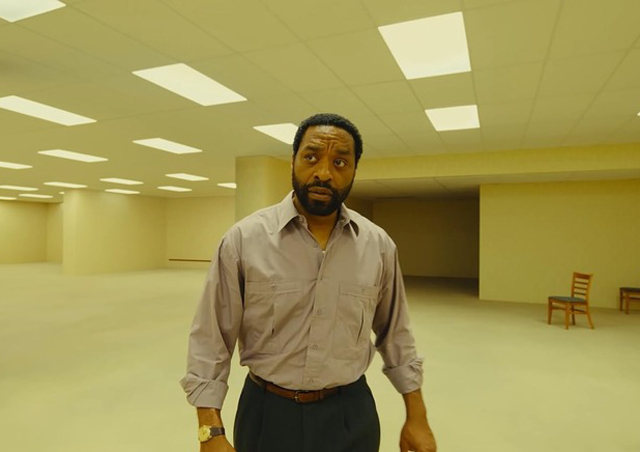
There have been plenty of Youtubers that have made the transition to studio filmmaking before, but 2026 seems to be a truly banner year for them. The reason for that is because the movies made by these filmmakers are suddenly gaining traction at the box office, meaning that they are no longer niche YouTube filmmakers, but actual crossover hit makers. Two movies that have demonstrated this have released in the last month; the horror flicks Obsession (2026) and Backrooms (2026). Now, the low risk high reward nature of horror filmmaking makes it a bit easier for filmmakers outside of the Hollywood system to suddenly generate a hit. But, it’s the scale of the success of these two movies that really has Hollywood buzzing. Obsession started off modestly at the box office, typical of most low budget horror movies. But, what it did the following weekend made heads turn in the industry, as it grew it’s box office numbers into it’s second weekend; an unbelievable feat of a movie defying gravity and having a better second week of release than the first, even in direct competition with a Star Wars movie. And then we have Backrooms, an A24 produced horror flick that is poised to have a massive opening weekend as of this writing. A24 typically has never had a massive showing at the box office, with not a single one of their films having crossed the $100 million mark at the domestic box office, with only last year’s Marty Supreme (2025) coming the closest at around $90 million. That is all set to change thanks to Backrooms, which is going to gross more in it’s opening weekend than over 80% of all of A24’s releases managed to make in their entire runs, and it’s easily going to blow past that $100 million threshold, shattering all records for the indie studio. And this is all thanks to a pair of filmmakers in their early 20’s that cut their teeth making Creepypasta videos on YouTube. Hollywood isn’t just finding new talent on YouTube; they are possibly finding the newest hitmakers that will transform the face of Hollywood for the next generation.
But, the types of filmmakers making the leap from YouTube to the big screen is not all uniform as you’d expect. There’s a difference between YouTube talent, and people who make stuff to watch on YouTube. Kane Parsons, the 20 year old filmmaker behind Backrooms for instance, is someone who made stuff for YouTube and was never public facing. His YouTube channel, Kane Pixels, is a collection of filmmaking experiments that play upon the Creepypasta horror trope of liminal spaces. He crafted videos centered around exploration of a space called the Backrooms, where the spaces are like empty rooms but the architectural style is just slightly off-kilter to the point where it makes the space feel unsettling. In addition, the videos show that hallways connecting the rooms seemingly have no end, and there’s something lurking around in the shadows. Kane’s video effectively used this style of creepy liminal spaces to generate a feeling of foreboding dread; like being stuck in a nightmare, which was enhanced further by the fact that the videos were from the first person perspective and often made to look like grainy found footage. A lot of it is impressive because Kane was able to create these videos on his own through his own self taught skills as a visual effects artist. The videos gained a viral following, and this helped Kane get the attention of people in the movie industry, namely A24. Honestly, he’s a good match for the A24 house style, because his videos are very atmospheric in nature. In Kane’s case, his big screen debut is an extension of what he was able to do on his YouTube channel. Sometimes that transition can falter because it’s hard to take something that worked as a short internet video and make it work as a full length feature, but the results seemed to have worked out for both Kane and A24. Kane brings his vision and A24 can help to enrich it with Oscar caliber talent involved like actors Chiwetel Ejiofor and Renate Reinsve. But one of the main reasons why Kane Parsons managed to make that transition be a success is because he allowed his vision to be his calling card.
This is different for other types of YouTube creators, namely those who are more public facing. The interesting thing about this Youtuber turned filmmaker class is that many of the ones who are now getting movie deals from Hollywood likely didn’t start out with that as a career path in mind. This is true about gaming streamer Mark Fischbach, aka Markiplier. His channel grew out of his popular gameplay streams, where he was often had very entertaining reactions to the games he was playing. His most viral videos often were the ones where he had hilariously over the top reactions to scary moments in horror video games. Given how successful he has been as a streamer, he probably would’ve been content just making that his sole career. But instead, he decided he wanted to invest his earnings into and time into making a movie. It wouldn’t be a movie version of his channel, but instead an adaptation of a game that he was fond of and wanted to bring to the big screen, with him working both in front and behind the camera. The movie, Iron Lung (2026), was a sci-fi horror flick that wasn’t going to be cheap to make, but Markiplier believed in this project enough to use his own capital as a YouTube celebrity to get the movie funded and distributed. This also likely helped the movie get a wide theatrical release, because there was enough internet buzz generated thanks to Markiplier’s fanbase to convince large chains like AMC and Regal to four wall the movie. And it worked out. Iron Lung managed to be a surprise hit, opening at #2 on it’s opening weekend. The thing that probably helped Markiplier the most is that as a Youtuber, he’s also a personality that stands out and has managed to keep his audience entertained throughout the years. And that public persona helped to generate a devoted following of fans who showed up to the movie theater to see his film. The surprise box office for Iron Lung was probably not the result of the appeal of the movie itself, but because of Markiplier’s appeal to his fanbase. They enjoy what he makes, and they were willing to give his transition into filmmaking a deserving look.
This doesn’t translate across the board however. YouTube film critic Chris Stuckmann also made his recent directorial debut with the horror flick Shelby Oaks (2024). In contrast with Markiplier, Stuckmann seemed to always have a career in filmmaking in the cards for him from the beginning. As many aspiring filmmakers have done, Chris found a platform on on YouTube and grew an audience from there. But he didn’t use his platform to make filmmaking experimentations. He instead found his niche as a film critic, shooting most of his videos from the comforts of his home office studio, with him sharing his opinions about newly released films and shows directly to the camera. Over time, he became one of the most frequently watched film critics on the platform with a 2 million subscriber fanbase. But, along with being a person with an opinion about movies, he also wanted to be a maker of movies (don’t we all). So, like Markiplier, he looked to his audience to help him with pursuing that passion. He created a Kickstarter campaign to crowdfund the movie, and to a lot of people’s surprise he managed to break a lot of records for a crowdfunded horror movie on the Kickstarter site, generating $1.3 million from over 14,000 backers. This is what brought a lot of attention to Chris Stuckmann’s dream project, with the industry taking notice of Stuckmann’s impressive funding pull. The only question is, would it work. True to his word, Stuckmann poured every cent of the campaign into making the film, and he managed to get a distribution deal with indie studio Neon. But, unlike Markiplier’s Iron Lung, Shelby Oaks wasn’t able to translate Stuckmann’s internet fame into strong box office. Perhaps it’s because Stuckmann didn’t make himself the face of this project, using his celebrity to spotlight the film. He purely worked behind the camera as the writer, producer and director. Sure, he would talk about this film and promote it on his channel, but if you went to the cinema looking for a Chris Stuckmann film, there was nothing about the promotion surrounding the movie that really tied back to him as a YouTube personality. Unfortunately for Stuckmann, the movie had a mediocre theatrical run, and Stuckmann has made no mention of a follow-up film in the future. His YouTube career is still flourishing, but it’s too early to know if his filmmaking career will ever see a second act.
Whether these filmmakers are public facing people or no, what it does show is that YouTube is no longer looked at as a niche market for entertainment. The people who create content for their audience on the platform are now demonstrating that they are capable of translating their talents into movie making as well. One thing that is benefitting a lot of these filmmakers right now is that a lot of them are self-taught and also self-funding their projects. It’s a very DIY community of artists and performers , and that’s shaking up the order of how Hollywood trains their talent. These are new filmmakers that can make things quick and cheap that can also connect with audiences. It’s very much in that same spirit of the new crop of filmmakers that arose from the early days of television. YouTube filmmakers know exactly how to work within limitations, and that mindset is helping them appeal to Hollywood. Much like Roger Corman school of filmmaking, Youtubers are making the most of their limited resources, and breaking the rules of filmmaking in a way that actually benefits the artform because it shows a very hands on approach. Sure, there are many slop channels on YouTube, where a lot of Youtubers just loads stuff on there for clicks, often aided with AI. But, those are not the channels getting Hollywood’s attention. It’s the hands on people like Kane Parsons, Markiplier, and Obsession’s Curry Baker that are generating the buzz in the industry. Since YouTube has been competing with Hollywood for audience attention, Hollywood is now starting to look for ways to gain that attention back, and that’s by finding talent that can bring that same kind of energy in a way that is compatible with their business. Remember, some of the Roger Corman alum turned out to be Martin Scorsese, Francis Ford Coppola, Ron Howard, James Cameron, and Joe Dante, and these were the ones who changed the culture of Hollywood. We’ll see if that holds true for this generation of internet filmmakers, but there’s a pretty good chance that someday someone with a YouTube channel today will one day be an Oscar winning filmmaker of tomorrow.
As of right now, the YouTube generation is leaving their mark on the horror movie genre, which is the genre most receptive to innovation and change at the moment. What is also striking is just how young these YouTube filmmakers are. Kane Parson was born in 2005, the same year that YouTube launched. He has never known a day where the platform has not existed, and it’s the platform that has quickly catapulted him to the top of Hollywood with a blockbuster hit. Sure a lot of it has to do with luck, but Kane never set out to be a blockbuster filmmaker. He started playing around with Blender and Adobe After Effects as a hobby, and he mixed that hobby with a fascination with liminal space horror and created videos that connected with people on the internet. Now that hobby has turned into a career, and it all boils down to having a creative drive and the right kind of method to express it. He created something unique, and it managed to gain traction on a platform that rewards things that go viral. In the end, like with most filmmakers, it comes down to the talent of the filmmaker. Kane Parsons and the other Youtubers who are currently breaking out in Hollywood now may not have all set out to become filmmakers, but they nevertheless had it in them. YouTube just allowed them to have a platform to test out what they wanted to do, and have it seen by people, even in it’s rawest form. Hollywood may get the wrong idea and think that any YouTuber can make a hit movie. I dread the idea that there may be a Mr. Beast or Logan Paul movie in the future. Hollywood needs to look at where the talent lies in the YouTube space and find the right kind of future filmmaker on the platform; the ones who want to tell good stories and express their art, and not be a spectacle of themselves. We are seeing that come true this year, and it’s pleasing to see Hollywood starting to look outside of their bubble to find the next big thing in cinema. It’s not just limited to horror filmmaking either, there are talented comedians, animators, and dramatists who are all using YouTube as a showcase for their craft and getting some well deserved attention for it too. For an industry that has long been playing things too safe and sticking to long worn out brands to save them at the box office, the rise of YouTube is offering an alternative to the Hollywood dream machine that Tinseltown really needs to take notice of. And if they find the right talent on the platform to help them make that leap forward, we might see a new re-shaping of Hollywood that can indeed be a benefit to all.