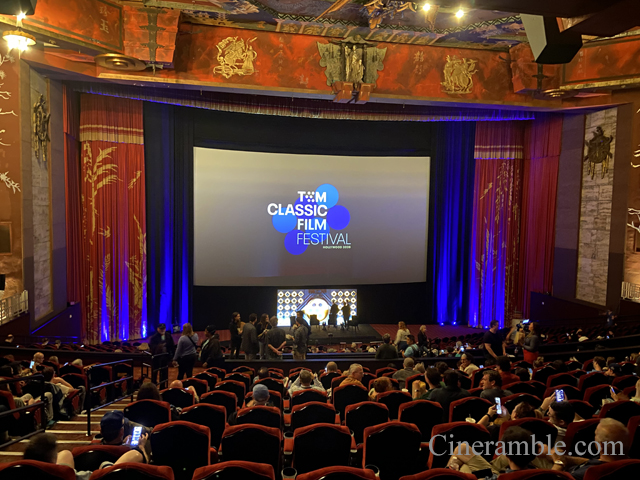
There’s a certain kind of cinema fan that eagerly awaits a film festival every year that exists entirely to show old movies. I am that kind of fan. I have now been going to the TCM Classic Film Festival for well over a decade, and covering it here since 2014. This is one of the events that I always have marked off on my calendar and each year I try to maximize my time at the festival over it’s 4 day run. I do have to fit in my 9-5 job of course on the first two days which limit me to just the night shows, but even still, I have been averaging 11-12 movies per festival. There are many great memories I have made at these festivals, particularly in seeing old legends making a live appearance like Mel Brooks or Kirk Douglas. But in all the years that I’ve been going to the festival, I don’t think I’ve ever had a full festival experience as great as the one I had last year. 2025 was indeed peak TCM Film Festival for me. It seemed like everything just went right for me throughout the whole festival. I got into every movie that I wanted to, which was great on it’s own. But the extent of things I got to do last year are all among my favorite festival experiences ever. I got to see my first ever Vistavision print screening ever. I got to see Al Pacino live before a screening of Michael Mann’s Heat (1995). I saw The Rocky Horror Picture Show (1975) with a full shadow cast midnight party atmosphere. And unbeknownst at the time, I managed to see director Rob Reiner live in person for the only time in my life, with his tragic murder occurring months later. All of the other screenings that I got to see were wonderful as well. I try to fit in as many movies as I can that I haven’t seen before. Last year, only a quarter of the films I saw were new to me. Hopefully that’s something that I can improve upon this year. The theme for this year’s festival is “The World Comes to Hollywood,” which celebrates the impact left by people who came to Hollywood from across the world and brought their stories with them, helping to diversify the spirit of the dream factory and adding to the story of America. This year’s selection of movies represents that spirit of international storytellers, while also celebrating movies that are hitting key milestones this year. I’ll be detailing my day to day experience below, including my own snapshot taken throughout the festival. So, let’s take a look at my visit to the 2026 TCM Classic Film Festival.
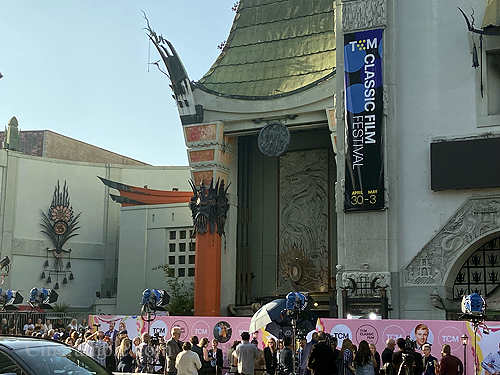
THURSDAY, APRIL 30, 2026
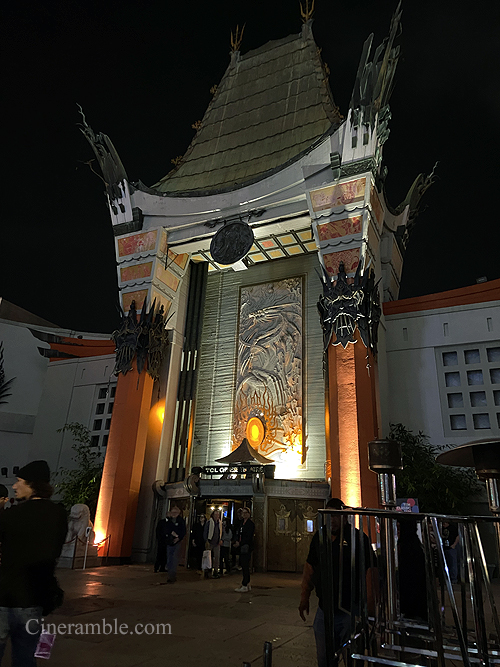
Of course the festival always starts with the red carpet rollout for the opening night showing. This is the one that is exclusively for the high roller passholders, which I very much am not. As the economical festival attendee, I stick with the standby option, which often works out (such as it did all through last year), but it’s never a guarantee. Even still, it’s great to see TCM kick off every festival with a big show, treating these screenings like a premiere. The opening night showing, held in the festival’s flagship venue of the TCL Chinese Theater, is also where they invite the biggest names as special guests. Last year’s festival began with a 45th anniversary screening of The Empire Strikes Back (1980), with a first ever festival appearance by Star Wars creator George Lucas. While myself and many other people weren’t able to get into this show, TCM still made it available to watch on their YouTube page shortly after, which makes me grateful that they are doing their part to preserve these festival moments for posterity. This is especially poignant when rewatching these videos after some of the special guests leave us over the course of the following months. Hopefully for many at this year’s festival that won’t be the case for a very long time. For this year, the special opening night screening is done as a bit of a memoriam of sorts, but for somebody that has left us in the previous year. The opening night screening this year is Barefoot in the Park (1967), starring the late Robert Redford. As part of the remembrance of Redford for this screening, the festival has invited his co-star from the film, Jane Fonda. No doubt, she’ll be talking about their time working on the film as well as the friendship of theirs that endured in the decades afterwards. While this screening is going on, my mission is to get to the Chinese Multiplex on the upper level of the Ovation Hollywood complex, which is where most of the other movies will be playing throughout the festival. While it will be a close call getting there from work, my goal is to make my first movie of the festival a film that I have surprisingly never seen before, the 1958 comedy classic Auntie Mame.
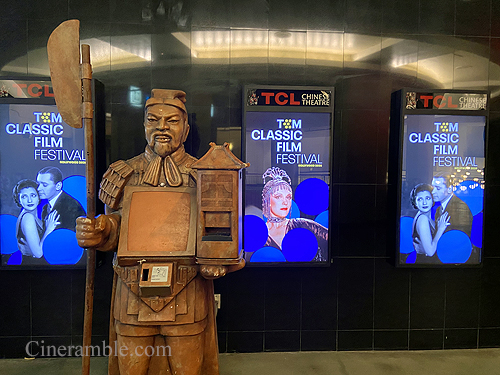
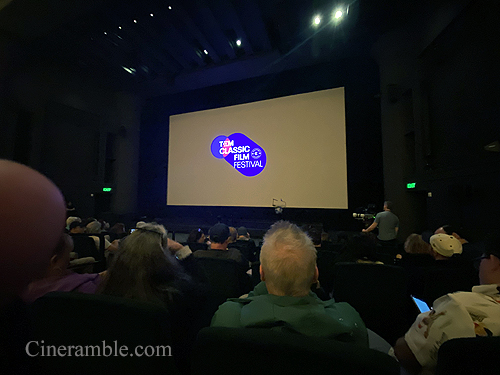
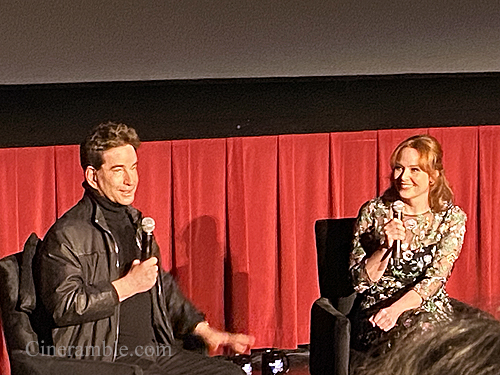
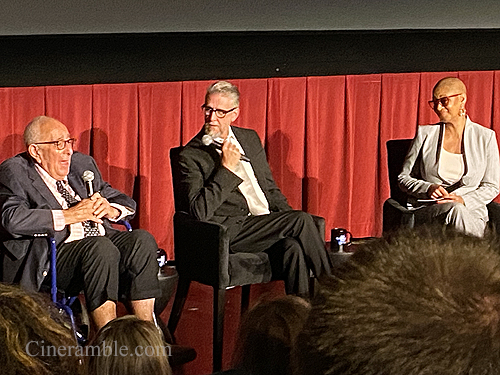
Despite my rushing to get there, I did arrive just in time to get a seat at the Auntie Mame screening. Considering that it was in the largest of the Chinese Multiplex venues, that being Auditorium #1, I wasn’t too worried about it selling out, especially on opening night. Once seated, we were greeted with the salutations from the TCM Festival staff, welcoming us to the festival and reminding us to stow away our cell phones during the film. For Auntie Mame, the screening was to be hosted by TCM personality Dave Karger with a special Q&A. The movie Auntie Mame was released 68 years ago, but there is still someone around today who was there during it’s making, and thankfully TCM had him as a special guest for this Festival. Actor Jan Handzlik was 13 years old when he played the role of the titular Auntie Mame’s nephew and sole living relative, a part that he also had originated on the stage years prior with Rosalind Russell. Despite him being nearly aged out of the part by the time the movie was getting made, Ms. Russell still fought to keep him in the role, knowing just how strong their chemistry was working together, which was one of the many insights that Mr. Handzlik shared with us. He talked quite a bit about what it was like working with Rosalind Russell, whom he genuinely looked up to like she was a true member of his family. Jan also shared a lot about his life before and after the movie, such as how he came into the acting profession, and why he ended up leaving it for a career in law. All these years later, Jan Handzlik has had a distinguished career as a lawyer, working among other things in the Criminal Division at the Los Angeles U.S. Attorney’s office with a focus on white-collar crime. As he stated himself, there a very thin line between working as an actor and as a lawyer, and he credits his early career in stage and film acting as helping him with his later career in law. Of course, this was my first experience with the film, and while I have my nitpicks, I still found it to be charming, and it’s clear just how well Rosalind and Jan worked together on screen. It’s also very cool to learn just how well he did after he left acting behind, which is something you don’t hear too often when it comes to child actors.
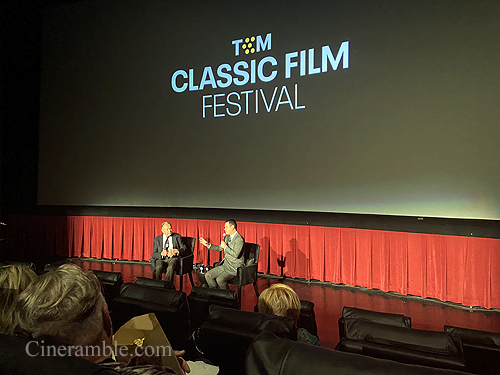
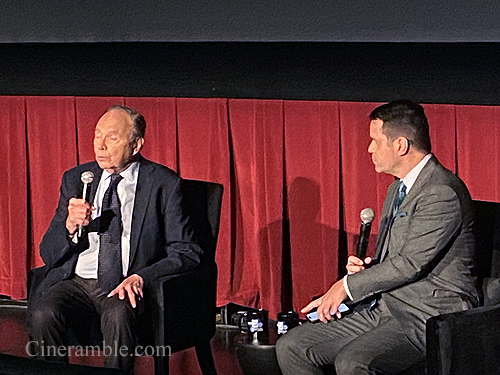
Auntie Mame had an early start comparative to past Festivals, and that’s mainly because of the nearly 2 1/2 hour runtime. To fit in a whole other set of movies to close the night out, the Festival had to accommodate for the longer movies, but I stuck around for next film, which was a movie from one of my favorite directors that I hadn’t seen yet. The Fortune Cookie (1966) was one of the later era comedies from the great Billy Wilder, and it has the significance of being the first film to pair up one of the greatest comedy duos ever put on screen; Walter Matthau and Jack Lemmon. I’ve become a fan of Billy Wilder, but that has mainly been due to his more famous films like Sunset Boulevard (1950), Some Like It Hot (1959) and The Apartment (1960). His later films have been a bit more unexplored by me, so I wanted to take this opportunity. And it’s always a treat to see Lemmon and Matthau sharing the screen. For this screening, the movie was preceded with a Q&A with TCM host Alicia Malone and Walter Matthau’s son Charlie, who himself has become a film producer and director. Charlie talked quite a bit about what Walter was like as a father, and the long term working relationship he had with Jack Lemmon. He also shared that Matthau was almost cast in the Tom Ewell role in Billy Wilder’s The Seven Year Itch (1955) opposite Marilyn Monroe, and it took a decade for Billy Wilder to make it up to him by casting him in this film. But, it worked out for Matthau as this was the role that won him an Oscar for Best Supporting Actor. One of the other great unexpected treats of this screening was that there was another special guest in the audience; actor Ron Rich, who played the key role of football player Luther “Boom Boom” Jackson in the film. At the age of 87, Rich is less mobile these days and probably would have had a difficult time participating in a Q&A before the film, but it was still a treat to see him there in person and he did stay to watch the film with us. He did receive a warm round of applause from the audience when he was given the shoutout. I enjoyed the movie, though I watched it half awake due to being up since early morning because of work. But, there’s little time to rest because I still have three more Festival days to go.
FRIDAY, MAY 1, 2026
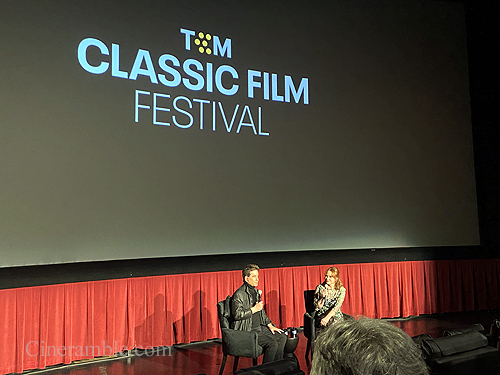
Due to my work schedule, I once again had to limit myself to attending the night time screenings. This unfortunately makes me miss out on some events I would have liked to have attended, such as the new 4K restoration premiere of Disney’s Alice in Wonderland (1951) at the El Capitan Theater, the handprint ceremony out in the Chinese Theater courtyard celebrating screen legend Glenn Close, as well as screenings of Strangers on a Train (1951) and Ace in the Hole (1951) that I would’ve very much liked to have seen. But, people have to work, especially if they want to spend their paycheck money buying tickets to movies at this festival. So, my first movie of the second day wouldn’t be until almost 9:00pm. I did arrive at the theater in time without having to rush from work, but I wasn’t as lucky getting into the movie I wanted this time. For the first time since 2024, I experienced a sell out showing at the festival. This is probably due to me choosing to see a movie in the tiny 200 seat Auditorium #4, which was the Carol Lombard flick The Princess Comes Across (1936). The standby line never moved at all, and was even dispersed well before the movie started. So, I had to improvise and go with a back-up film. The Ingrid Bergman film Gaslight (1944) was playing in the Chinese Theater and Shane (1953) was screening at the Egyptian. Gaslight would have been easy to get into considering that the Chinese Theater rarely sells out. But, I opted to stay there at the Multiplex and try out one of the movies that was playing in the two other auditoriums. I ended up opting for the 40th Anniversary screening of Ferris Bueller’s Day Off (1986), which I felt would have the more interesting pre-show Q&A. It would also get me out of the theater in time to catch the midnight showing, which in recent years has become a tradition for me at this Film Festival.
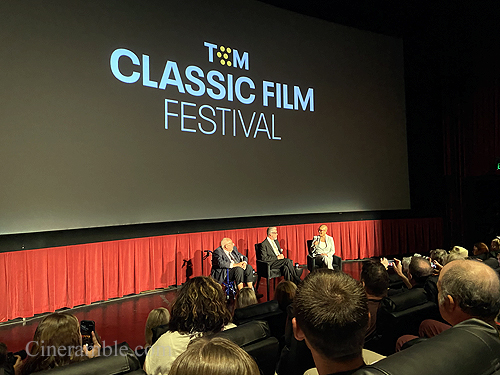
For Ferris Bueller’s Day Off, the Q&A would be hosted by TCM personality Jaqueline Stewart, and she would be joined by two of the film’s actors; Alan Ruck who played the role of Cameron in the movie, as well as Ben Stein, who cameo role as the boring history teacher has become of the movie’s most iconic moments. Ben Stein talked about how much of his performance was improvised, as he at the time was an Economics professor with no prior experience in acting, and was basically told by director John Hughes to just play the role as himself. Now his droll line reading of “Bueller. Bueller” is one of the most quoted moments in movie history. He’s very grateful for what the movie did for him, helping to launch him into a whole second career in show business. Alan Ruck also shared a lot of fond memories of making this movie; getting to work with Hughes and Matthew Broderick as well as shooting on location across the city of Chicago. They also shared how much the legacy of the movie means to them, with fans of the movie constantly telling them how much their work in the movie affected their lives. It’s quite something knowing that this movie has now reached the 40 year mark. A lot of it still feels new and fresh, and the only thing that dates the movie is a bit of the 80’s era tech that Ferris uses to get away with his schemes. This movie was also helpful in keeping me awake through what was honestly a long day of work. The film is a lively experience, especially with a theater full of people. Having two of the actors involved in the film there was also pretty special, and they offered up some very fun stories that gave a good sense of the kind of fun atmosphere that John Hughes tried to create on his film sets. So, even though it was not my first choice, I still had a fun time watching Ferris Bueller on the big screen for the first time. But, my hope was to make it through the following midnight screening.
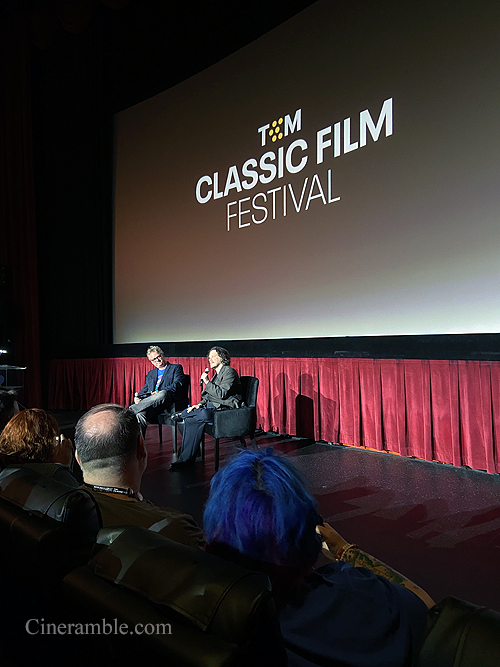
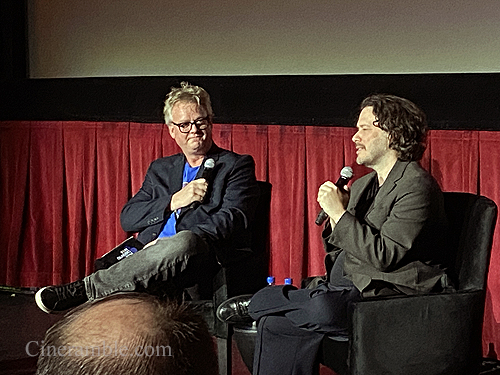
Last year’s midnight show was an all time great Festival experience for me. Getting the full Rocky Horror experience at the TCM Film Festival was a surreal treat, and I also felt that I really lucked out in making it into that show, because it turned into a pack and rowdy house, which really helped me get through those early morning hours. This year would be very different, and that’s not a knock against what I was able to see. This midnight showing doesn’t have the tied in tradition of a rowdy interactive experience like Rocky Horror. What I instead was about to see was the classic car chase action thriller Vanishing Point (1971). This was one of the most iconic and influential car movies of it’s era, and it has gone on to influence so many other films in it’s wake that feature heavy use of car based stunts. To talk about the movie beforehand was a famous fan of the movie, director Edgar Wright, who not that long ago made his own car centric movie, Baby Driver (2017), which Wright cites Vanishing Point as an influence. Wright talked a lot about the iconic Dodge Challenger that became an symbol of the time period, and has since become one of the most sought after cars by collectors. Quentin Tarantino himself bought one specifically because it was the car used in this movie, and it was also featured heavily in his own car movie Death Proof (2007). Wright also talked a lot about the work of vehicular stunt man Carey Loftin, who was the man behind the wheel for some of the crazier, death-defying stunts with the car, like the near collisions and the big jumps across ditches. The movie is a nice time capsule of the period, and alongside movies like Easy Rider (1969) and The French Connection (1971), it helped to redefine how to film movie scenes involving cars. It was my first time watching this movie, and I felt this was the right kind of way of seeing it, though my long day was taking it’s toll, and I had to fight to keep myself from dozing off. Seeing this at midnight was special, but it wasn’t the adrenaline rush that Rocky Horror proved to be. Still, I’m happy I continued my tradition of catching at least one midnight show per Festival. Now, with a planned sleep in for the following morning, I was ready to take in the full weekend for the rest of the festival.
SATURDAY, MAY 2, 2026
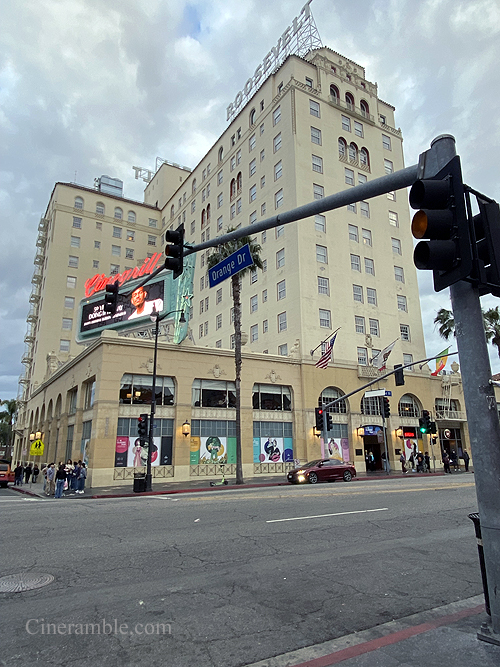
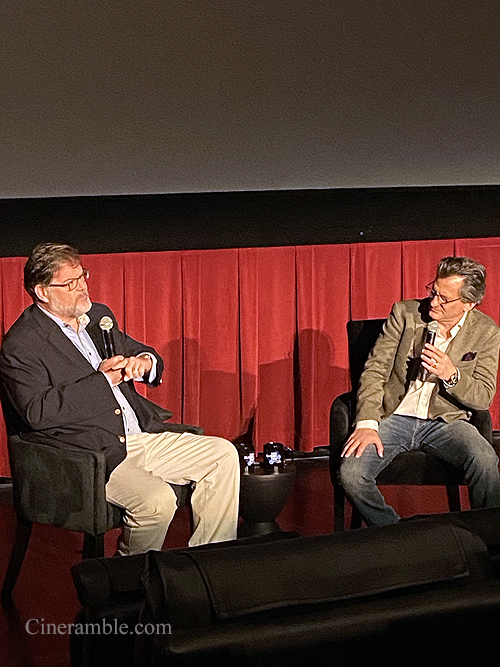
To recover from the midnight showing, I did what I have done in previous years and skipped the first round of movies on Day 3, so that I can get those extra hours of sleep. But, I was still going to maximize the rest of the day. Coming in around noon, I was eager to see a movie that interested me because of the relevance it has today despite being nearly 70 years old. The Elia Kazan political satire A Face in the Crowd (1957) tells the story of a folksy country singer who becomes an overnight celebrity, and who subsequently begins to use his influence to push for a stake in the political world, becoming more and more of a demagogue along the way. It’s a sharp satirical film that seems eerily prophetic today in the era of Trump. What’s even more shocking is that this brash, nasty character was played by the wholesome Andy Griffith, making this role very much against type for him. But Griffith does a brilliant job in the film, and it is a daring performance. It was his first screen role, and the fact that it failed at the box office might of helped him in the long run because it opened the door for a prosperous television career on The Andy Griffith Show and later on Matlock. The Q&A for this one was interesting because instead of someone from Hollywood joining the discussion, we instead had a figure from the world of politics there to talk about the film. TCM host Ben Mankiewicz would be joined by conservative political columnist and commentator Jonah Goldberg. Despite his political differences with Mankiewicz (himself a liberal democrat), Goldberg had a lot of common ground in his feelings about the movie with Ben, and the two talked a lot about how important this movie’s message still is. Jonah particularly pointed out that the movie isn’t just an indictment about the kind of populist figures that Griffith’s character represents, but it’s also an indictment about all of us in society who continue to allow people like that to get away with so much all the while they are exploiting that goodwill towards their own selfish needs. This was indeed a really fascinating film to watch (and a first time watch for me) and the informative discussion between Jonah and Ben was worthwhile as well, showing that even ideological opposites can still come together in appreciating a good movie with an important message.
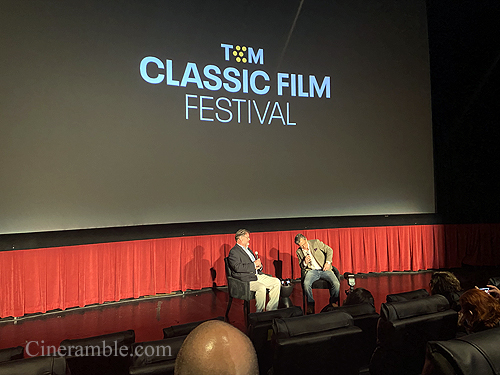
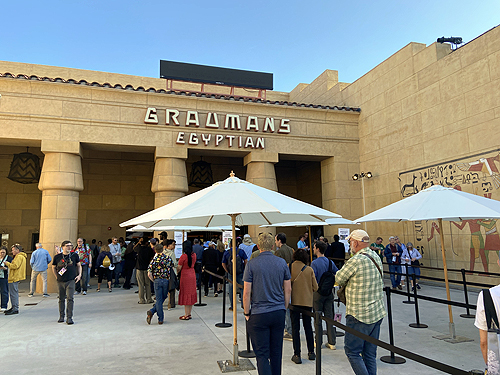
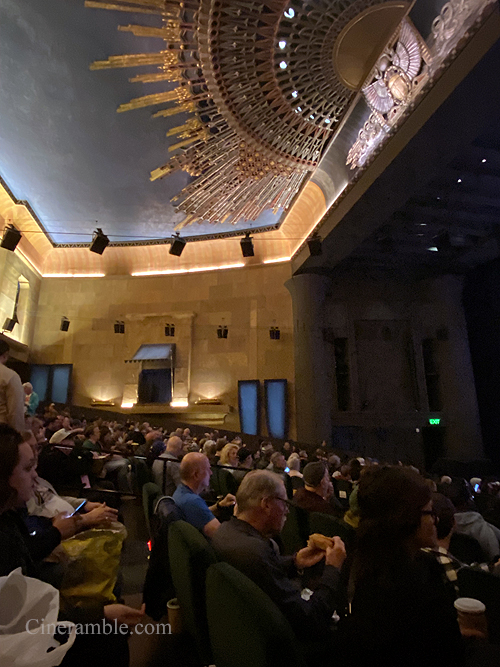
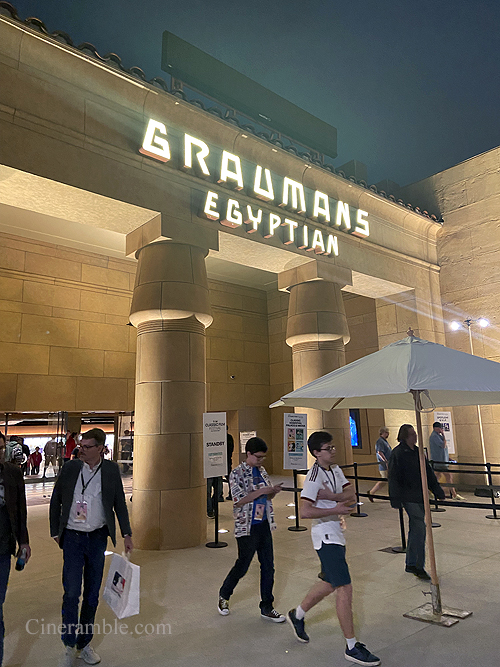
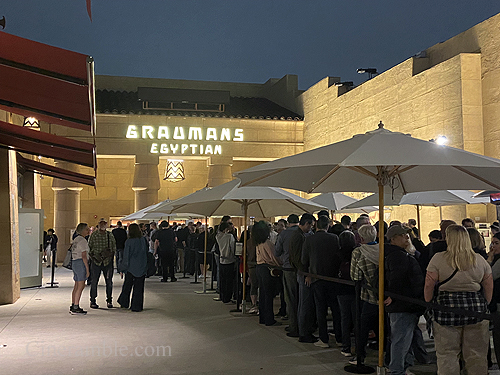
One thing that I definitely didn’t want to miss out on this festival was seeing a movie at the iconic Egyptian Theater. Unfortunately my choice to sleep in on this Saturday made me miss the one and only screening of a Nitrate print at this Festival; which was for the 1947 film The Farmer’s Daughter. Catching that screening of Mildred Pierce (1945) at last year’s Festival was not easy either, as I was one of the few Standby ticket holders who made it in. But, this was a different situation entirely. I had a very short window after A Face in the Crowd to make my way to the Egyptian, which is a couple blocks away from the Hollywood and Highland Complex that serves as the main hub of the Festival. Even still, the line outside the Egyptian wasn’t too overwhelming, and I was able to make it in through Standby. The Egyptian still looks amazing after it’s lengthy remodel, that was even further delayed by Covid. Now back as a regular venue, this is one of the few places at the festival that still plays movies on film, though this particular screening wasn’t going to be one of those. I was going to see the classic neo-Western The Misfits (1961), which was the very last film for two of it’s stars; Clark Gable and Marilyn Monroe, who both died not long after making the movie. This screening had a very special guest in attendance; actress Sharon Stone, who is a big fan of both the movie and Miss Monroe. She shared some interesting tidbits about the film, how it was written for Marilyn specifically by her then husband Arthur Miller, who ironically ended up divorcing her in the middle of the film shoot. Sharon also shared that she now lives in the house once owned by Montgomery Clift, who is also in the movie and wasn’t long for this world either after making the film. According to the host, Eddie Mueller during his discussion with Sharon, death sort of stalks the movie, though another cast member Eli Wallach would disprove this as he almost lived to 100. Though Sharon obviously never met any of the cast, she did share her encounter with the film’s director John Huston, which was it’s own fascinating story. It was great seeing this movie on a big screen, given it’s beautifully shot sequences on location in the Nevada deserts outside of Reno. And seeing what would be Clark Gable’s and Marilyn Monroe’s final moments on the big screen is also a worthwhile too.
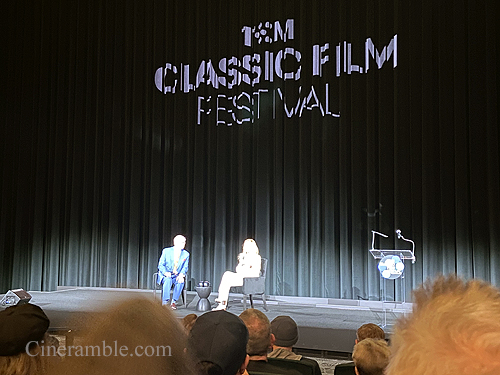
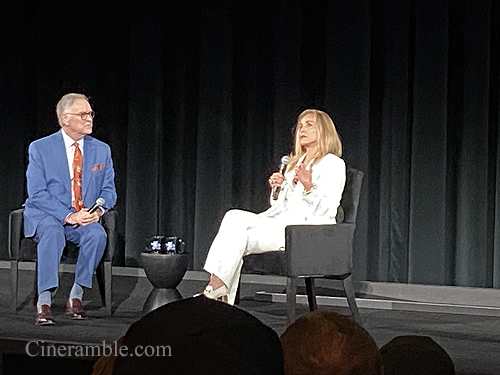
One thing that I like to do at these Film Festivals is try to watch at least one big Hollywood musical, since they are often some of the most entertaining and lavish spectacles to watch on a big screen. Seeing them on the massive screen of the Chinese Theater (the largest in North America) is also worthwhile. Unfortunately this year there weren’t a whole lot of choices in musicals. There was Friday night’s Pal Joey (1957), or the Rogers and Astaire classic Swing Time (1936), which unfortunately coincided with my screening of The Misfits. My closest option for this festival was going to have to be a movie that’s not a full musical per say, but still had plenty of musical sequences. This would be the Blake Edwards musical comedy Victor/Victoria (1982). I have never seen this one before, and I had a lot of the other people I was talking to in the standby line hyping this one up for me. What struck me about the film while watching it was just how forward think it was in queer representation. In addition to the whole gender bending aspect of the premise, it was also remarkable to see the film feature a fully out and proud character played by musical legend Robert Preston, who is most famous for his lead role in The Music Man (1962), and that his sexuality is never the point of ridicule in the movie, but rather a point of pride. This is an unashamedly pro-LGBTQ movie, which is all the more amazing considering that it was released by a major studio (MGM) in the middle of the Reagan era in America. For a queer person like myself, born in the same year as this film’s release, it’s re-assuring to know there were allies like Blake Edwards and Julie Andrews showing their heartfelt support for the community in even the darkest days. That goes for their co-star Lesly Ann Warren, who was the special guest at this screening. She talked about what it was like working with the power couple that was Edwards and Andrews, as well as leading man James Garner. She also talked a lot about how she developed the character of Norma, which was a pretty zany role. She too is also proud of her following in the LGBTQ fanbase of this film. Content aside, the film also just looks amazing on a giant movie screen. This also marked my first trip inside the Chinese Theater for this Festival, so what better way to finally enter the flagship venue than with a lavish musical film.
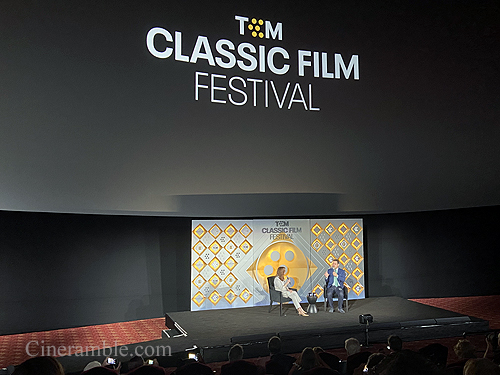
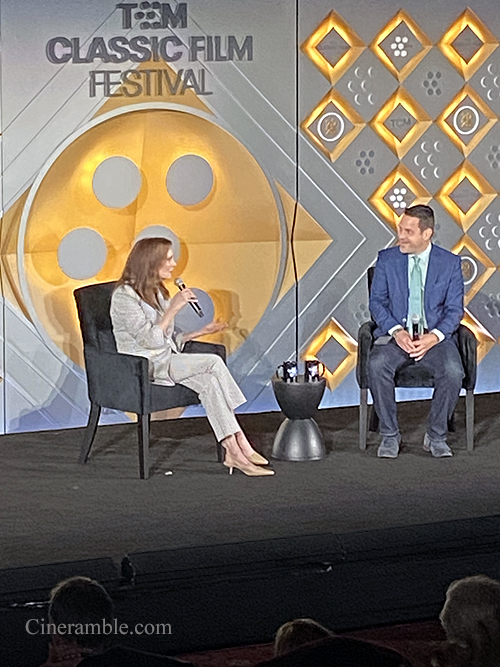
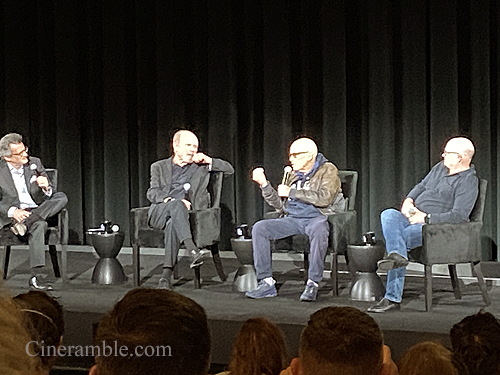
My final film of the second day of the Festival would once again be in the Egyptian Theater. I was more concerned about this movie selling out than I was about The Misfits, because this was going to be a newer movie with a much different kind of crowd. The Paul Verhoeven sci-fi classic, Robocop (1987) was being shown, with the star of the movie, Peter Weller, in attendance alongside co-stars Kurtwood Smith and Paul McCrane. The audience coming to see this movie would be on the fairly younger side (around my age in fact), and would be better abled to sit through a late night screening of a hyper-violent film. But, I did manage to get inside and find a seat. The theater had a pretty healthy sized crowd, with many who hadn’t seen the movie before too. Ben Mankiewicz conducted the interview with the three actors, all sharing their thoughts about making the movie. Paul McCrane had a fun story about him thinking very little of the movie that was pitched to him based on the title, but then realizing that the movie was a lot smarter than he thought after he read the screenplay. Peter Weller had an interesting insight into what made the movie so special, and that’s the way that the character of Robocop makes their journey towards re-discovering his own soul through the scattered memories of his past. They all talked about what it was like working with Paul Verhoeven on the set, and how the movie took a lot of risks, especially in it’s depiction of violence. The final movie cut had to go through several edits in order to just get it down to an “R” rating, and even still in ran into a lot of headwind once it came out. But, even still the movie became a hit and continues to be highly influential, and the three actors on the stage all expressed how incredibly proud they are to have been a part of the film. For me, this was a first time experiencing the film on a big screen in a theater, and that really helped to make it a special experience, especially with the state of the art sound equipment in the Egyptian Theater. So, three days down and one left to go in this year’s TCM Classic Film Festival.
SUNDAY, MAY 3, 2026
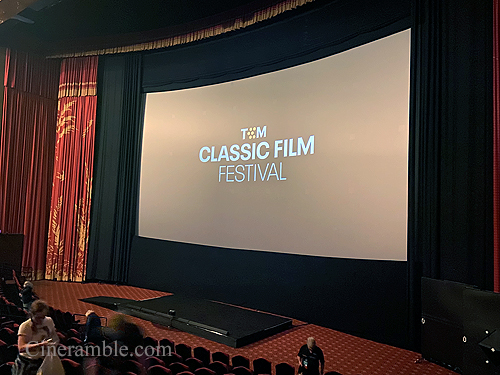
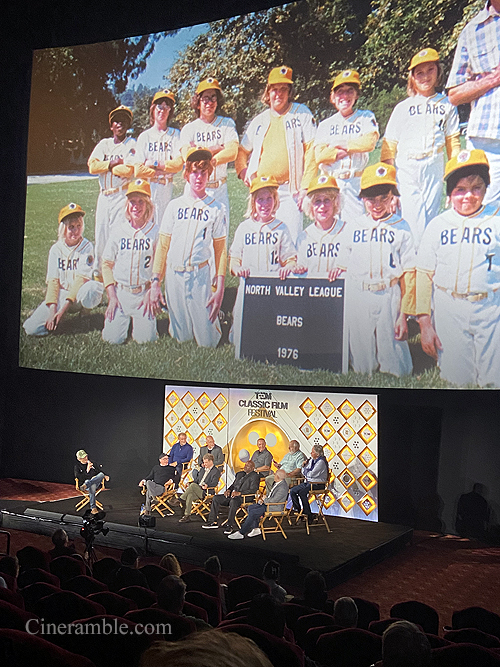
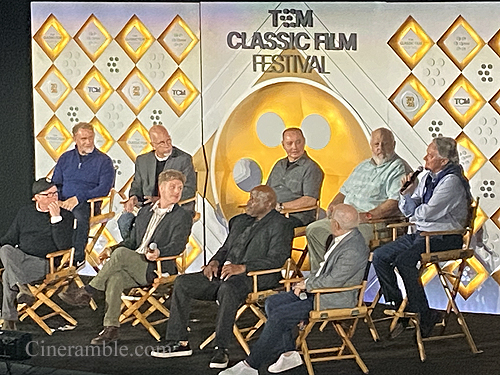
Last day of the 2026 TCM Film Festival and I was getting an early start. Unbeknownst to me at the time, I would pretty much be spending the entire day solely at the Chinese Theater. To start off the day, I would be seeing the comedy classic The Bad News Bears (1976), celebrating it’s 50th anniversary. One of the things that I became aware of during this fest was the frequent presence of Walter Matthau on my movie schedule. With Bad News Bears, The Fortune Cookie, and also his supporting role in A Face in the Crowd, Matthau was the most frequently seen face I experienced all festival long. But of all those movies, this is the one where he was the headliner. For this screening, TCM had a very special treat for us as they brought in 9 of the actors who played the titular Bears team in the film. This included Christopher Barnes, Jayme Escobedo, Erin Blunt, Gary Cavagnaro, Scott Firestone, Alfred Lutter, Brett Marx, David Pollock and David Stambaugh, all of whom were between the ages of 10-13 when they made the movie, Now in their 60’s, they fondly looked back on the experience of working on this film. Each had a special memory of working with Walter Matthau, saying that he treated them all like equals, and that he would do fun things like teaching them vaudeville acts between filming. They also shared the really neat experience they had when Jack Lemmon visited them on set and took the whole team out for Ice Cream. They also talked about working with their co-stars Tatum O’Neal and Jackie Earle Haley. Haley was scheduled to be at this screening previously, but had to unfortunately cancel due to a last minute schedule conflict. It was very cool to see this big of a cast reunion at the Festival, and it might be the most people I’ve seen on the stage at the Chinese Theater all at the same time for a single film. It also marked a great way to kick off the last stretch of movies for this Festival.
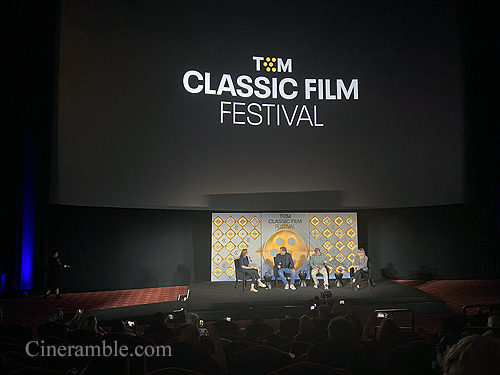
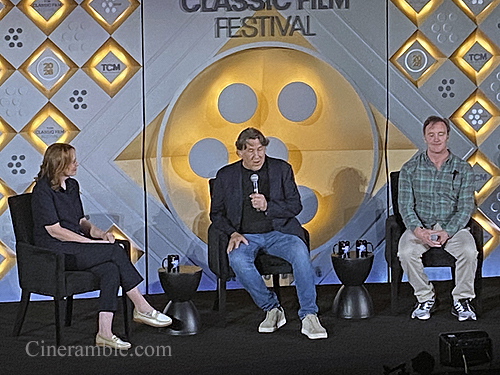
Right as I walked out of the Chinese Theater, I got right back into the standby line to enter it again. The next movie up would be a 30th anniversary screening of Cameron Crowe’s Jerry Maguire (1996). The romantic comedy, starring Tom Cruise and Renee Zellweger, is one that I’ve seen many times before, but not on the big screen, as I missed out on that during it’s first release. In attendance for this screening was the writer/director of the movie itself, Cameron Crowe, along with casting director Gail Levin, and actor Jay Mohr. Crowe shared that the movies of Billy Wilder were a big inspiration for the movie, and at one point he wanted Billy to have a role in the film, playing Jerry Maguire’s mentor. Unfortunately Billy Wilder turned the part down, but he and Cameron remained friendly afterwards, and Cameron would in the future publish a box about their many conversations over the years. Jay Mohr talked about how he landed the role of the rival sports agent Bob Sugar in the movie. He originally had tried out for the part of Chad the nanny, a part that ultimately went to actor Todd Louiso, because Cameron thought that Mohr would be better as the conniving, antagonist in the film. Re-watching the film again, I was pretty struck by how well the movie holds up, with the only dated aspect of it being the tech of the era (otherwise everything else feels timeless). It also makes me wish we had more of this kind of Tom Cruise performance. Sure, I love the Mission: Impossible and Top Gun movies like everyone else, but I feel like Cruise has been stuck in action movie mode for far too long, and this movie shows that he’s just as capable of this kind of performance as well. I really hope we see Tom Cruise escape his action movie shell and show what he can really do as an actor again, because I feel there are several more Jerry Maguire like roles out there waiting for him. Regardless, it’s great to see him here in top form and to experience this movie again the way it was meant to be seen.
I originally planned to have my movie after Jerry Maguire be one showing in the Multiplex. In fact it was in the larger, 300 seat Auditorium #1, so I felt my chances were pretty good to get in. Standby was, however, a pretty hefty 40 strong, but I managed to get into Rocky Horror last year with a similar sized line. The movie was Alfred Hitchcock’s Rope (1948), which remarkably is a movie I have held off watching up to now, specifically because I wanted to see it for the first time in a theater. Sadly, it was not meant to be, as the standby line was cut off after letting in just five of us. There’s something about the Hitchcock movies that just draw the crowds in, which I witnessed from the near sell-out of the Chinese Theater two years back for North by Northwest (1959). So, for the second time of this festival I had to call an audible and go with a back-up. Unfortunately there were very few to go with, especially if I wanted the movie to finish in time for me to get to the closing night showing at the Chinese. The Egyptian was already in the middle of screening of the three hour long The Towering Inferno (1974), and Auditorium #6 at the Multiplex was already a half hour into it’s screening of Ishtar (1987). So, I headed back to the last safe bet, which was the Chinese Theater. They were screening the Audrey Hepburn classic, Breakfast at Tiffany’s (1961), which is a movie that I surprisingly have never seen before. The Q&A beforehand was between Alicia Malone and director Adam Shankman, a super-fan of the movie. They talked quite a bit about how the movie differs from the Truman Capote novel, mainly in how it tones down the more sexually explicit parts of the book (like the fact that the two main characters played by Hepburn and George Peppard are essentially sex workers). They also touched upon the unfortunate miscasting of Mickey Rooney as Hepburn’s Japanese upstairs neighbor, creating a rather ugly stereotypical yellow-face performance that sullies an otherwise wonderful film. It did affect my experience watching the movie, as I cringed every time they would show this character in the film, because not only is it racist, but he also feels like he’s from a whole other movie. Malone and Shankman shared that both Rooney and director Blake Edwards would later regret what they did with this character in the movie, calling it their biggest mistake.
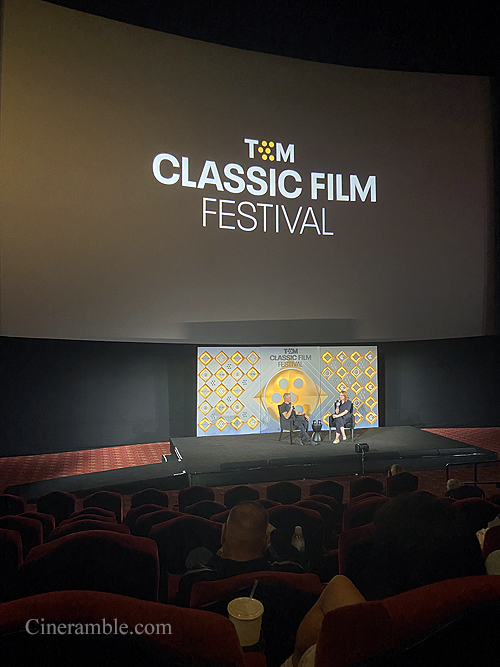
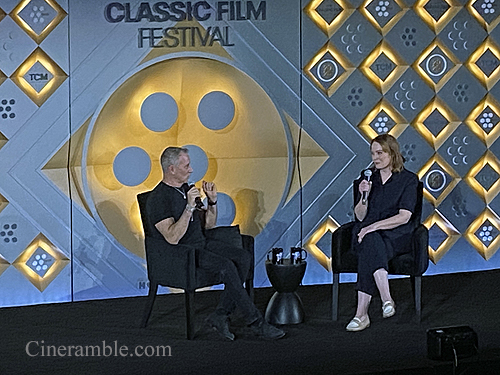
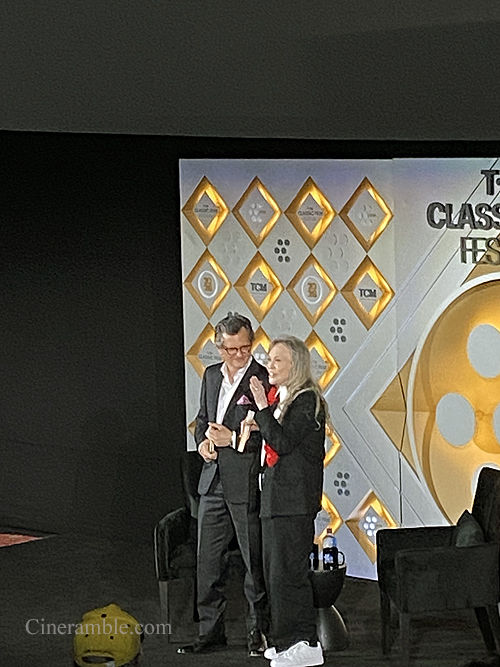
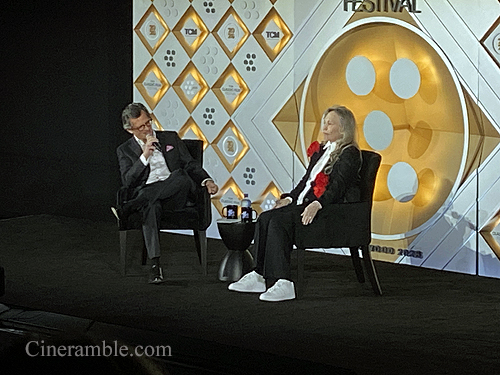
So, with one movie to go, I was determined to have the festival finish strong. While not a bad festival in any way, it has been lacking the highest of highs that defined last year’s festival, with this year just being on par compared to most past years. My hope was that my last film of the evening, Sidney Lumet’s masterpiece Network (1976), would be that strong finish I was looking for. Last year I got to see Heat (1995) with Al Pacino in attendance. Unfortunately, there are very few players left from Network, and we just lost another one this last winter with Robert Duvall’s passing. Thankfully one of the leads from the movie is still around and that’s actress Faye Dunaway, who won her Oscar for the movie. TCM managed to invite her to this year’s Festival as the special guest for the closing night screening, and she walked onto the stage with a standing ovation from the nearly 900 people in attendance in the Chinese Theater. Faye still has a lot of fond memories about working on the film, lavishing much praise on the masterpiece of a screenplay written by Paddy Chayefsky, as well as her experience working with William Holden and Peter Finch. Her and host Ben Mankiewicz also talked about how ahead of it’s time this movie was, and how it feels even more prescient today with the current media landscape that we live with. It was great seeing a living screen legend like Faye Dunaway alone, but I also have to say that Network more than stands the test of time; it feels even more modern now than at any other time. The fact that this film still has things to say about our current world that still feel true even after 50 years is miraculous. Honestly, after all the movies I watched over these four days, this is the best one by far, and I’m glad that this was how I finished my Festival experience. As I walked out of the Chinese Theater, with the TCM staff already dismantling all of their festival decor, that feeling of accomplishment was starting to wash over me, and I was ultimately happy with how things went, despite some minor setbacks.
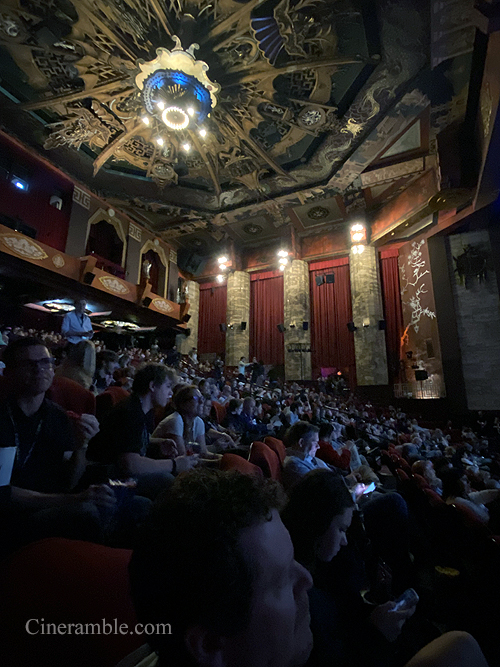
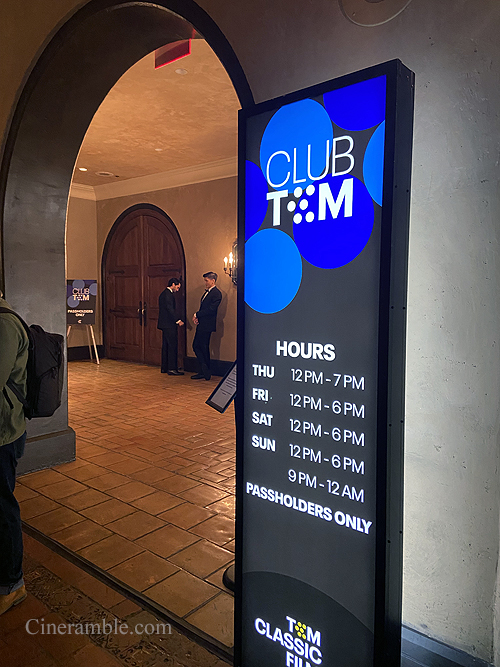
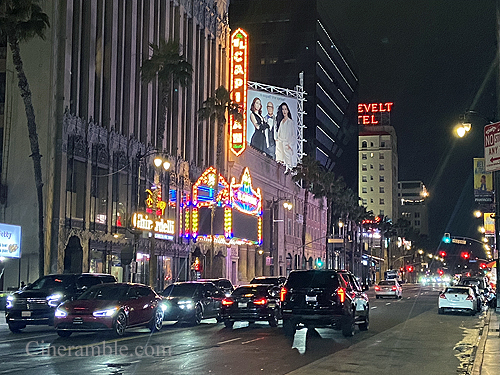
So, there you have my movie by movie experience at the 2026 TCM Classic Film Festival. It wasn’t the all time great that the 2025 Festival turned out to be, but I also can’t complain about what I did get to experience. TCM still put on a great show over these four days. The only downsides for me this year were those two times when my preferred choices sold out, and that’s on me because they were my choices for those time slots. I still had the options to see other things and that I did. I managed to match my record of 12 movies in one Festival, which I have been doing fairly regularly. I still got to see a midnight screening, and I got to finish my Festival experience in the Chinese Theater with a screen legend in attendance. It’s also just a thrill each year that I get to see these classic movies in these historically significant venues like the Chinese and Egyptian Theaters. Watching these movies in these venues just re-inforces what makes going to the movies such a magical experience. But, what is especially fun about these Film Festivals is that you get to mingle with likeminded classic movie fans while standing in line or in the seat next to you in the theater. A lot of the time, I was striking up conversations with complete strangers while waiting in line for the movies, and they were all fun and engaging talks. It was also fun comparing our Festival experiences, especially if the other person has seen the films that I myself had missed out on. There are a whole host of activities throughout the festival that are available to people who attend which I can’t detail, because they are exclusive to passholders, of which I was not. This includes the Club TCM events held in the Ballroom of the nearby Roosevelt Hotel, the poolside screenigs at the Hotel, book signings, and more. For me, I focus on the movies themselves, and I have yet to feel like I am missing out too much. Hopefully one day I can afford a Festival pass and get more of the experience, but even still this is a full weekend event that still left me little time to waste. With an uncertain future waiting for TCM’s parent company Warner Brothers, let’s hope we don’t see TCM becomea victim of media consolidation and that the festival endures for years to come. I will certainly keep attending year after year as long as they still hold the Festival in Hollywood. Thank you again TCM, and I can’t wait to see what you have in store for us in 2027. Have a good time at the movies.