Supergirl (2026) – Review

We are in an interesting time now with Super Hero movies.  The genre flat out dominated the box office throughout the 2010’s, built on the backs of Christopher Nolan’s Dark Knight trilogy and the rise of the Marvel Cinematic Universe.  It seemed for a while like movies based on comic books would be the golden goose that would never stop laying golden eggs, and it was true across the board.  Not only was Marvel riding high, but so was their cross town rival DC, which saw massive hits with even their second tier heroes like Wonder Woman (2017), Aquaman (2018) and Shazam (2019).  But after Covid and the continued rise of streaming, viewing habits began to shift, and these Super Hero movies were no longer gaining traction anymore at the box office.  That’s not to say that comic book movies are a dying genre; big hitters like Batman, Spider-Man, and Deadpool have still been able to deliver billion dollar grosses for their respective studios.  But it’s the lesser known characters that are underperforming at the box office, showing that there are limits to the coat tail riding that these franchises are capable of pulling off.  While Marvel can still find success with their big franchise characters like Spider-Man, Thor, and Deadpool, they have a far more difficult time now getting us excited for something like say the Thunderbolts (2025) for instance, even despite that movie getting generally positive reviews.  This is leading to a major re-evaluation of the genre as a whole.  Marvel seems ready for a re-boot of sorts once they get past the next batch of Avengers movies.  Meanwhile, DC has already started again from scratch with a whole new cinematic universe under the supervision of director James Gunn.  The Gunniverse as some have dubbed it is still in it’s infancy, but like their counterparts at Marvel, DC is looking far ahead to what this cinematic universe could actually be.  The hope from parent company Warner Brothers is that this re-boot will help ensure the health of the DC brand for the foreseeable future, but in a changing world where audience tastes are changing rapidly, this is not something that is guaranteed.

Thankfully, James Gunn and his DCU initiative couldn’t have asked for a better start.  The choice was made to have the most iconic super hero of them all, Superman, lead the charge with a new film directed by Gunn himself.  It was risky, given that Superman has had a hard time connecting with audiences over the years, with Superman Returns (2006) and Man of Steel (2013) being very polarizing films.  But, James Gunn’s Superman (2025) managed to break that curse with a box office hit that was praised across the board by critics and audiences alike.  Most of the praise was given to David Corenswet especially, with people proclaiming him to be the best Superman since the beloved Christopher Reeve.  Gunn, who of course is no stranger to making comic book movies with broad appeal like he did at Marvel with the Guardians of the Galaxy (2014), showed that he could do the same thing at DC, and this made a lot of people hopeful that they indeed could stay competitive with Marvel and continue to keep the super hero genre alive.  But that would also all depend on what comes after the big hits.  James Gunn of course can’t direct every movie in the DC pipeline, so he has to delineate to other filmmakers in order to keep the slate of films coming.  It’s an unusual situation where Gunn has to be what Kevin Feige is to Marvel, which the overseer of the entire enterprise, while at the same time being hands on with his own projects.  The beginning of the DCU is very much frontloaded with Gunn’s own projects, which includes the Superman movies as well as his hit Peacemaker series on HBO.  The test of the DCU will very much depend on the strength of the properties that Gunn has less involvement in.  This summer we are getting the first film in the DCU from a different director, and it involves a character who has had a more difficult time connecting with audiences over the years than Superman has.  The character of Kara Zor-El, aka Supergirl, has been a popular fixture in the comic books since her debut in 1959, but has yet to have that big breakout hit on the big screen.  The last time she had her own movie, it was the disastrous 1984 film starring Helen Slater and Faye Dunaway.  Can this 2026 reverse that trend, or is Supergirl just too unlucky at the box office.

Kara Zor-El (Milly Alcock) has lived a fairly lonely life as one of the last of her kind.  She was born on the last remaining city of the planet Krypton called Argo, which itself began to die off when Kryptonite poisoning took hold of the population.  Her father Zor-El (David Krumholtz) believed that the only way Kara would be safe is if she were sent to Earth to live with her cousin Kal-El as the only other survivor of Krypton.  With her loyal dog Krypto by her side, Kara escaped Argo on a pod sent to Earth.  Once there, she was greeted by Kal-El, now named Clark Kent (David Corenswet) who has become the hero known as Superman.  On Earth, Kara has learned to fit in like her cousin, as well as master the new powers she has thanks to Krytonian ability to absorb energy from yellow suns.  But, she still feels alone and isolated.  So, she leaves Earth behind and heads out into the cosmos once again.  She ends up visiting planets that orbit red stars because there her powers are lessened and she’s able to get drunk.  During her bar hopping across the galaxy, she comes across a planet where the local population is being harassed by a group called the Brigands; a nasty gang or rogues known for pillaging innocent people across multiple planets and stealing their women and girls to perpetuate their all male race.  The Brigands leader, Krem (Matthias Schoenaerts) attacked and killed an entire family belonging to a local weapons smith, except for the daughter named Ruthye (Eve Ridley).  Ruthye runs into Kara at one of the seedy bars on the planet, and is astonished by her incredible bravery and strength, even with Kara’s powers in a reduced state near the red star.  She tries to enlist Kara’s help to stop the Brigands and get her revenge on Krem, but Kara is not interested in getting involved.  However, things change when the Brigands raid Kara’s own ship and more distressingly shot her dog Krypto with a Kryptonite laced dart.  Kara has only three days to find the Brigands who carry the antidote and save Krypto from a painful death.  This puts her in a reluctant alliance with Ruthye as their goals are now aligned.  But, trouble still arises in their hunt as another party is also searching for the Brigands; a bounty hunter named Lobo (Jason Momoa).  Can Kara save her dog in time while also guiding the young Ruthye down the right path?

The hope was that Supergirl would carry the momentum of Gunn’s Superman, and make audiences care about all the different characters that make up the DC canon.  This particular film takes it’s inspiration from the 2021-22 comic book miniseries Supergirl: Woman of Tomorrow, which follows the same basic premise of Kara helping a young alien girl avenge her family, which is a story that takes heavy inspiration from the Western novel True Grit by Charles Portis.  It’s clear that the movie adaptation is also heavily inspired by James Gunn’s own Guardians of the Galaxy movies, with it’s interplanetary world-building and embrace of the weird and quirky.  But, despite Gunn being a producer of this film, it is not a James Gunn movie.  Instead, director Craig Gillespie (I, Tonya, Cruella, Lars and the Real Girl) takes the reins of this adaptation and that is probably where a lot of the problems with this film stand.  Gillespie is a filmmaker that excels at smaller, character driven films.  He seems to be lost a lot more when called upon to direct a big franchise project, and it really shows with Supergirl.  This movie is sadly a mess from beginning to end.  The plot is flimsy, the action set-pieces are non-sensical, and it’s horribly paced and edited as well.  It’s clear that they wanted to create a movie in the same vein as Gunn’s Guardians trilogy, but it has none of the fun of those films.  Truth be told, there are a lot worse super hero movies; this movie easily is better to sit through than Madame Web (2024).  But, as a follow-up to a movie that worked on almost every level like Superman, this film is very much a big step backward.  It’s honestly that feeling of disappointment while watching the film that hurts it the most, because the ingredients are there to make a great movie.  I feel like it all comes down to Craig Gillespie being a bad match for the material.  He could have delivered a better film if it played to his strengths as a filmmaker who is good at delving into his characters.  We do get a little bit of that with the flashbacks to Kara’s childhood in the city of Argo, which is one of the film’s few highlights.  Gillespie manages to successfully make us care about Kara as a character in those moments, but once we get back to the main plot, the character development gets buried under the weight of a lot of mindless action.

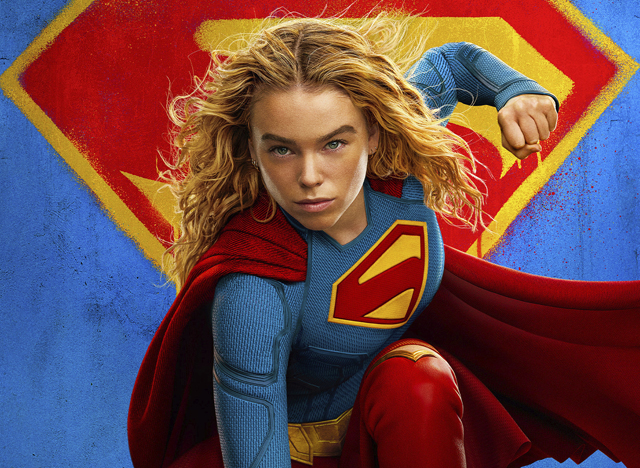
The movie’s saving grace is undoubtedly Kara herself.  While the movie gets so much wrong with her story, there is no denying that Milly Alcock nails the character in her performance.  She perfectly encapsulates Kara as a character, perfectly displaying the despair that is driving her self-destructive ways, while at the same time still showing her as a woman with agency.  Milly manages to make Kara funny, but never to the point where she becomes a parody of herself.  The biggest disappointment of this movie is that Milly’s performance is the only thing that works; it’s a performance in search of a better movie.  She keeps you interested all the way through, and you want to see her succeed.  And I do like the fact that they don’t put her into the Supergirl suit until the very end.  It allows for Kara to stand out as an individual first and foremost and not have her be defined as a symbol.  The best action movies are the ones that allow for their super heroes to be interesting characters both in and out of their costumes.  While the movie as a whole doesn’t work very well, it at least allows for Kara to stand out as a more well rounded character.  It’s all about her coming to accept herself as the hero everyone else sees her as.  The whole point of her being on that bender at the start of this story is to show that she’s a lost soul in need of regaining her faith in herself.  It’s one of the ingredients that is present in the story and could have become something special overall.  But it unfortunately is undermined by the movie’s inability get anything else right.  Milly Alcock still remains a great choice to play Kara, and hopefully she still remains a part of the DCU moving forward.  But this movie does her no favors as it just feels lifeless in every other aspect.  Her performance very much is like a small golden nugget buried under a giant mound of mud.  It’s trying to shine through as best as it can, but you really need to dig through a lot of ugly to get to it.

It doesn’t help that a lot of the other performances in the film are fairly subpar.  Eve Ridley seems like a nice kid who’s capable of giving a heartfelt performance.  But her character Ruthye in this film is just the worst.  She is a horribly one note character that never stops whining throughout the film about how she was wronged and that Kara is not living up to her potential.  I chalk it up more to how the character is written than how Eve is performing her.  Ruthye is an obnoxious character who constantly throws herself into harms way, which just ends up leading Kara to have to save her again and again constantly.  She exists in this movie purely to move the plot forward and that’s it.  And unfortunately, she is in nearly the entire film, right by Kara’s side.  That’s probably why the Kara’s backstory scenes were the best parts of the movie, because it allowed us to actually focus on the only character we care about.  But it’s not just Ruthye that drags the movie down.  The film also unfortunately suffers from having a very weak villain as well.  Matthias Schoenaerts’ Krem is as bland as they come; never once feeling as intimidating as the movie tries to make him be.  He just is a brute that grunts and chuckles his way through the chaos he creates.  It’s especially disappointing given just deep the rogues gallery of DC comics is that they couldn’t find a more interesting adversary for Kara to face.  Krem has no connection to Kara or her story whatsoever; he’s just a nuisance that Kara could easily either destroy or just ignore completely.  Krem obviously means more to Ruthye’s story, and the fact that they are both so one note as characters just illustrates the weakness of this plot overall.  The only performance that comes anywhere close to standing out as well as Milly’s performance as Kara is Jason Momoa as Lobo.  Lobo, the gritty monochromatic motorbike riding alien mercenary has been a fan favorite in the comic books for years, and it is nice to see him finally make his big screen debut.  Momoa of course famously played the character of Aquaman for DC in the past, but it’s pretty clear that Lobo was a better fit for him as a performer because he more closely fit’s Momoa’s personality type, and James Gunn clearly agreed.  Momoa is an ideal match for the character and he does make the most of his presence in this movie.  It’s just unfortunate that Lobo doesn’t get much screentime.  He comes and goes without much impact to the story, which again becomes a missed opportunity.  It’s a shame that he had to make his debut this way.  They are clearly setting Momoa’s Lobo up for bigger things in the future, including possibly a solo film.  But if you want audiences to embrace the character, he should be given a better role to play from the start.

Another thing that works against the movie is the way it looks.  This is a very ugly looking movie, with the majority of the film cast in garish shades of brown and green.  It’s trying to go for that Guardians like aesthetic, where the outskirts of space has a vey lived in and grimy feel to it.  But Guardians of the Galaxy was also a vibrant movie with lots of color, which helped to balance out the grime and rust of the different worlds it showcased.  Every world in Supergirl just feels the same, and they all look dirty and unappealing.  And none of the planets that the characters visit feel distinct.  The only identifying aspects of the locations is that one planet is desert like while another has the feel of a prairie.  None of the different locations feel unique or like anything you’ve ever seen before.  Another aspect working against the movie is that the action scenes are poorly constructed.  The fight choreography feels uninspired and it’s shot in a way where you have a hard time following what’s going on.  The movie also is terribly edited.  A lot of the action scenes just kind of peter out without a good button to bring them to an end.  It just all feels like the movie’s storyline was put together through bullet points with no actual thought put into how each scene would flow together.  I hate keep bringing up to how this compares to James Gunn’s own films, but Gunn is an expert in crafting action scenes that feel lively, inventive and unlike anything we’ve seen before.  Take for instance the prison escape scene with Margot Robbie’s Harley Quinn in The Suicide Squad (2021), which was an extremely inventive and well choreographed scene.  The Mr. Terrific beachfront fight scene from Superman was also a great example of James Gunn putting some extra creativity into his action scenes.  I think that the reason we don’t see any of that here is because Craig Gillespie is not that kind of director, and he is out of his league when called upon to make a movie that is full of nothing but action set pieces.  That’s why the film feels like it drags, despite being only a little over 100 minutes.  I’ve seen comic book movies that run between 2 1/2 to 3 hours that fly by, so for this movie to feel so long despite being relatively short is a clear sign that something is fundamentally wrong with the film as a whole.

What worries me the most is that the failure of this movie is just going to send the wrong message to Hollywood.  There is a contigent of the internet that has been very much rooting for this movie to fail, and their reason for wanting to see it fail is because of their own bigotted misogyny.  They want to send the message to Hollywood that movies that center on female super heroes are destined to fail and that they should never be made in the first place, thereby ensuring that comic book movies remain a male centered genre.  This is a horrible thing to believe, and my hope is that Hollywood ignores them.  We shouldn’t be ignoring stories centered around female heroes; we just need to make them better.  Supergirl deserves a much better movie than what she got here.  She is a wonderful character that can easily hold her own.  And I certainly wouldn’t trust the misogynistic haters online to determine what direction to take with the character either, because you know all they would do is just sexualize her and turn her into a one note character that fits within their idea of what a woman should be.  The movie does deserve credit for at least trying to make Kara more than just a symbol of womanhood.  She is a character that goes through struggles just like everyone else.  The movie, for all it’s flaws, still got it’s main character right, and that’s not nothing.  Milly Alcock deserves a lot of credit for making Kara a character worth rooting for and I do hope she manages to shine a bit brighter in James Gunn’s next Superman film, in which she’s going to play a substantial role in.  But, what this movie shows is that there needs to be a better vision for everything else in the DCU.  We can always count on James Gunn to deliver, but there needs to be better talent involved in the making of all the other upcoming films.  The other directors in the DCU should not feel like they need to ape Gunn’s style, and instead find their own voice in telling these stories.  Craig Gillespie was just not the right guy for this kind of movie.  It’s been a tough road for Supergirl on the big screen, from the 1984 original to the unfortunately wasted potential of her appearing in 2023’s The Flash.  This film is not the absolute worst it could have been, as they did get her right as a character, but it too also feels like a wasted opportunity that unfortunately will have a chilling effect on female based comic book movies and only empower the worst kinds of voices on the internet.  Supergirl deserves better, and I hope we do get to see her given the cinematic treatment she deserves in the future.

Rating: 5.5/10
Toy Story 5 – Review

It’s pretty remarkable looking at the resiliency of the Toy Story franchise.  The original 1995 film began the digital revolution of filmmaking, upending years of tradition in animation and forcing a sea change in the kinds of animated movies that would be made for decades to come.  Within a decade of it’s premiere, all hand drawn movies would disappear from the multiplexes, including the ones from industry leader Disney, and all animated movies would be almost entirely computer generated.  Pixar Animation, the Bay Area studio behind the creation of Toy Story, quickly became the new standard bearer of quality animation, and knowing just how valuable their name in the industry was, Disney decided to acquire them rather than see them grow into a competitor.  Even under the wings of Disney, Pixar still managed to flourish over the next thirty years.  With each new film they pushed their artform further, refining computer animation to the point where the lines between realism and hyper-realism become very blurred.  And even with all the advancements they’ve made over the years, Pixar still manages to find time to revisit their roots with Toy Story.  Rather than stay a relic of the past when computer animation was in it’s early rough stage, Toy Story has managed to remain relevant and popular with audiences.  It’s a tribute to the timelessness of the original that it makes you forget about the rougher edges of that early 90’s computer animation.  Apart from the innovative animation, Pixar has always prided themselves in putting characters and story at the forefront of what they do.  They don’t move forward with a movie unless they believe that it’s a story worth telling, and they will often put years into refining those stories until they meet the high standards they set for themselves.  While Pixar has brought us dozens of brilliant and wonderfully original stories, it is surprising how many different new ways they are able to expand the story of their original groundbreaking movie.  Even after 30 years, we still haven’t seen the last of Toy Story.

It didn’t take long for the studio to devise a sequel.  It fact, Toy Story 2 (1999), was only their third feature ever after the original and A Bug’s Life (1998).  And what was more surprising was the fact that they managed to surpass the original in every way.  While the first Toy Story was iconic in a lot of ways, delved even deeper into the characters of Woody and Buzz Lightyearand even raised the stakes, showing us what can happen when toys are no longer played with.  For a long time, Toy Story 2 was considered the Empire Strikes Back of animation, because of how well it built on something that was already iconic, and made it even better.  But, after a 10 year run of classic original films, the team at Pixar decided it was worth revisiting Toy Story again.  Toy Story 3 (2010) somehow managed to build upon it’s already beloved predecessors and become an even bigger hit.  It became only the third animated film to earn a Best Picture nomination at the Oscars and for many, it had what is considered the best ending of any Pixar film, with the toys saying their final goodbyes to the boy who once played with them before he heads off to college and adulthood.  For a lot of people, they thought that this was the perfect way to bring the story of Toy Story to an end, but that’s not how the filmmakers at Pixar felt.  In particular, Pixar legend Andrew Stanton, who was one of the writer on the first two Toy Story’s as well as the director of classics like Finding Nemo (2003) and Wall-E (2008), felt there was more to story to tell, especially for the character of Woody.  He developed a new epilogue storyline for Woody which involves the old toy discovering a new direction for his life outside of being a child’s plaything, which also included him reconnecting with a lost love as well.  Toy Story 4 (2019) was risky, picking the series up after another long gap in time and doing so after many felt the story had already completed on a perfect final note.  But, again, Toy Story 4 defied expectations and won over audiences, becoming the highest grossing film in the series yet.  Despite the odds, Toy Story has managed to deliver each time it comes back, showing resiliency that no other animated franchise has been able to match.  But can Pixar manage to do it again with the release of yet another risky new chapter to this story with Toy Story 5?

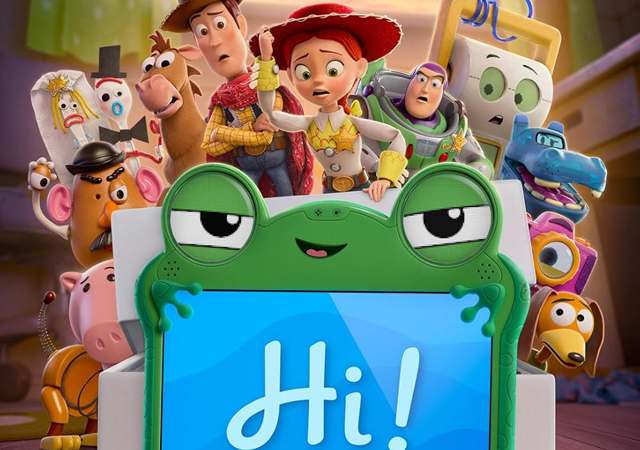
Toy Story 5 takes place a short couple of years after the events of 4.  The toys’ playful and creative little girl owner named Bonnie (Scarlett Spears) is now 8, and still hasn’t grown out of playtime.  But, they also notice that Bonnie is also very shy and is struggling with making new friends.  Jessie (Joan Cusack) becomes concerned and wonders why none of the other children in their neighborhood is playing with toys the same way that Bonnie is.  She learns that all the children are not playing with toys, but rather are playing games on screen based tech gadgets.  Jessie immediately becomes concerned about the encroachment of technology into the lives of children and that Bonnie might succumb to it too, but the other toys including Buzz Lightyear (Tim Allen) don’t share that same concern.  However, Jessie’s fears are realized when Bonnie’s parents buy her a tech toy named Lilypad (Greta Lee).  Lilypad wastes no time taking up all of Bonnie’s time, as she spends all day and night playing games on the toy tablet, while all the other toys are neglected.  Jessie, who sees Lilypad as an existential threat, tries to prove that she is better at helping Bonnie connect with new friends, but a failed attempt to sneak her way into joining Bonnie on a sleep over causes Jessie to be lost and mistakenly picked up by strangers.  Due to the address that’s been inked onto her boots for decades, Jessie ends up at the same rural home that was once owned by her original owner Emily; the same girl who abandoned her years ago.  Jessie tries to find a way to get back to her new home, but she’s going to need the help of strangers in the form of some long neglected toys owned the new family that lives at the ranch house.  One of them is an old school tech toy named Smarty Pants (Conan O’Brien), who challenges Jessie on her anti-tech bias.  Meanwhile, Buzz Lightyear enlists the help his old buddy Woody (Tom Hanks) to help in finding out where Jessie has disappeared to, and that means finding ways to force the information out of Lilypad, who herself is also finding it difficult trying to get Bonnie to connect with other children.  All the while, an army of Buzz Lightyear toys are making their way to civilization after their shipping crate washed up on a deserted island, with their only drive being their need to rendezvous with Star Command.  With the toys scattered to the far winds again, will they all manage to find their way home, and more importantly, will they manage to get Bonnie to find happiness in friendship rather than wasting her time glued to a screen alone in her room.

Andrew Stanton, who has had a hand in scripting all 5 films in this series, takes the helm as director this time around in the series, which is a great benefit for this long running franchise.  Under Stanton’s direction, he helps to keep that continuity from all the way back to the beginning in this franchise, which is very much needed in order to have this movie come anywhere near the high bar that’s been set.  You would think that with four films already that Toy Story would be pretty much spent as a franchise, and for some, they believed that 4 was too many, given 3’s perfect ending.  But, because this is Pixar, they wouldn’t have gone ahead with another film in their flagship franchise unless they had the right angle to explore, and thankfully they found it.  The tech vs. toys angle is a brilliant way to not only bring new life into this long running franchise, but also make it timely as well.  After 30 years, childrens’ attention spans have been altered by the introduction of gadgets like tablets and smart phones into their life, which may keep them occupied for a while, but it also disconnects them from the world as well.  In the writing of this story, Stanton became concerned about the amount of time that young children are spending playing on these smart devices, and that it’s in a way robbing them of a childhood.  Moreover, he’s also noticing that it’s causing a lot of children to ignore the other toys they have, which proved to be a great perspective to explore in this franchise all about toys and their want to be loved and played with by children.  It is pretty remarkable that even after 30 years, the Toy Story franchise has yet to drop the ball and thankfully Toy Story 5 manages to live up to that high standard as well thanks to it’s smart and insightful take on how toys would react to the introduction of tech into their lives.  Now, Stanton could have easily fallen into the trap of making an easy “toys good, tech bad” diatribe as part of the story, but thankfully Toy Story 5 is more nuanced than that.  The presence of tech is not the problem.  Obviously, the Pixar team would have come across as pretty hypocritical if they made that case, as their whole studio production line is run on computers.  The case made in the movie is that the belief that tech is a solve all for all of our problems is the thing that is bad in our lives, and it’s even worse when children are involved.

Where the brilliance lies in this movie’s story is that they tells this story through the perspective of Jessie.  Here, she is elevated to main character status, as it’s pretty clear that Buzz and Woody have already had their arcs fulfilled in past films.  For Jessie, there is still some unprocessed trauma in her story, and the fight against tech gives her a perfect reason to finally confront some of that.  No other character in the Toy Story franchise has had to deal with the tragedy of abandonment like her, which was also a main crux of her character development in Toy Story 2.  So, to have her confront the existential threat of tech taking over a children’s playtime stirs up all of these old bad memories, and it thrusts Jessie’s story to the forefront in a way that we haven’t seen yet.  What this also does is to help differentiate the movie from all the other Toy Story’s  as the focus shifts to a different protagonist.  And even though Jessie does get the lion’s share of development in this film, the movie doesn’t ignore the rest of the toys we’ve grown to love as well.  Some even get more of a spotlight than we’ve ever seen before.  The toy horse Bulls Eye also gets a lot more to do in this film than he has in the last three, and it’s great to see him actually be an active force in the story rather than just a funny animal sidekick.  Buzz and Woody may take a back seat this time, but the movie still finds some fun ways to keep them engaged in the plot, including rekindling their rivalry in some ways again.  If the movie has a bit of a flaw, it’s that the cast of characters seems a bit too overstuffed as most of them make a return here.  Quite a few of the characters literally contribute nothing to the story and are just there to be seen so that longtime fans know they are still okay.  But probably the best character development of all belongs to the girl Bonnie, as we see her struggle with growing up and not being able to fit in.  Her growth as a character is at the heart of the story, and it becomes of the more emotional parts of the movie.  At the same time, the movie still manages to balance the more emotional scenes with a lot of well earned humor as well.  While it’s not the funniest movie in the series (I happen to think that Toy Story 4 had the best ratio of jokes that landed of all the films in the franchise), this movie will still leave you smiling with some really hilarious moments.

Of course this is a long standing franchise that has seen many great characters come and go over the years.  It is particularly heartening to see longtime series fixtures like Tom Hanks and Tim Allen return every time to continue voicing their iconic characters.  And it’s not just them, as other mainstays have also come back, such as Annie Potts as Bo Peep, Wallace Shawn as Rex and John Ratzenberger as Hamm have also returned, albeit in far more minor roles.  They are all definitely welcomed back, but there’s no denying that the star of this film is Joan Cusack as Jessie.  Here she gets the mainstage and she makes the most of it.  She really comes into her own in this film, putting Jessie through an emotional roller coaster and brilliantly grounding her in some real emotional truth.  This movie, in many ways, feel most like a companion piece to Toy Story 2 in the way that it delves deeper into the experience that helped to shape Jessie into who she is.  She can definitely still play the boisterousness of Jessie in her most playful mode very well, but it’s the scenes where she has to get Jessie to some deeper reflection that Joan’s vocal performance really shines.  And all the while, it still feels in line with all the other times she’s played this character over the last 27 years.  Even though the movie seems a little overstuffed with characters that the series has collected over the years, it still manages to allow the new characters to leave a strong impression.  The best of all of them is Conan O’Brien as the potty training toy Smarty Pants.  He is a great addition to the cast, and Conan perfectly brings his already hilarious persona into the characterization of his character.  A lot of credit should also go to the vocal performance of Greta Lee as Lilypad.  It could have been too easy for Lee to play Lilypad as sterotypical villain for this story, but she managed to find several layers to the character that allows Lilypad to be a bit more complex than that.  An antagonist for sure, but one who’s honestly motivated by the same goals as the heroes, which is to help Bonnie fit in with the other kids.  Greta does a great job of helping to find that balance, making Lilypad adversarial but by no means malicious in her motivations.  Overall, even though the cast seems a bit overwhelming, the film still finds enough time to let most of them shine, and that’s especially impressive given that some of these actors have been sticking aorund for over 30 year now.

I still maintain that Toy Story 4 is the most visually stunning of the Toy Story films, but 5 is no slouch either.  Pixar would undercut their marquee franchise, so this sequel still meets the high standard that’s been set by the studio.  It is interesting to see how computer animation has progressed over the years just by looking at the differences in detail between movies 1 and 5.  Much of the original Toy Story is crude and flat in it’s background detail, given how their rendering resources were so limited at the time.  Each subsequent movie since then has gotten better at not just animating the characters, but also making their worlds feel fleshed out.  5 continues that tradition of raising the bar, and it has some incredible visuals throughout.  The subplot involving the army of Buzz Lightyears venturing through the wilderness offers up some of the best visuals in the movie, including a scene with a hilarious reference to Bambi (1942) of all things.  The movie may not be as big of a visual breakthrough as some of Pixar’s other movies, like Inside Out (2015) or Coco (2017), but I don’t think that’s the intention either.  It’s purpose is to feel in line with all the Toy Story’s that have come before it, and those movies have always been more story driven than anything else.  But one thing that does still impress is the subtlety that they are able to bring into the character animation.  While the original Toy Story team managed to do the best they could with character expressions given the limited software they had back then, today Pixar is able to run the gamut with no limits to the kinds of expressions they can give their characters.  This is especially true with Jessie, who has to emote quite a bit in this film.  And the animators did a great job capturing just the slightest little subtleties in the characters in the moments when they are meant to be introspective.  The film also makes great use of the locations in the film.  This is probably the Toy Story film with the most varied locations, and they all feel lived in with a lot of character all their own.  Where I feel 4 still exceeds the rest is in the stunning use of color throughout the movie, and 5 keeps things a bit less saturatred and more grounded.  It’s nevertheless a visually stunning film to look at and definitely on par with Pixar at their best.

I’ll have to reflect on the movie a bit longer to properly know where I would rank it in relation with the other Toy Story movies.  The one thing that I know is that regardless of where it ranks, it still feels like a worthy successor to all the previous movies in the series.  I still think Toy Story 2 is the best one, but this movie makes a strong case of knocking out 3 and 4 for the third and/or second place in the series.  What I love best about it is that it found a way to be different from the rest.  Making this a Jessie centered story was the right call, because Buzz and Woody really had no more angles to explore in their storylines, wheras there was still more to unravel with her.  I love the fact that it ties back into that story of abandonment that shaped her as a character before, and it allows her to finally process that lingering trauma that she still had in the back of her mind.  I also love the fact that Andrew Stanton and his team took a more nuanced approch towards tackling the issue of technology replacing toys.  Tech is only as evil as the way it’s been used; or misused to be sepcific.  The movie shows that tech can be fun and sometimes useful, but it’s not a substitute for actually human interaction.  What’s troubling today is that too many kids are getting addicted to these screen based tech toys at too early a stage and it’s leading to social isolation, which just makes things worse for children overall.  The movie’s main thesis is that moderation should be a guiding principle in life, especially when it comes to using this kind of technology.  Too much screen time is bad for anyone, let alone kids, and Toy Story 5 wants us to be reminded of the fact that a fancy technology like tablets and smart phones should never be substitutes to living life in the real world.  I feel like most audiences will be happy to see all their favorite characters returning the big screen again.  Toy Story 5 may feel superfluous to some, but I think it shows that there still are worthwhile things worth exploring in this franchise, even after 5 films.  It will be interesting to see if Pixar decides to go further beyond with a Toy Story 6.  If it keeps going, it wouldn’t surprise me, but if this is the final chapter of the Toy Story series, I also think it does an adequate job of capping the series off, even though 3 has the best ending to be sure.  It’s very reassuring that we still have a friend in these lovable toys, and that they are still capable of going to infinity and beyond.

Rating: 8.5/10

Evolution of Character – Dorian Gray

As queer culture has gained more mainstream acceptance over the years, it has helped to elevate icons within the community who were instrumental in helping to shape it and keep queer culture alive in the face of societal repression.  One of those icons that gained a reputation over time was famed playwright and author Oscar Wilde.  Wilde was not say instrumental in the fight for queer rights over the last century.  He in fact spent much of his life hiding the fact that he was indeed a homosexual, and even went to court to protect his public image, which in turn backfired and led to his imprisonment under Victorian England’s then stringent “decency” laws.  But, even despite his closeted existence, he still represented an ideal of what the queer community believed was core to their identity in the early years in the movement.  He was unapologetic about his “dandy” public persona, and his intelligence and wit helped to set him apart in Victorian society.  While he maintained his closeted lifestyle, he nevertheless pushed the limits of what he could get away with.  Even at the height of his popularity, he was still controversial, as he challenged the morality of the Victorian era in much of his writing.  His satirical plays skewered the social hypocrisies of English aristocracy and even challenged the social norms when it came to class and gender.  Controversial in their time, people today celebrate Wilde’s critical eye towards moral hypocrisies, particularly among the queer community who now hold Wilde up as one of their pioneers.  And of all the works that Wilde wrote over his brief but influential career, the one that perhaps best represents his complex look at the social nuances of Victorian society the most is the only novel he ever wrote; The Picture of Dorian Gray.

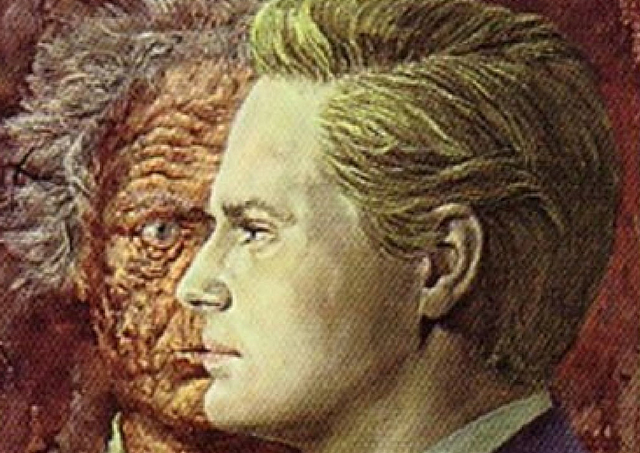
Wilde wrote Dorian Gray on a commission for the American literary magazine Lipincott’s Monthly in 1890.   The idea for his novella stemmed from a portrait sitting he had while on tour in Ottawa, Canada with artist Frances Richards.  Upon seeing his finished portrait, he pondered on the idea that as he will grow older this portrait of him will remain forever young.  This sparked the idea in his head of an opposite effect, where the portrait would fade and age, but the subject would remain young and beautiful.  What interested him about this concept was the notion of what this would do to the person who had this blessing of eternal youth.  In his story, he saw this as a potential road to ruin for his character, as vanity leads to destructive ends.  Wilde drew upon many classical works as inspiration for his stories, and in this case, he was inspired by two works in particular, the myth of Narcissus and the story of Faust.  The Narcissus myth details how someone destroyed their own life after falling in love with their own image.  And in Faust, a man makes a deal with the Devil to achieve their own dream, but in not understanding the pact they made they also doomed their own soul.  In combining these two concepts, Oscar Wilde created the character of Dorian Gray.  Dorian, whose name comes from ancient Greece in reference to idealized beauty, ponders that same idea that Oscar Wilde had when he saw his own portrait, and makes the wish to have his portrait age while he remains eternally young.  Magically, the wish comes true, and Dorian Gray lives out all of his hedonistic desires without care, knowing that his youthful beauty will never fade.  But the scars of all his sins still manifest on that portrait, which over time has grown more grotesque.  Dorian hides it away as it is a reminder of his own moral decay, but no matter how much Dorian looks away from it, the portrait becomes a specter that he can’t escape.  He finally destroys the portrait as his life of criminality begins to close in on him, but in doing so, he releases the bind that the portrait had on his soul.  He is found dead soon after, with his body morphed into a grotesque monstrosity, while his portrait is once again beautiful.  In Dorian, Oscar Wilde found an ideal subject to portray the fallacy of idealized beauty.  In putting one’s self interest above all else, Dorian Gray is the epitome of vanity’s corrupting influence, which was a key theme of Wilde’s critique of Victorian decadence.  Often portrayed as a villain, Dorian Gray has become an iconic character in literature, as well as on the stage and screen.  Here we have a look at some of his most noteworthy, as well as notorious, screen appearances over the years.

HARRIS GORDON from THE PICTURE OF DORIAN GRAY (1915)

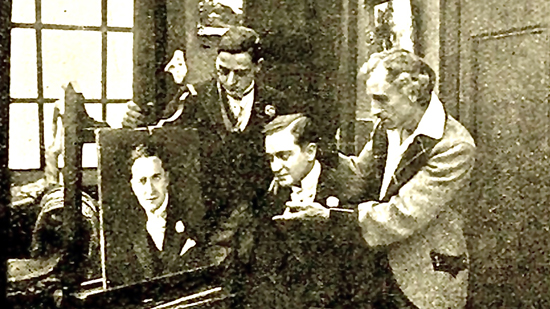
Not long after Oscar Wilde’s death in 1900, his novel would receive numerous adaptations for the stage, helping to ensure the novel’s continued presence in the new century.  With the run that this story had on the stage, it wasn’t long before this new artform called cinema would also see the potential in bringing Wilde’s work to life.  A lot of the adaptations of The Picture of Dorian Gray from the early days of cinema are lost to time, but this 1915 American made two-reel adaptation has managed to survive for over 100 years.  It’s a very condensed and straight forward adaptation of the novel, but it still contains the central themes of Wilde’s story.  We still see the corruption of Dorian Gray unfold as he allows for his vanity to overtake his moral senses, and it all gets imprinted on the portrait as it ages and withers.  In many ways, the medium of film allows for this story to flourish, because through the process of editing, we are able to see that transformation on the portrait happen magically before our eyes, which further emphasizes the terrifying hold it has on Dorian Gray himself.  Young actor Harris Gordon does a fine job of portraying Dorian as he further descends into madness through the course of the story.  The one thing that certainly differs in his portrayal from the way Wilde described the character in the novel is that Harris is a bit more traditionally handsome rather than the idealized beauty that Wilde portrays Dorian as; described as being an made “out of ivory and rose leaves.”  Harris’ more masculine beauty is what post-Victorian society would have valued more, and that is more a product of when this was movie was made, rather than a revision of Wilde’s work.  The story essentially remains the way Wilde wrote it, and while this movie does have a somewhat different Dorian Gray in mind than what Oscar Wilde had imagined, the actor still manages to convey the essential aspects of the character and helps to sell it with his impassioned performance.

HURD HATFIELD from THE PICTURE OF DORIAN GRAY (1945)

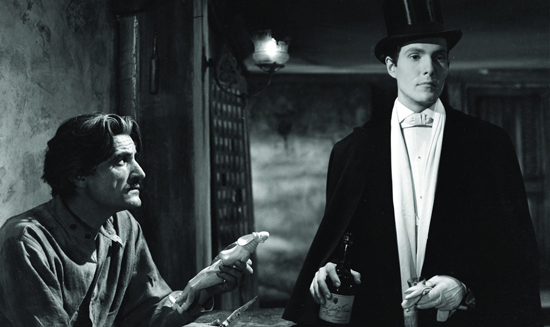
This is undoubtedly the most famous cinematic adaptation of Wilde’s novel.  It’s also one where the more controversial subtext of Wilde’s story is minimized the most.  This lavish MGM produced production also fell under the limitations of the Hays Code, which meant that the homosexual subtext between Dorian Gray and his male admirers had to be excised from the plot.  Instead, this production plays up the more gothic horror aspects of the story.  The movie is famous for having used color cinematography for the brief inserts of showing the portrait itself.  In a movie that is primarily in black and white, those color shots have all the more impact, especially when we see the portrait reach it’s most grotesque point.  One thing that also helps to make this a darker take on the story is the very cold and sinister portrayal of the character of Dorian Gray by actor Hurd Hatfield.  American born Hatfield managed to perfectly embody the persona of a Victorian aristocratic dandy very well, and it’s in his chilling understated performance that he really helps to sell the corruption of Dorian Gray’s soul as he becomes more detached from his humanity.  He’s also closer to how Wilde described him in the book, with well defined facial features and smooth unmarked skin.  Over time, Hatfiled actually resented the fact that he played this character too well, because he thought it typecast him as this Victorian dandy type, and possibly hurt his chances as a leading man with range over the course of his career.  Still, he did manage to make a lifelong friend with his co-star Angela Lansbury, with The Picture of Dorian Gray being only her second on screen role in her still blossoming career, as well as her first Oscar nomination.  Despite how Hurd Hatfield felt about the part, he still put in an iconic performance, and made Dorian Gray one of the most fascinating and chilling screen villains in classic Hollywood.  While the movie was still compromised because of the censorship of the day, it still felt to be in spirit with Oscar Wilde’s original story, especially when it came to the portrayal of Dorian Gray himself.

HELMUT BERGER from DORIAN GRAY (1970)

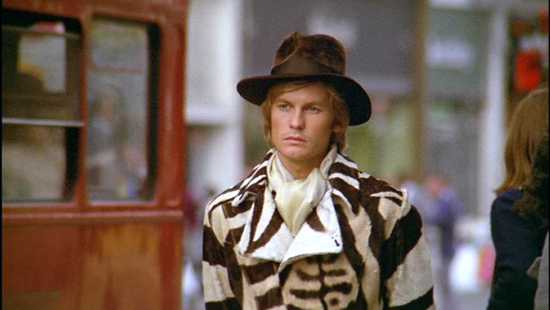
When the Hays Code broke down in the 1960’s, filmmakers were more liberated to explore more taboo themes on film.  So in this more libertine time period, it was seen as worthwhile to look at Wilde’s Dorian Gray once again, and this time allow it to fully tackle subjects on the big screen like it hadn’t before.  In this joint Italian and English production, the story of Dorian Gray is brought forward into the modern day, with Dorian as a male model in the London fashion scene.  The movie does stick to much of the same beats of the original story, just minus the subtlety.  This is very much a product of the era it was made, with a strong psychedelic aura and far more exploitative regard towards sex and violence on screen.  Oscar Wilde himself would probably admire the film’s lack of restraint, but might have also balked at it’s crudeness.  This movie certainly didn’t have the gloss of MGM’s adaptation, but it also doesn’t seem to care.  At it’s center is Austrian actor Helmut Berger in the title role, who does spend most of the movie in various forms of undress.  He definitely fits within the sexual liberation standards of beauty, being less aesthetically beautiful and more just exerting a sexual aura about himself.  Berger does portray the vanity of the character quite well, but his performance also lacks the chilling restraint of Hurd Hatfield’s portrayal.  The degradation of this version of Dorian Gray’s soul doesn’t come across as that shocking in the long run, because he’s already starting off in the story as a vain, ego driven person.  The corrupting influence of the portrait doesn’t have that same kind of weight as a result.  It’s where the more libertine approach of the story kind of works against how the story should unfold, because given the social taboos that Oscar Wilde was responding to during the Victorian era, it made his story all the more powerful in the way it broke all those down.  It doesn’t quite work in contrast when you set the story in an era where those cultural taboos are already front and center.  Still, by bringing the story up to the present day, it still showed that a character like Dorian Gray still had a strong cultural presence, and represented a major shift in the moral standards that had changed over the years.

BELINDA BAUER from THE SINS OF DORIAN GRAY (1983)

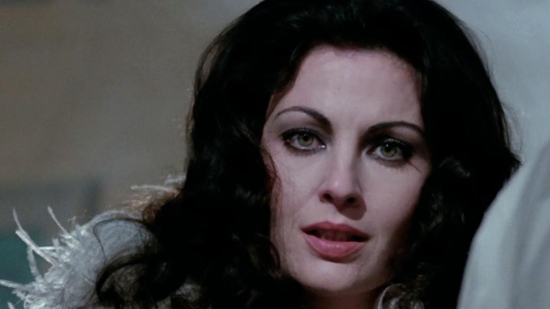
Taking a wild departure from this Wilde story, this made for TV adaptation not only changes the time period and the setting, but also changes Dorian Gray’s gender as well.  Here, Dorian Gray is a female model looking for work in modern day New York City.  Instead of preserving her youth through a painting, her soul is captured in an audition tape, which allows her to remain young while her image on the tape grows older.  Even despite all these changes, the movie does stick closely to Wilde’s story, and shows that it has more universal meaning beyond just the gender binary.  The movie shows the corrupting influence of having to maintain youthful beauty in a world that values nothing else.  Though Oscar Wilde never imagined it in the first place, his story seemed to predict just how corrupting the fashion and beauty industries would become in the following century, with fading beauty driving those who live and work in those worlds to desperate ends.  This is depicted well in the performance by Belinda Bauer as the female version of Dorian Gray.  As she remains young and beautiful while everyone around her grows older and grayer, she becomes more detached from her place in the world, and that leads her down darker paths.  Though the movie is not quite as stylish nor as polished as other adaptations before, given the limited TV budget this had, it still manages to convey the themes of Wilde’s story, and that’s mainly thanks to Bauer’s performance throughout.  The changing of genders also sheds some interesting perspective on the queer subtext of Wilde’s original story, as so much of Dorian Gray’s spiral into darkness stems from how he/she responds to being the object of affection for so many other men.  This story reminds us that pressure to maintain beauty standards comes with a price over time, and it’s just as destructive for women as it can be for men, if that person is so consumed with their own sense of self beautification.  While this movie is small in scale compared to other adaptations, it still manages to remain true to that theme.

STUART TOWNSEND from THE LEAGUE OF EXTRAORDINARY GENTLEMEN (2003)

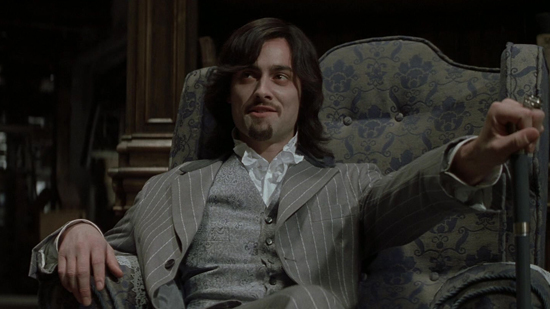
This disaster of an adaptation of Alan Moore’s classic series of comic books is notorious for a number of reasons.  It sadly became a lackluster final screen performance from the legendary Sean Connery and it was also a colossal box office bomb that prevented there from ever being another adaptation of these comics ever again.  The premise basically can be described as Marvel’s Avengers, but with classic literary characters.  The line-up of the main characters is different in the movie than in the comics, and one of those character changes was in the presence of Dorian Gray in this movie.  Dorian Gray only has a minor cameo in the comics, but here he’s elevated to supervillain.  Marking one of the least surprising heel turns in action movie history, Dorian betrays the other heroes and reveals himself to have been on the bad guy side the entire time.  The film also changes how the portrait works from Wilde’s story.  Not only does it prevent him from aging, but it also makes him invincible as well, incapable of dying no matter how many times you shoot or stab him.  But his powers only last as long as he doesn’t look at his own portrait, which for some reason he still keeps close by.  The movie is a mess and the portrayal of Dorian Gray completely misses the point of Oscar Wilde’s original.  In the movie, he is portrayed by Irish actor Stuart Townsend, who joined this film after he left the role of Aragorn in Peter Jackson’s The Lord of the Rings trilogy.  Imagine the alternate timeline where that bit of casting was different.  Suffice to say, this movie didn’t do his career any favors.  He certainly is a handsome actor, but perhaps in a way that makes him a bit too roguish for the character of Dorian Gray.  The point of the character was that he was the epitome of unspoiled, youthful beauty and that this was a shell for an empty soul that continued to corrupt over time while on the outside he remained the same.  Townsend’s Dorian already has the outward appearance of a scoundrel, which of course clues you in immediately to how his part in the story will play out.  Suffice to say, this is a prime example of how not to bring this character to life on the big screen.

BEN BARNES from DORIAN GRAY (2009)

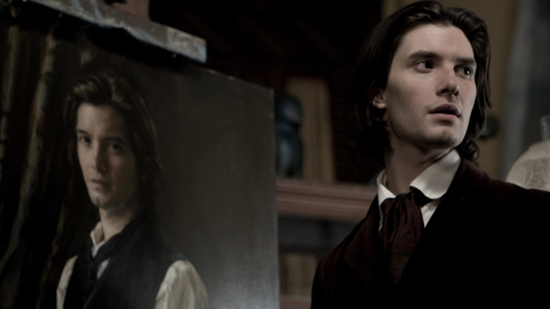
This more traditional adaptation brings the story back to it’s Victorian roots, while at the same time bringing a modern sensibility to the story.  In this version, the character is played by British actor Ben Barnes, who does fit closely with the version described by Oscar Wilde.  In an interesting departure from Wilde’s version, this movie takes a more nuanced look at the character of Dorian, making him more than just a villain in the story, but rather a tragic by product of a corrupting society.  We see Dorian before the influence of high society as this impressionable youth.  As he is drawn into the decadence of Victorian aristocracy, we see him change, and it more has to do with holding onto the things he’s gained rather than maintaining the youth that he gave up his soul for.  The movie also delves more into the queer subtext of the story, showing his closeness with the Colin Firth’s Lord Henry being more than just a casual admiration of his status in life.  It also portrays Lord Henry as more of an antagonistic force than most other screen versions of the story, showing that he very much is responsible for making Dorian into the monster that he is.  The movie doesn’t let Dorian off the hook, though, as he is still very much a corrupted soul by the end of the story, but the movie is asking more about the way society pushed him into becoming the monster that he is, and not just limiting it to his own sense of vanity.  Barnes does a fair job of portraying Dorian throughout the film, though his portrayal does indulge a bit more into the monstrous side of the character.  The movie definitely is evocative of classic horror movie cinema, and it wants to create a spooky aura around the character of Dorian Gray.  But, that kind of detracts from the way that Oscar Wilde depicted him in the novel, where he was outwardly a gentleman while hiding a darker soul.  Barnes does a good job of capturing the charm of the character, but something gets lost when he has to become the monster.  Still, it is worthwhile seeing the story reach back to it’s Victorian roots to help inform the societal taboos that have since been broken down over time thanks to provocative stories like this one.

FIONN WHITEHEAD from THE PICTURE OF DORIAN GRAY (2021)

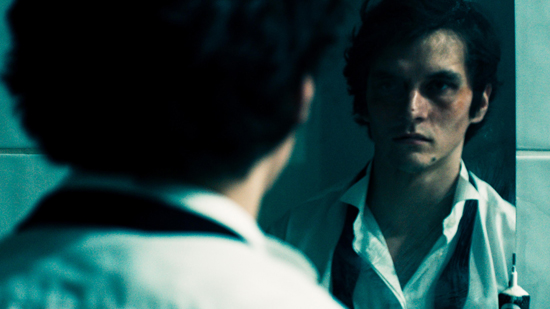
The story received another translation to the modern day with this re-telling, but does so in a way that really plays up a new relevance that this story manages to embody in our world today.  It takes Oscar Wilde’s Dorian and turns him into a social media influencer.  This is a smart way to bring the story up to date, because if there was ever a place like Dorian Gray to flourish, it would be through social media.  The film explores the idea that anyone is capable of becoming corrupted through a social media presence, because it’s a place where people project a version of themselves to the world that they want to represent the best version of themselves.  This often leads people to mislead their online followers, putting themselves out there as a person that is not their true selves.  In this movie, there is no portrait of Dorian Gray, and in fact, it reverses the scenario where Dorian’s online version of himself stays young while he himself grows more decrepit in real life as a consequence of his actions.  It’s an interesting study of social media culture that Oscar Wilde’s story surprisingly fits well into.  British actor Fionn Whitehead does a fine job of portraying Dorian in this version of the story, taking him from a naive novice when he starts putting himself out there on social media to the depraved, washed out online addict who will sink lower and lower just to get more clicks.  The downside of the movie is it’s limited scope, given that it was a Covid-production that was largely filmed over the course of the pandemic with the actors either zooming in or working alone on a set.  Even still, the point it gets across is a poignant one.  Social media has made us all care too much about our public image, and it’s corrupting us just like the portrait did to Dorian Gray.  The movie asks us to consider what the cost of maintaining a false sense of self will do to us as a whole, and through the example of Dorian Gray, we see that it can lead us to some pretty twisted ends.  Just like with Oscar Wilde’s original story, it’s a cautionary tale about the dangers of vanity, and how social media is perhaps the most toxic way we have succumbed to our own vain indulgences yet in society.

Oscar Wilde himself knew his was not immune to the pitfalls of vanity.  He famously was quoted as saying, “I have nothing to declare but my genius” when he went through customs on his travels to America, so he obviously had a pretty inflated opinion of himself.  But, he was also observant of the fact that vanity is often the thing that leads to a quick ruin in people.  In the influencer culture that we currently live under, that sentiment seems all the more prescient, as we are witnessing the quick rise and falls of people who have chosen to present a carefully curated version of themselves online.  Celebrity influencers can reap rewards for their online following, but they can also open themselves up to a severe drop in favorability once their influence wanes.  What’s even more dangerous is how influencer culture has an affect on the ones who consume the content that is being made.  We’ve seen the rise of some toxic communities like the Manosphere come out of social media, with influencers pushing some rather backwards ideas about beauty standards and what gender norms should be.  Though Oscar Wilde lived long before anything like social media would have even been thought of, he still had a keen sense about the false fronts people put forward to present themselves to the world and how that can be a very bad thing in general for the world.  Despite the moral confinements he lived under, Oscar Wilde always pushed back at the idea of accepted norms and was one who embraced individual eccentricity.  This is why he is celebrated so much as a queer icon, because he challenged us to embrace our own selves regardless of what the rest of society thinks.  Through Dorian Gray, he showed us the dangers of stunted growth; desperately clinging to a past version of ones’ self while the world passes by.  In the end, Oscar Wilde believed it to be better to embrace all those wrinkles and scars that life gives us, because that’s what gives us character.  Sure, Wilde was aware of his own vain inclinations, but he was also aware of how vanity drives us toward being closed minded, which was something he knew all too well in Victorian England.  His story of Dorian Gray is a powerful reminder of just how easily we can fall into our own loop of self importance and it’s a story that remarkably feels more modern today than it did well over a century ago, as demonstrated by so many movies choosing to present the story in a present day setting.  Wilde’s story remains universal, and it still has a critical thing to say about us as a society.

Empire’s Fall – The Missed Opportunity of Disney’s Atlantis: The Lost Empire

The Renaissance Era at Walt Disney Animation was a legendary moment in the artform.  Animation was finally being looked at as a powerful force in cinema, with Disney’s movies constantly breaking box office records and even getting a lot of love during Awards season.  The peak of this period in time came in the early 90’s, with the trifecta of Beauty and the Beast (1991), Aladdin (1992) and The Lion King (1994) all building on each other’s success.  Given the confidence that this built amongst the artists and producers at the Disney company, the studio would embark on an ambitious, one movie a year film slate over the next 10 years.  The hope was that the trend of success would continue over that time, and the studio was very invested in making new movies that would continue to raise the bar.  But, in a way, Disney would also become a victim of their own success.  The massive success of The Lion King almost became too high a bar to clear for anything that came after, and that would truly become the case.  The more serious in tone Pocahontas (1995) was next on the slate of films, and it struggled to stand on it’s own in the massive shadow of The Lion King.  It did decent box office numbers, but no where near what the previous 3 films had made.  The equally ambitious The Hunchback of Notre Dame (1996) also struggled to gain traction at the box office.  And when Hercules (1997) became their first film in a long while to fail to cross the $100 million mark, it began to make a lot of the top brass at Disney feel a little worried.  There was a small uptick again with the success of Mulan (1998) and Tarzan (1999) at the box office, but there were definitely signs that Disney was definitely loosing momentum as the industry leader in animation.  And with other animation studios on the rise like Pixar and Dreamworks, Disney needed to come up with a way to keep their place at the top a certainty.

For Disney, the belief was that audiences were no longer interested in the formula they had built their success during the Renaissance.  That formula being Broadway musical style storytelling.  Sure, making fairy tale stories like The Little Mermaid (1989) and Beauty and the Beast into musicals made sense because it fits with the fantastical nature of those narratives.  But for stories based on real life historical figure Pocahontas as well as Victor Hugo’s Hunchback bell ringer, it was a bit more difficult for audiences to embrace.  But the more existential threat that was causing the decline of traditional animation at Disney Animation was the emergence of CGI animation.  Again Disney fell victim to their own success as their collaboration with Pixar Animation, Toy Story (1995), became such a hit that it caused Hollywood to start investing like crazy into this new artform of computer animation.  The result would cannibalize Disney’s own in-house animation department.  But, to change the direction of this trend, Disney decided it was best to change up their formula.  For much of the Renaissance, they were making movies that fit at home in a place like Fantasyland at their own theme parks.  To change course, they began to think of something that was more Adventureland in nature.  After all, in addition to finding success with his animated fairy tales, Walt Disney also succeeded with live action adventure films like 20,000 Leagues Under the Sea (1954) and Swiss Family Robinson (1960).  Even after Walt was gone, the Disney studios would continue to make more adventure based films throughout the years, except in animation.  So, Disney decided it was time to make an adventure themed film that was wildly different from what they had made before.  But what would it be about?  The successful directing team of Kirk Wise and Gary Trousdale who had previously made Beauty and the Beast and The Hunchback of Notre Dame at Disney proposed what they thought would be an ideal place to set their story around; the mythical lost city of Atlantis.  But it wouldn’t be about Atlantis alone; it would be a expedition style story in the same vein as an Indiana Jones adventure, filled with a colorful cast of oddballs and misfits.  The fact that this movie was so wildly different from anything that Disney had made before became it’s biggest asset at a time when Disney was ready to shake things up.  The mantra around the making of this movie was that it had “fewer songs and more explosions.”

A lot of prep work went into the planning of the story.  The problem with tackling a new idea for an animated film is that you are pretty much starting from scratch.  There was no classic piece of literature or folk tale for Disney to build their movie on; Atlantis was a blank slate.  Sure, Atlantis as a mythological place has been discussed for centuries, ever since the poet Plato first wrote about it in Ancient Greece, but there’s so many different interpretations and theories surrounding Atlantis that there really is no consensus about what kind of a place it actually is.  So, Wise and Trousdale had to come up with something cohesive to wrap their story around.  They enlisted the help of screenwriter Tab Murphy (Gorillas in the Mist), who had helped them before on Hunchback, to craft a story based on the Atlantis myth that could work for their film.  The project would prove to be pretty monumental, as Murphy’s first draft came in at a staggering 150 pages; nearly double what a typical animated film ends up being.  Instead of just focusing on just one singular idea of what Atlantis needed to be, the team at Disney decided to throw everything at the wall to see what would stick.  This, inevitably became one of the biggest problems with the production of the film, which was the struggle to wrap this project around something cohesive.  Eventually they landed on the hollow earth theory, which is the idea that entire ecosystems and even cultures can exist within  vast pockets beneath the crust of the Earth.  This coincides with Plato’s original poem, where he described Atlantis disappearing beneath the waves.  In this film, disappearing beneath the waves means that Atlantis itself survived buried underground beneath the surface of the sea floor.  For the filmmakers, the journey to Atlantis was the main focus, but after learning that their original cut of the story took nearly 80 minutes of screentime just to get to Atlantis (the length of an average animated film), they realized that they needed to trim a lot of the fat off of their story.  Gone were a lot of the monster encounters along the road to Atlantis.  Character interactions were also minimized, because it was believed that they needed to get the story to Atlantis as quickly as possible.

One of the most interesting aspects of the production of Atlantis was that it wildly changed up the animation style at Disney.  Instead of the storybook like visual style they had worked with before on Beauty and Hunchback, Wise and Trousdale decided they wanted their film to look more like a comic book come to life.  They sought out artists from outside the studio to conceptualize different visual ideas that could be applied to their story.  One particular artist that would go on to have the most profound impact on the production was Hellboy creator Mike Mignola.  It’s strange to think that someone of Mignola’s pedigree in comic book art would find himself working on a Disney film, but not only was he brought on board, he would be the chief creative influence for the entire film.  Not since Sleeping Beauty (1959) had Disney Animation formed a film around a singular visual style attributed to one artist.  And it wouldn’t just be the look of the environments that Mignola’s art would influence.  He would also be instrumental in shaping the designs of the characters.  The characters would still have the same rounded eyes that most Disney characters in other films had, but their other features would be sharply defined and often exaggerated.  One particular Mignola feature that made it into every character in the movie was the squared off finger tips; a trademark of his drawing style in the comic books he’s created.  In addition to changing up their art style,  the directors also wanted to make this a widescreen film as well.  Making widescreen animated movies was rare in those days due to the costs involved in working with a wider canvas.  Disney themselves had only done it three times before, the last being the very costly flop The Black Cauldron (1985).  Disney managed to find a cost cutting way around that by planning their shots around what they would be able to crop out of the image, meaning they would still be working with the same sized animation tools they’ve worked with before and not have to worry about upscaling what they had to draw or paint.  Given that all of their artwork was being finalized in the computers anyway through their CAPS system, they were able to make their film widescreen without loosing any clarity in the picture as they cropped their image.

One of the things that was essential to make the movie work was creating characters that audiences would want to follow along with.  Because this was breaking with the typical Disney formula, Atlantis would be entirely without cute animal sidekicks that make for great toys during the merchandising phase of a film’s release.  The characters would range solely between the explorers and the Atlantean natives.  And it would be a very robust cast indeed, with perhaps more characters than the story really needed.  For inspiration, Disney looked at how action movies with ensemble casts worked to build up their characters over the course of a movie; particularly movies like The Magnificent Seven (1960) and The Dirty Dozen (1967).  But, what the Atlantis team put their most focus on was building up the character at the heart of the story.  The film’s biggest triumph is the character Milo Thatch, the bookworm historian key to finding the trail to Atlantis, who by the end also becomes it’s savior.  Milo manages to carry most of the film on his shoulders (as scrawny as they are) because he’s a likable and relatable protagonist with a charming sense of enthusiasm for the adventure that he’s on.  One of the things that really helped to define Milo’s character was giving him the voice of Michael J. Fox.  Fox, who himself has been the charming center protagonist in other adventure movies like Back to the Future (1985), was perfectly cast for this role, and it’s one that’s tailor made for his persona.  Fox brings a lot of personality to the character, keeping him charmingly silly in his awkwardness, but also heartwarming sincere at the same time.  It also helps that the duty of animating Milo was also given to a veteran like John Pomeroy.  Pomeroy was one of the animators who left Disney in the late 70’s during the great exodus led by animation director Don Bluth, but he returned in the Renaissance era where he started work as the lead animator on the character John Smith in Pocahontas.  Pomeroy feels especially proud of the work he did on animating Milo, stating that it’s the closest he’s ever come to creating a self portrait.  Unfortunately, with a strong central character like Milo, the rest of the movie is given over to developing the rest of the cast.  A lot of the supporting characters barely get any development in the story and what they do get is rushed through with heavy exposition.

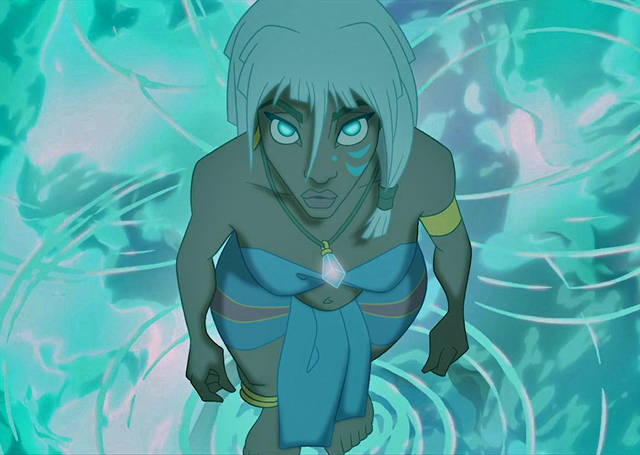
Perhaps the thing that gets short-changed the most in the film is Atlantis itself, and the people who live there.  This was a realization that came fairly late in the movie’s production, as they realized that they were taking way too long to get to the place that was the main focus of their story.  Not only that, the film’s female lead didn’t get her introduction until the film’s halfway point.  A very last minute decision was made to change the prologue of the movie, introducing the city of Atlantis and the character of Princess Kida in the opening minutes of the movie.  The problem is that they already had a prologue involving Vikings searching for Atlantis already fully animated and complete.  Excising and replacing a fully animated sequence is something that all animated films try to avoid because of the costs involved, but Kirk Wise and Gary Trousdale realized that it had to be done in order for us to care more about the Atlantean people later in the movie.  Doing this also laid more importance on the character of Kida, the princess of Atlantis.  Her connection to the story needed to be set up right in the beginning, so that by the time she shows up again halfway through the story, we already understand where she came from.  One nice thing is that Disney didn’t attempt to cast a big name for the role, but instead gave the role to a veteran voice actress named Cree Summer.  Cree had by that time already been in a ton of animated shows, including Inspector Gadget and Tiny Toon Adventures, and she still is an in demand voice actor to this day.  Giving her the key role of Kida was beneficial for the character because she does sound so different from other Disney princesses.  Her more grounded performance also balances off of Michael J. Fox’s Milo perfectly, making them a surprisingly strong pair.  And while many of the characters do get shortchanged by the lack of time devoted to their development, the voice actors do a fine job of at least bringing some personality to them all, including established veterans like James Garner and Leonard Nimoy, as well as the late Jim Varney of Ernest fame in what would be his last role as he passed away during the film’s making.

There were a lot of high hopes surrounding the release of Atlantis: The Lost Empire.  This was going to mark a sea change for Disney, showing that they could indeed do more than just musical fairy tales.  Unfortunately, it did not deliver the way it was planned.  The film failed to launch at the box office, grossing only half of what it cost to make.  While the bigger box office failure of Treasure Planet (2002) is mostly and unfairly labeled as the movie that killed traditional animation at Disney, it was honestly a trend that was already gaining steam under the box office disappointment of Atlantis long before.  Audiences at the time really didn’t know what to make of Atlantis: The Lost Empire.  It was a confusing mash of different concepts thrown together into a movie that didn’t really devote enough time to allow the audience to absorb it all in.  Even though it is longer than the average Disney animated film at 96 minutes in length, it still feel truncated as a whole.  We never get enough time to savor the expedition of the explorers, nor the time they spend in Atlantis once they are finally there, because the movie has to constantly keep moving just to fit in everything that the filmmakers needed to put in for the plot to make sense.  One other thing that also worked against Atlantis was the fact that it was in direct competition at the box office with Dreamwork’s breakout hit, Shrek (2001).  This was the real sea change moment in animation, as Disney’s traditional animation machine was no match anymore against the novelty of computer animation.  And this is what ultimately led to then Disney CEO Michael Eisner deciding it was time to abandon hand drawn animation all together, which was further reinforced by Treasure Planet’s dismal run the following year.  It sadly also marked the end for Wise and Trousdale as a directing team.  Kirk Wise would stay on a bit longer at Disney before eventually going freelance, but Gary Trousdale would leave Disney not long after Atlantis’s theatrical run, ironically moving on to Dreamworks where he would direct Shrek holiday specials.  While the end of the Disney Renaissance era was always an inevitability, it is unfortunate that it also broke up one of the most celebrated teams of artists the studio had ever had as traditional animation was clearly seeing it’s days numbered in this new world order in animation.

But 25 years later, Atlantis: The Lost Empire has managed like a lot of other Disney misfits to find it’s audience over time.  Just like how one time box office failures such as The Emperor’s New Groove (2000) and Treasure Planet (2002) have been reassessed over the years and gained a devoted following by fans, Atlantis is also getting a cult following of it’s own.  One of the things it is being celebrated for is the fact that it is so unique in the Disney canon.  No other movie from the Disney Company looks the way this movie does, with it’s very comic book like style in the animation.  It’s also very different from the typical Disney formula; favoring action instead of musical numbers.  It was also only the second PG rated Disney animated film ever after The Black Cauldron, and it does earn that rating with it’s more violent action moments.  But, even despite having it’s own devoted fan base, there’s still no denying that it is a very flawed movie.  The plot is too condensed to ever work effectively and the movie needed a bit more trimming down of ideas and even characters in order to find it’s rhythm.  What we get is certainly ambitious, and at times quite beautiful, (especially in it’s “explosive” climax), it never truly gels together, and that’s truly a shame because it could have been something quite special.  There are certainly a lot worse Disney animated films, especially in the last days of the Renaissance era like Brother Bear (2003) and Home on the Range (2004), and as far as blown opportunities, it doesn’t miss the mark as badly as the movie Wish (2023).  But given all the ideas and ingredients that Disney had as their disposal during the making of Atlantis, the fact that they couldn’t get it all to come together with all the top tier talent involved is still a tragedy.  It’s a compromised film, squandering it’s potential due to the fact that it was made at a time when the animation industry was moving on to something else and it couldn’t keep up with the change.  There is still a lot to admire in the artistry though, and the fact that it is seeing renewed life as a cult film is encouraging.  As a movie, it is managing to stand the test of time and not becoming lost overall.  But the greatest tragedy about the film was the fact that it did spark the beginning of the end of one of the greatest traditions within animation, that being hand drawn art.  Only time will tell if that is as lost to time as the city of Atlantis itself.