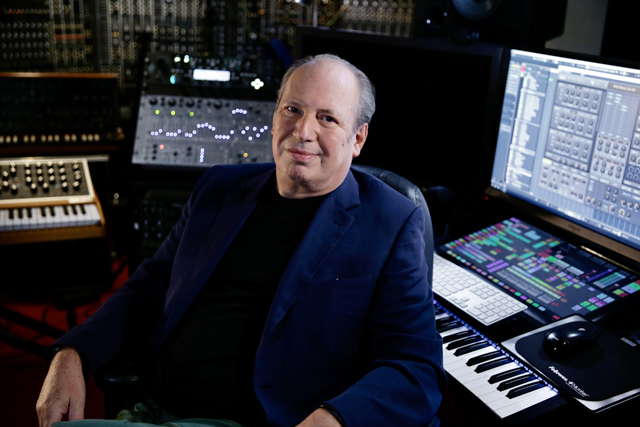
A couple months back, I took a look at the unforgettable musical scores written by the legendary composer John Williams, but for this top ten list, I wanted to spotlight another film composer who has also been among the most influential of the last several decades. Hans Zimmer may not have as robust a resume as Mr. Williams (and unfortunately he also has fewer trophies as well), but Zimmer’s influence on the soundscape of cinema is just as impactful. While John Williams had Steven Spielberg and George Lucas , Hans has worked with the likes of Ridley and Tony Scott, Terrence Malick, Guy Ritchie, Denis Villeneuve, and Christopher Nolan. One of the things that has distinguished Zimmer as a composer is the undeniable modernity of his music. Some would call his style global in that he combine sounds from many different cultural influences and combines them in a way that makes the music sound unique and unlike anything you’ve heard before. He has always been an experimental composer, always making the atypical choice in how to use music within a scene. This has been what has made him such a valuable composer in Hollywood for many years; especially with filmmakers behind big epic productions. His use of heavy brass, pulse-pounding rhythm, and unconventional beats have made him the king of action movie music. But, he’s also a highly versatile composer as well having composed for small dramas and romantic comedies in addition to the big epics. And even in those movies you still see him working on unique rhythms. Certainly the movies that have spotlighted his work the most have been the big epic films, but what makes his work on those films so memorable is the fact that he was allowed to break the rules of film composition and make the unexpected choice. This is the guy who had his violists pluck on their strings with razor blade just because it would create a sound unlike anything we’ve heard before. When you’re making a movie that requires a whole new kind of soundscape for maybe an alien world or a bygone era in time, Hans Zimmer is most often the guy you would want to go to.
Born in West Germany in 1957, Hans was largely a self-taught musician who over time became an expert keyboard player and synthesizer. When he moved to London as a teenager, he began to fall in with the New Wave band culture , where his use of synth sound became very handy. He worked with many bands around that time, including the Buggles, and he even can be briefly seen in their music video for “Video Killed the Radio Star,” which of course famously launched MTV a couple years later. After a couple years working in studio sessions, Hans career path changed when he partnered up with British film composer Stanley Myers. Myers, who had credits on over 60 films, wanted to combine Zimmer’s modern sounding electronic sound to his more classic style, and the two worked on multiple films together, including Moonlighting (1982) and My Beautiful Laundrette (1984). After working under Myers’ mentorship, it was time for Zimmer to set off on his own. His first solo film score was for the thriller Terminal Exposure, but the big break for him would come a year later. Director Barry Levinson was looking for a unique sound for his Tom Cruise and Dustin Hoffman starring drama Rain Man (1988). Supposedly, Levinson listened to the soundtrack that Hans did for the anti-Aparteid film A World Apart (1987) and like it so much that he sought out Hans personally. This would result in what would end up being Hans first ever Oscar nomination, and more importantly it opened more doors for him in Hollywood, making him one of the most sought after composers in the business. In the nearly 40 years since, Hans has earned 12 more Oscar nominations as a composer, including 2 wins. And he’s still very active, composing not just for film but also for television and even video games. To show how impactful Hans Zimmer’s music has been, I’ve compiled what I think are his top 10 musical themes. They of course range from the pulse pounding epic to the surprisingly intimate and comforting, showing that he’s a film composer capable of working in any kind of medium. So, let’s take a look at the Top Ten Musical Themes from the legendary Hans Zimmer.
10.
“HOMELAND” from SPIRIT: STALLION OF THE CIMARRON (2002)
In addition to the many scores that Hans Zimmer has composed for live action film, he has also been prolific in composing for animation as well. He famously worked on Disney’s The Lion King (1994), but for the most part, he’s been a Dreamworks guy. He composed the scores for all four of the studio’s hand drawn animated classics, and then would later be a composer for many of Dreamworks computer animated movies; most notably for the Kung Fu Panda movies. But one of his best themes for Dreamworks Animation was in the little seen animated Western called Spirit: Stallion of the Cimarron. The soundtrack for the movie is often derided because of the Bryan Adams pop songs that were shoehorned in, which was the trend in animated movies at the time; a trend that Hans helped to start by the way when he collaborated with Elton John on the songs for The Lion King. While the Bryan Adams are most hit or miss, Hans score is still top tier, and shows him working at the peak of his talent. The best melody in the film is the one that opens the movie itself called “Homeland.” This sweeping overture sets the stage perfectly for the movie, played over sweeping views of natural landscapes, which were beautifully animated in what was the only hand drawn animated film from Dreamworks in the Cinemascope format. In this piece, we hear Hans Zimmer at his most pastoral, underscoring magnificent vistas with a regal orchestral sweep. But there still that modern electric sound underneath that to show that Hans is still experimenting with a different kind of rhythm to help make the music sound unique. Despite the fact that this musical theme was written for the animated medium, it could have just as easily been written for live action two. There’s just something about the melody that make you get the feeling of a natural world, like it was composed for a national park’s welcome center. If you can get over the Bryan Adams influence, you can definitely find some really beautiful music in this underrated animated classic, and that’s in large part due to the skills of Hans Zimmer.
9.
“DISCOMBOBULATE” from SHERLOCK HOLMES (2009)
For a great example of Hans Zimmer’s experimental method in composing a film score, look no further than this Guy Ritchie directed adaptation of Sir Arthur Conan Doyle’s famous sleuth. When developing the score for the film, Hans bought an out of tune piano at a flea market for $200, solely because he wanted an instrument that was broken and out of tune to add a quirkiness to the music he was writing. It’s unorthodox, but it kind of matches the character of Sherlock Holmes himself, especially this version played by Robert Downey, Jr. The theme “Discombobulate” is the main theme of the movie and the one that opens and closes the film during the titles, and it is a great example of Hans Zimmer at his most playful. Taking cues from Cockney Victorian English melodies, the theme is aggressive and flashy in an almost parody like way. That out of tune piano proved to be a wonderful find, because it really sets the tone regarding the criminal underworld that Holmes is about to explore. You get the sense of this piano having a history, like it came out of some back alley pub deep in the worst neighborhoods in London. But it’s not just the piano that makes the melody stand out. The percussion has a very metallic sound to it, like someone is banging on steel pipes, and the cello strings are being plucked rather than strung. In every part of this theme, Hans is breaking all the rules of orchestral music and that’s what makes it sound so unique. Holmes himself is someone who solves mysteries by seeing the world in a way that other people can’t, and Hans Zimmer’s score matches that out of normal space vibe perfectly. It’s a great example of how Hans Zimmer can create a wholly different kind of sound for the music of a movie that also gives the movie more character, mostly by subverting expectations for how the music should sound in the first place. And that means even going to the extremes of using instruments that are intentionally supposed to sound bad like a broken down piano.
8.
“LEAVING WALLBROOK” from RAIN MAN (1988)
We certainly need to spotlight the turning point moment in Hans Zimmer’s career as a film composer. Barry Levinson’s Oscar winning drama about a road trip taken by a young business man and his older autistic brother across the country is not the kind of film you would expect to hear African style rhythms as a part of the music score. But Levinson wanted Hans Zimmer to bring that same kind of sound that he used for the South African set A World Apart to this movie. Levinson’s reasoning was because of Hoffman’s character’s severe autism, which disconnect him from the rest of the world and leaves him in a world of his own mind. So Levinson wanted to match that with a score that fells like in his words, “a world music for a world that doesn’t really exist.” Hans would be just the right person for that assignment, because he could take all of those cultural influences he absorbed from working on a movie like A World Apart. In the film’s main theme called “Leaving Wallbrook,” there’s definitely an African influence in the the percussion beats, but he also combines it with Peruvian style flutes, and of course his own synth beat underneath it. In all it makes the music feel like its coming from everywhere in the world, and also from nowhere in particular. And of course this is all for a movie about a road trip across America. It’s a prime example of Hans bringing an atypical approach to scoring a film. It’s something that would define his style over the course of the decades after. He’s the guy you go to when you want to make the surprising choice in how a movie’s music will sound. It may not have been as atypical as Vangelis’ music for Chariots of Fire (1981), where that synth score really stuck out compared to it’s time and place in the story. Oddly enough, Han’s score for Rain Man actually felt like it fit with the story being told. It proved that Hans was a unique voice in film composition, and of course we would see many more great things to come in the years that followed.
7.
“THE KRAKEN” from PIRATES OF THE CARIBBEAN: DEAD MAN’S CHEST (2006)
Of course one of the movie franchises that Hans Zimmer had a strong influence on was the Pirates of the Caribbean movies. But it probably surprises most people that he wasn’t the one who did the music for the first film that launched the series. Producer Jerry Bruckheimer wanted him to score the first Pirates film, but he was already too deeply in the middle of scoring the movie The Last Samurai (2003). Instead, Hans offered Bruckheimer one of his proteges, Klaus Badelt, to work on the score though Hans did contribute some uncredited melodies to the film, including the main theme itself. But after the success of the first Pirates movie, Hans was committed to scoring the sequels that followed. He would be the sole credited composer for both Dead Man’s Chest and At World’s End (2007), contributing some of the franchises most epic and memorable themes. His best contribution to the scores would probably be this composition written for the mammoth sea monster that hunts after the pirates in the movie. “The Kraken” theme is a fantastic chaotic piece that really matches the ferocity of the monster itself. It’s big and orchestral, but Hans also throws in some electric guitar to add a little bit more unpredictability to the music. The music itself does kind of feel like a monster on the hunt as the piece starts low and then builds to a concussive wall of sound. The low, pulse beat that Hans opens the piece with sounds very much like a reference to John William’s iconic two beat rhythm from the opening theme of Jaws (1975). But instead of a shark, Hans is writing music for a giant squid, so when the score finally builds that moment of attack, the music goes wild and hits from multiple directions, similar to how a squid’s tentacles would lash around wildly. It’s definitely the standout piece in the film Dead Man’s Chest, and perhaps the best thing he wrote for the entire series, except maybe the main theme himself which he was partly the author of. It’s hard to imagine that Hans Zimmer wasn’t always the composer of these Pirates movies, because his signature style is all over them. But, once he was fully involved, these movies certainly brought out the best in his talents.
6.
“YOU’RE SO COOL” from TRUE ROMANCE (1993)
Proof that not all of Hans Zimmer’s scores had to be big, epic productions. Sometimes all he needed was just one instrument. For this particular piece, he composed a tune for nine marimbas played in unison. The unique sound of this tune is catchy and joyful, which is a stark contrast to the film that it’s found in. It’s hard to think that Hans Zimmer wrote this romantic and bubbly tune for a hyper violent and gritty thriller directed by Tony Scott and written by Quentin Tarantino. But, that’s exactly what the movie called for, because at the center of all the stark violence in the movie, there is this tender and heartfelt love story between two star-crossed misfits played by Christian Slater and Patricia Arquette. Amidst all of the violent action, their romance becomes the heartbeat of the movie, and Tony Scott wanted a melody that matched that. It stands out in stark contrast from the rest of the movie, but that is honestly what Hans Zimmer has always been good at. In most of his other films, he’s been called upon to write music that added a modern edge to a film, but here he does the opposite. His romantic theme called “You’re So Cool,” is used to soften the edges of the film, and help it live up to what the title says. It’s another great example of Hans Zimmer doing the unexpected, only this is a move that is unexpected in contrast to all of the other music he’s written. One of the reasons why Tony Scott wanted such an upbeat tune in his hyper violent movie was because he viewed the romance between Slater and Arquette’s characters to be like a Fairy Tale. It’s a bright light in an otherwise dark world, and he trusted Hans to find that in the music as well. It also shows Hans experimentation in full display, managing to create a unique sounding tune that only required one kind of instrument, which itself is used in a very unexpected way. Hans is a composer who can definitely go big, but here we see that he’s just as brilliant when he goes small and simple too.
5.
“NO TIME FOR CAUTION” from INTERSTELLAR (2014)
Certainly one of the strongest collaborations that Hans has had with any filmmaker is his time working with Christopher Nolan. Hans first worked with Nolan on the score for Batman Begins (2005), working alongside James Newton Howard. They would continue working together on all of Nolan’s films up to Dunkirk (2017), before Hans started getting involved in the Dune series and Nolan started working with Ludwig Goransson (because of Hans’ suggestion by the way). Through that decade of collaboration, Hans wrote some of his most impressive and epic themes. One of his most celebrated scores was for Nolan’s space epic Interstellar. For a movie about exploration in the vastness of space and looking for a new home on alien worlds, Hans was certainly the right guy to score this adventure. It’s probably the most haunting of musical scores in Hans Zimmer’s body of working, with him using pipe organs as a key instrument in the film, possibly as a nod to Richard Strauss’ “Also Sprach Zarathrustra” which was famously used in Stanley Kubrick’s own space opera 2001: A Space Odyssey (1968). One other thing that also was a continuing theme in Nolan and Zimmer’s collaboration was the idea of time passing. Zimmer’s scores in Nolan movies always had this pulsing beat to them, like a ticking clock, and that’s certainly found in this piece from Interstellar. The theme “No Time for Caution” plays during the harrowing docking scene where Matthew McConaughey’s character has to push the space ship to the limits of survivable G-forces in order to match the spin rotation of a damaged and out of control mothership in order to dock. Hans keeps building that pulse of a score to more harrowing heights in order to match the tension of that scene, and once it resolves we get that release from the pipe organ. While Hans Zimmer has worked mostly with modern sounds in his scores, this is a great example of him using classical instruments to create music that is quite literally out of this world. If anything, this is probably Hans at his most harrowing as well, with a music theme that’s all about driving up the tension to an unbelievable level.
4.
“WORM RIDE” from DUNE: PART TWO (2024)
Speaking of the series that Hans left his partnership with Christopher Nolan for, this is another great example of Hans Zimmer using his knowledge of global music to create music for a world that’s never existed. In this adaptation of Frank Herbert’s sci-fi epic, director Denis Villeneuve wanted to have a score that was big and orchestral, but still very modern, fitting the movie’s far distant futuristic setting. Hans’ musical score for Dune: Part One was certainly great in itself, and it even earned him a long overdue second Oscar win. But it’s in Part Two where Hans was really let loose to go big and heavy with the orchestrations. In particular, he created a fantastic piece of music for the pivotal scene when Timothee Chalamet’s Paul Atreides proves his worth by learning to ride a sand worm for the first time. It’s an epic moment in the movie, with the sand worm being this colossal monstrosity that makes the scene all the more harrowing. It’s here where the main theme of the series hits it’s apex, and the moment hits with a heavy triumphal note. Hans Zimmer’s music is just as much a part of the character of this film series as anything else, sounding uniquely of his style, while at the same time still showing the composer trying out new things to make the unexpected choices. The moment where Paul Atreides takes command of that worm is a crucial moment in the story, and Hans gives it the epic weight that it deserves. The unsung element in this piece of music is vocalist Loire Cotler, who does the chant at the center of the piece, and can also be heard through much of the rest of the film’s score. She really gives a haunting and otherworldly element to the music, making the moment in the movie almost a religious experience. It’s not the first time that Hans Zimmer has used vocals in his orchestrations, but few are quite as iconic as the one used in the Dune movies. Thankfully, Hans is once again scoring the upcoming Part Three, so it will be interesting to see what he has left to do in this franchise. Thus far, it’s been some of his best work in recent years, with this piece from Part Two being a definite highlight.
3.
“STAMPEDE” from THE LION KING (1994)
Hans won his first Academy Award for his one and only Disney Animated film. The choice in having him score the film was quite a departure for the studio at the time, as most of the other Disney Renaissance films were scored by Alan Menken. But Hans was exactly the right man for the job, bringing his African influences with him into the orchestration of the film. One of the most important choices he made in his development of the score was writing it an African vocal choir in mind. This led him towards working with South African musician Lebo M, who was instrumental in helping to bring an authentic African sound to the movie. Lebo was the one who would conduct the choir himself and he even provides some of the vocals as well. His voice is even the first thing you hear in the movie with the iconic sunrise opening and his “Naaaaaaah” chant to kicks off the film. There are a lot of iconic musical moments throughout the film, but perhaps the one that demonstrates Hans at the peak of his abilities is the music from the pivotal Wildebeest Stampede scene. The scene shows Hans using all the tools in chest to create this cacophonous musical moment, creating the feeling of a stampede rushing by you with incredible force. It’s especially effective in the way that it starts off small, with the eerie feeling of danger approaching from a distance. And then the first waves of that tsunami of sound come crashing in and doesn’t relent. Lebo M’s choir chanting through it all also gives the moment an extra special boost, acting almost like a Greek chorus lamenting the tragedy that’s unfolding. All the while, that distinctive electronic sound that defined much of Hans Zimmer’s early film work also can be heard underneath. While many people throw a lot of praise towards Elton John’s songs from the film, you also can’t deny that Hans Zimmer had the most profound effect on the movie’s emotional core with his unforgettable musical themes, his “Stampede” theme being an especially iconic highlight. It’s why this music has endured not just as a legacy of the movie itself, but also as something that helped to make The Lion King a huge hit on the stage as well.
2.
“TIME” from INCEPTION (2010)
If there was ever a movie that represented the best out of the collaboration between Christopher Nolan and Hans Zimmer, it would be Inception. In creating the music for Nolan’s dreamscape heist movie, Hans in a way went on to influence a whole generation of action movie scores. It was because of this movie that action films began to have that oppressive “BWAH” sound in their scores. The reason it was used in Inception was because Hans was creating the feeling of music itself being slowed down as time is experienced differently within dreams. In particular, Edith Piaf’s rendition of “Non, je ne Regrette rien” is played throughout the film and when played at normal speed in the real world, it becomes this booming ticking clock to the characters within the dream. It’s a plot device in itself that becomes part of the character of the score itself. And while the whole movie is full of incredible, pulse-pounding music (especially in the hallway fight scene) it’s the final closing piece of music that shows Hans Zimmer at his absolute best. In a piece called “Time” we see the characteristic Nolan and Zimmer motif of time ticking away in a clockwork like rhythm, but here Zimmer creates it into this triumphal sounding march. The film actually plays out the final scene in the film with little to no dialogue with the music instead guiding the moment. But even as it sounds triumphant, there’s also this uneasy feeling underneath pondering if it is all actually real. That’s the mystery that Christopher Nolan leaves in the final moments of his film, creating an open-ended question that he never intends to answer; did our heroes escape or are they still stuck in that dream? The brilliance of that ending is given even more weight by Hans’ music, especially at the end. Nolan finishes the movie with a shot holding on a spinning top, a symbol that determines if the world is real or a dream. The top continues to spin, but right before you think it’s about to stop, the movie cuts to black. Brilliantly, Hans Zimmer brings the music down to almost silence and then throws in a slight sharp sting right before the screen goes black. Inception represent the best in what Hans Zimmer and Christopher Nolan could do together, and it still represents a peak in both of their respective careers.
1.
“NOW WE ARE FREE” from GLADIATOR (2000)
Out of all the scores that Hans Zimmer has written throughout his career, the one that feels the most complete in it’s majesty is the one he composed for Ridley Scott’s Oscar-winning epic Gladiator. The movie was both a throwback to classic Hollywood sword and sandal epics and at the same time a boldly modern reimagining of legends from Ancient Rome. A lot of what makes Gladiator such a iconic film is undeniably Hans Zimmer’s score. He pulls out all the stops throughout the film, from the opening battle against the barbarians, to the melancholy of Maximus’ tragic return home to find his family already killed, to the climatic gladiatorial battles in the Coliseum. But no other piece of music sticks with you more than the closing theme of the movie. After Maximus (Russell Crowe) himself succumbs to his wound and rejoins his family in Elysium, Hans Zimmer takes over the emotional weight of the movie’s closing moments. We see Djimon Hounsou’s Juba symbolically burying the figures of Maximus’ wife and son in his own blood spilled on the Coliseum floor, where we tells his fallen friend the titular words of the piece, “Now we are free.” And the music carries us out of the film and into the credits like the final movement of an opera, which is fitting because the movie we had just watch had an operatic quality to it. Like many of his other film scores, Hans works in some incredible vocal arrangements into the music, and for this piece he called upon the angelic voice of Lisa Gerrard, who worked closely with Hans on much of the film’s music with her even being credited as a co-composer on the soundtrack. Lisa’s voice beautifully carries the emotion of the piece, making it sound somber in remembrance of Maximus’ sacrifice, but also triumphant in recalling the way Maximus was able to avenge his fallen family and do what no one else could do which was defy and defeat the tyrannical Emperor Commodous (Joaquin Phoenix) and restore order to Rome. This particular theme has become a favorite piece of music people have used to remember lost ones in their lives, given how it both mourns a death and celebrates a life purely through music alone. This represnts more than anything Hans Zimmer’s ability to reach for something truly profound in his music, and that’s what make it (in my opinion) his greatest piece of music from his entire body of work.
Undeniably one of cinema’s greatest composers, Hans Zimmer has left a lasting impact on Hollywood. One of his greatest lasting legacies has been his ability to craft new kinds of sounds from unlikely places. Whether it’s using a broken down piano for Sherlock Holmes or basing the motif of your film score off of a slowed down version of an Edith Piaf song in Inception, he is a film composer that definitely thinks outside of the box and refuses to repeat himself. What really has defined him is the ability he has to create soundscapes for new kinds of worlds. That’s what has made him so valuable in creating musical scores for epic fantasies, like with the Pirates of the Caribbean and Dune series, because you can always count on him to make the music of it’s own world. He’s also the kind of composer you can count on to create the unexpected choice, like he did by adding African rhythms to a small road trip drama like Rain Man, or a single instrument love theme to a violent thriller like he did with True Romance. Despite having been in the industry for over 40 years now, Hans is still not done writing music yet. He’s still a high in demand film composer, and later on this year we’ll see him continue to build upon his previous work with the highly anticipated Dune: Part Three. The special thing about Hans’ career is that he takes chances as a composer, and thankfully he’s found the right filmmakers who embrace his experimental way of composing music. The decade long collaboration he had with Christopher Nolan especially proved to be fruitful, and even though they have taken different trajectories in recent years, there is no doubt that they both recognize that they brought out the best in each other. It’s quite a journey that this self-taught synth keyboardist from West Germany has been on. He went from backing up new wave rock bands to creating the soundscapes of the cosmos on the big screen. And it’s a career far from complete as well. Hopefully this list has been helpful in spotlighting the impactful and memorable body of work that he has created. It’s one thing to create a soundtrack for the world we know, but also another to create the music of a world we never knew could be possible.