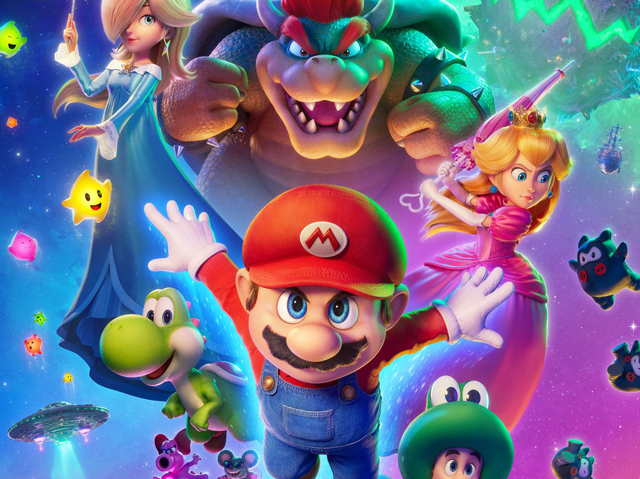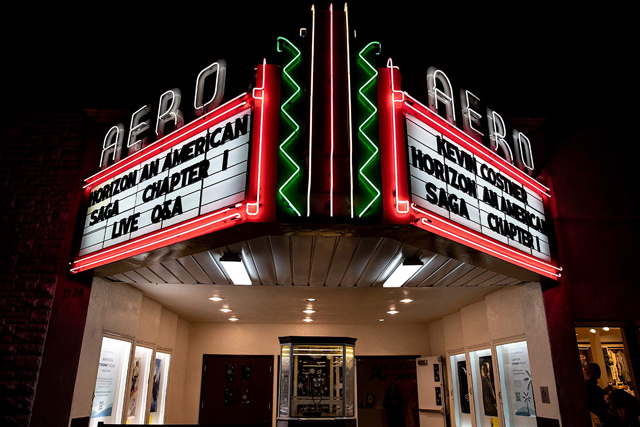
So, we are well under way into the year of 2026, and there are already many things happening in the world of movies this year. Primary among the things happening in Hollywood right now is the uncertainty surrounding the impending merger between Warner Brothers and Paramount. What was once the Big 5 studios will soon wither down to just a Big 4, and many people are rightly worried what that may mean for the already withered job market in the movie industry. Many people are going to lose their positions due to redundancies no matter what happens when the merger goes through, and the fact that there is one less place to pitch movie ideas to in Hollywood also is going to have a long term effect on how many productions actually get to go into production. Movie theaters are especially anxious, because this also means a reduction in the number of movies that will be distributed into the market, which already has been reeling from the effects of both streaming and Covid. But, despite the existential problem of these mega-mergers, ticket sales have actually been strong this year. Buoyed by movies like Project Hail Mary (2026), Hoppers (2026), and The Super Mario Galaxy Movie (2026), this Spring time box office has been the best the industry has seen since before Covid. Whether or not the box office can sustain that momentum through the summer is another question, but there are quite a few movies that could indeed prove to be big grossers for the studios. We’ve got the usual sequels of course, but there’s also some big movies coming from the likes of Steven Spielberg and Christopher Nolan, as well as the first batch of festival season movies that may end up in the conversation for Awards season later this year. Given that the Spring season has already put the year off to a good start, the hope is that the Summer helps to push the box office to some record-breaking heights, or at the very least getting to a point where we were before the pandemic wrecked havoc on the movie theater industry. In a matter of weeks, we will know for sure.
Like every year, I am here to share my thoughts about some of the upcoming Summer season’s most anticipated films. You’ll find them categorized in what I believe are the Must Sees, the ones that have me worried, and the ones that I believe you should skip. Keep in mind, these aren’t predictions about how each movie will perform. They are purely my thoughts about each film based on my overall sense of anticipation and reaction to how well the movies have been sold so far. I have underestimated movies in the past, and I’ve also ended up being too excited for movies that I ended up not liking after seeing them. My goal is merely to raise awareness about what this upcoming Summer movie season may look like. There’s a lot that could happen between now and Summer’s end, including plenty of surprises. Good or bad, there certainly is a lot to talk about for this Summer. So, without further ado, here is my preview of The Movies of Summer 2026.
MUST SEES:
THE ODYSSEY (JULY 18)
It’s gotten to the point now for Christopher Nolan that anything he makes is going to be instantly the most anticipated film of the year. People were very interested in what Nolan would do for a follow-up to his Oscar-winning Oppenheimer (2023). The safe bet was that he was going to stay in that epic spectacle mode, but it also would matter what story he chose to tell. He’s gotten to do science fiction, war epics, historical drama, super hero movies, and paranoia thrillers. But one genre that Nolan has yet to do is fantasy, which it turns out was the direction that Nolan wanted to go towards next. And not only was he doing a fantasy film, he was adapting the grandfather of all fantasy epics. The fact that Christopher Nolan decided to put his vision into adapting Homer’s ancient mythological story just made a lot of sense. Nolan is a master of creating movies on a massive scale that also feel grounded and real, and it’s going to be really interesting to see how he applies his style to some of the story’s more fantastical elements. What we’ve seen so far already looks amazing; the real Greecian style ship in the open water, the brief appearance of the cyclops, and lots of intense acting from the different actors in the film, especially from Matt Damon as Odysseus. In addition to Damon, the film is also loaded with an impressive cast, including a lot of Nolan regulars in addition to some exciting newcomers like Jon Bernthal and Tom Holland. Also exciting is the fact that this will be Nolan’s first film to be entirely shot and presented in 70mm IMAX. The anticipation for the IMAX release was so massive, that screenings for the exclusive 15perf 70mm IMAX version sold out for the opening weekend a full year in advance. I can count myself as one of the lucky ones who managed to snag one of those elusive tickets, though it’s at the tail end of the weekend on a Sunday. Even still, I’ll get to see this movie for the first time in the most ideal way possible; the version that Nolan himself would prefer to watch. My hope is that it will live up to that hype and be worth the year long wait. Without a doubt, the movie that I am most looking forward to this Summer, and probably for the entire year.
DISCLOSURE DAY (JUNE 12)
Beyond Christopher Nolan there are few other directors who can sell a movie purely on their name alone. One of those of course is Steven Spielberg, who is finally releasing his first new film in over 3 years. The interesting thing about this film is that it marks Spielberg’s return, a bit, to extra-terrestrial science fiction, which were the kinds of movies that helped to make Spielberg a household name at the beginning of his career. But while movies like Close Encounters of the Third Kind (1977) and E.T. The Extra-Terrestrial (1982) were stories built on optimism with regards to our interactions with creatures from another world, Disclosure Day seems to be a bit darker in tone. At least that’s how it’s coming across in the marketing. This is more in line with the Spielberg we’ve come to know from darker, more paranoid science fiction storylines like Minority Report (2002) and War of the Worlds (2005). What’s interesting about this movie is that we still don’t know that much about it, leaving much of the plot still shrouded in mystery. It’s also coming from an original story idea from Spielberg himself. He’s only personally written only a couple movies throughout his career and one of those is Close Encounters. This is leading many people to see this as a spiritual successor to that classic film, but I get the feeling that Spielberg is actually cooking up something that I don’t think anybody is expecting, and that’s the exciting thing about this movie. My hope is that there is a good payoff to the mystery behind this movie, and given Spielberg’s track record, he is a filmmaker we can still trust to deliver something that’s both interesting as well as exciting. The cast for this film looks impressive, with the likes of Josh O’Connor, Emily Blunt, and Colin Firth fitting well into the tone of this movie. Also, the action scenes shown in the film feel very Spielbergian as well, showing that even after making movies for over 50 years Spielberg still has the magic touch behind the camera. With a prime spot in the middle of the Summer season, this will hopefully be a welcome return to a version of Spielberg on the big screen that we haven’t seen in a while.
TOY STORY 5 (JUNE 19)
Toy Story has been a rather unusual franchise throughout the years. Everyone believes that each new film is perfection, and that doing one more would spoil a perfect ending to the series. And yet, Pixar still manages to find new stories to tell with these iconic characters, and people end up loving the films even despite their misgivings. Honestly, with the case of both Toy Story 3 (2010) and Toy Story 4 (2019), if Pixar had decided there was never going to be another film in the series, they would’ve easily gone out on a high note. But, here we are with Toy Story 5, and you know what, it actually looks really good. For one thing, the Pixar team appears to have found the perfect way to go with their story, with the toys now having to contend with tech. In this case, the little girl Bonnie who has been the owner of Buzz, Jessie and the rest of the toy gang since 3 is starting to spend most of her time playing with a iPad like device, ignoring them completely. This is a perfect story to tell in our current period of time because of the affect that tech has been taking over our attention, and in particular is negatively affecting the attention spans of children who more and more are being raised on these devices. It’s amazing to think that a series that started 30 years ago has managed to find a way to be timely. In addition to the intriguing premise, it’s also nice to see all these characters we’ve grown up with coming back to the big screen again. Both Tom Hanks and Tim Allen are back to voice Woody and Buzz, along with Joan Cusack as Jessie, Wallace Shawn as Rex and John Ratzenberg as Hamm. New to this film is the tech device itself, given a shell that’s frog-like and cleverly named LilyPad (voiced by Greta Lee), and she looks to be a interesting new antagonist for the toys to go up against. And in addition to the returning cast, this movie is also being helmed by one of Pixar’s most legendary filmmakers, Andrew Stanton, who in addition to being the director of classics like Finding Nemo (2003) and Wall-E (2008) has also been a writer on all the previous Toy Storys, so this franchise is in good hands. We’ve seen great finales from this series before, but one more is perfectly welcome, as long as it lives up to the others.
SPIDERMAN: BRAND NEW DAY (JULY 28)
Marvel has spent much of 2026 waiting in the wings, choosing to focus more on building momentum and excitement for the holiday season release of Avengers: Doomsday. This is very different from their 2025 schedule, where they had 3 big releases last year (Captain America: Brave New World, Thunderbolts*, and The Fantastic Four: First Steps), all of which performed under Marvel’s usually high box office standards, even despite positive reviews for that latter two. But, we aren’t going through this summer season without any Marvel on the big screen. While it’s technically a Sony film and not a Marvel Studios/Disney film, this is still a continuation of the enormously popular MCU adjacent Spider-Man series. Tom Holland returns as the friendly neighborhood webslinger, donning the mask for a record breaking fourth time. And after the multiversal events of Spider-Man: No Way Home (2021), the MCU’s Peter Parker is now disconnected from the past life he once had, anonymous to everyone who once knew him, even his closest friends who now see him as a stranger. But, he still gets to save his neighborhood as Spider-Man, though in this movie it looks like things get complicated as Peter is going through a bit of a metamorphosis. No matter what, people everywhere are excited to see where Spidey’s story goes next. The anticipation is still pretty high, even if it can’t quite match the amount of hype that preceded No Way Home. I like the fact that even though Spider-Man has become disconnected with his past life as an Avenger, he still exists in this MCU world where he can still meet with the Hulk, played here again by Mark Ruffalo. It’s also exciting that they are also bringing in other Marvel characters who haven’t shined on the big screen yet, like Jon Bernthal’s The Punisher. But it will be interesting to see what this movie means for the future of Spider-Man. This year marks 10 years since Tom Holland made his debut in Captain America: Civil War (2016), so the fact that he’s still up to play this character is pretty incredible. But, how many more will there be? The likelihood that he’ll turn up in Avengers: Secret Wars (2027), and Doomsday has the benefit of having Spider-Man be their lead in before it hits movie screens. Maybe Brand New Day gives us a teaser for one of the two. Regardless, it will be great to swing with Spider-Man again.
COYOTE VS. ACME (AUGUST 28)
One of the greatest miracles that can happen in cinema today is to see a movie rise from the dead. Despite having a near complete movie almost ready to go, Warner Brothers CEO David Zaslav decided in 2022 to cancel and shelve this hybrid animation and live action movie purely for a tax write-off. The fact that all that hard work from the cast and crew, no matter the quality of the finished product, was never going to see the light of day left a particularly bad taste in the mouths of Looney Tunes fans and regular movie goers alike. Is that all David Zaslav thinks about the movies made at his studio; something to just sacrifice for the sake of a short term financial gain in tax returns. But, unlike it’s fellow victim Batgirl, Coyote vs. Acme managed to survive just long enough to have the rights to it’s distribution sold to a new buyer. It wasn’t a sure thing, given the $70 million budget attached to it, which WB wouldn’t part with the film for anything less. Thankfully, indie distributor Ketchup Entertainment managed to put up the cash to take the movie away from Zaslav’s hands, and give this once doomed movie a chance to be seen by the public. Not only that, but they are also giving it a Summer theatrical release, albeit at the very tail end. I don’t know how good or bad this movie will end up being, but I will indeed make an effort to see it as a gesture of support for seeing movies get their chance to be seen, and not buried by a media conglomerate for tax purposes. I really do hope Ketchup Entertainment makes good on their investment. As a movie, it does have a fun premise, as Wile E. Coyote has had enough of all his bad luck and decides to take the ACME Corporation to court for all their failed products that keep letting him down. The fact that this movie has an anti-corporate message itself is pretty ironic, given what they ended up going through. Hopefully, the movie can live up to it’s premise, and also do well with all those iconic Looney Tunes characters, who have been honestly unvalued as of late by Warner Brothers. No matter what, the exciting part of it all is that this movie is a survivor of some soulless corporate shenanigans and the fact that we all get to see is very much a miraculous thing.
MOVIES THAT HAVE ME WORRIED:
STAR WARS: THE MANDALORIAN AND GROGU (MAY 22)
One thing that is going to define this Summer movie season is a lot of franchises that have been struggling as of late making an effort to prove themselves at the box office again. This is very much the case for Star Wars, which hasn’t been on the big screen since the divisive Rise of Skywalker in 2019. Since then, Star Wars has been making it’s presence known on the small screen with numerous streaming projects on Disney+. Some of them have not been as beloved as the Star Wars movies of the past, but there have been some popular new shows that have served the popular IP well; especially the award-winning Andor. One of the most popular Star Wars shows, and the one that helped launch Disney+ in the first place, is now getting it’s chance to shine on the big screen as well. The Mandalorian launched in 2019 and became an instant buzzworthy show, thanks to a little surprise character that we all at the time called Baby Yoda. In further seasons, we learned that Baby Yoda did in fact have a name (Grogu) and his story proved to be just as captivating to us as that of the titular bounty hunter, played by Pedro Pascal (often hidden under a mask). The show ran for a successful three seasons, but the question remains, can that success on TV translate into box office success. It helps that the show was developed by a veteran director like Jon Favreau, who is also helming this movie adaptation, and that much of the show’s production team is also playing a part in the making of this movie. But, it’s extremely difficult to translate what worked in 30-40 minute episodes into a two hour self contained story. This is also a continuation of the show as well, so those who hadn’t seen The Mandalorian may feel a bit lost, especially if the movie doesn’t give them any context. I hope that the film does bring out what made the show a fun watch, and that it lives up to the high standards of the Star Wars franchise. It’s been a while since Star Wars has been on the big screen, and that could be a handicap for this film out of the gate. At least we know that the very passionate Grogu fanbase will help this movie out. The force is strong with that one.
SUPERGIRL (JUNE 26)
It’s funny that the upcoming DC comics film that’s not being directed by James Gunn is the one that feels most like a James Gunn movie. After seeing her briefly introduced in last year’s hit re-launch of the Superman (2025) franchise, Kara Zor-El (aka Supergirl) is now getting her own film follow-up. And it definitely has Guardians of the Galaxy (2014) vibes. James Gunn certainly has creative control of all the DC properties that will be making it to the big screen now that he is the Creative Director, but he’s also trying to change things up every time he goes behind the camera. That’s why his Superman felt like a very different animal than his Guardians films or even his Suicide Squad (2021). So, it’s unusual to find a movie like this that copies so much of the Guardians’ formula; a dingy interstellar setting, a flawed but lovable protagonist, and quippy dialogue from heroes and foes alike. The big question mark is whether Supergirl can hold her own at the box office like her more famous cousin did. The fact that this is stylistically very different movie may end up helping, and Milly Alcock seems to have a good handle on the character. I like the fact that they are making her relationship with her pet dog Krypto a central part of the story. It gives the plot weight, while at the same time making things personal for the character. This isn’t a fate of the world scenario; it’s just a girl doing what she can to save the dog she loves. One of the other things to look forward to is the debut of Jason Momoa as the DC anti-hero Lobo. Momoa of course did his time in the DCEU as Aquaman, but this is honestly the character he was better suited for as an actor. Lobo is mayhem on wheels, and Momoa looks like he’s having a blast playing this character. Hopefully this proves to be one of the Summer’s best surprises like Superman was last year. Supergirl has honestly not had the best of luck on the big screen thus far, with an ill-fated 1984 film and the wasted potential of her presence in 2023’s doomed Flash movie. Hopefully this is the film that breaks that curse.
MASTERS OF THE UNIVERSE (JUNE 5)
There are two ways to go with nostalgia bait movies. One can fulfill every childhood dream of seeing your favorite characters brought to full life on the big screen. And the other is that it shamefully wastes it’s potential as a cash grab made by corporation hoping to squeeze whatever life they can out of their IP. This isn’t the first time the He-Man franchise has been adapted into live action, but that 1987 Cannon Films production starring Dolph Lundgren is largely seen as failure despite some camp value that has turned it into a cult classic over time. For the most part, He-Man and the Masters of the Universe has become very much a relic of the 80’s, with it’s appeal growing older along with the audience that was raised on it. And yet, Amazon MGM has decided it was worth it to try their hand at bringing this franchise up to date for a new big screen adaptation. While it does seem a little too effects heavy, there could be some charm found throughout this film. The cast they got looks pretty faithful to the iconic characters they are playing, especially Nicholas Galitzine who really bulked up to play the part of He-Man. Idris Elba being onboard is also a good thing. The film is also being directed by Laika Animation co-founder Travis Knight, who in addition to making beloved animated features like Kubo and the Two Strings (2016) also directed the best Transformers film to date with the surprisingly heartwarming Bumblebee (2018). Even still, the movie has a lot to prove to both long time fans as well as the generic public at large. Do people still care about He-Man enough to warrant a successful movie franchise? It also doesn’t help that the villain, Skeletor, is being played by Jared Leto, who has been the angel of death for many recent box office bombs recently, like Tron: Ares (2025) and Morbius (2022). We’ll see if this movie is able to overcome it’s shortcomings and hopefully provide some good nostalgia infused entertainment this Summer. Otherwise, He-Man will probably just remain a relic of the past.
MORTAL KOMBAT II (MAY 8)
The timing couldn’t have been worse for the first Mortal Kombat movie in this new reboot series. The film got delayed due to Covid for a year, and then when Warner Brothers was ready to start putting it out once theaters re-opened, it got undercut by the studio’s failed Project Popcorn initiative that saw it have a hybrid release in theaters and on streaming. This led to depressed box office, which led to a truncated cinematic run. And yet, it got enough buzz off of streaming to convince the studio to greenlight a sequel. While the first movie was far from perfect, it still had some worthwhile things about it; especially two excellent fight scenes between legendary adversaries Scorpion and Sub-Zero. The film also teased a sequel that promised us that we would soon be seeing fan favorite fighter Johnny Cage joining the cast. Well, you have to give credit to the filmmakers for making good on that promise. The best part is that they got someone like Karl Urban to play the part, a veteran action movie star himself who perfectly fits the role. The only question is, will the movie still take advantage of it’s R-Rating. The first film flew a bit under the radar, so it was better able to get away with some pretty gory stuff, which is very much in character with the Mortal Kombat brand. But, given that this franchise is becoming more popular, the worry is that Warner Brothers might water it down to appeal to younger and more violence-adverse audiences. Given that the movie still has an R-Rating is a good sign, but we’ll only know for sure once we see the movie. The hope is that the filmmakers do the exact opposite of watering down, and instead ups the ante, making the fight scenes even more over the top in it’s violence. That’s the appeal of Mortal Kombat, the fact that it’s done to excess. Karl Urban’s Johnny Cage should be a lot of fun, but let’s hope that the film doesn’t become a victim of it’s own popularity and suffers an unexpected Fatality in the process.
MOVIES TO SKIP:
MOANA (JULY 10)
Yet another cash grab remake of a Disney Animated film is bad enough, but when you couple it with a celebrity vanity project, it just spells disaster. With Disney now running out of Renaissance Era films to remake, they are now looking to their computer animated films for potential remakes, showing that this remake trend is starting to scrape the barrel. It hasn’t even been 10 years since the original Moana (2016) was brought to the big screen, and now we are getting it remade already. The main reason why this movie is happening so soon is because Dwayne Johnson wanted to play Maui in live action before he got too old for the part. Johnson originated the character in his voice over performance, and he did a great job. But, I’m not so sure he can pull off the same amount of charm as the character in live action, especially given that he’s not quite a physical match for the character. Also, I hate that so many of the Disney live action remakes seem too afraid to change up any of the original story’s formula and instead they become almost shot for shot remakes. This is the same issue I had with Universal’s How to Train Your Dragon (2025) remake, which just repeated every bit of the original movie. These Disney remakes work so much better when they change things up, like Cinderella (2015) or The Little Mermaid (2023), and not feel like they have to cut and paste the original. Unfortunately, this movie is giving me a lot of The Lion King (2019) remake vibes, and it saddens me even more that the remake window is getting narrower and narrower, to the point that one animated hit is likely to see a live action duplicate right on it’s heels.
MINIONS & MONSTERS (JULY 1)
Never liked the Minions, and this new film from Illumination is unlikely to change that. But of course my opinion means nothing in the end, because these annoying little yellow menaces have been consistently profitable throughout their existence. One of the most sure fire billion dollar movies of this Summer, this new Minions movie sees them partnering with a cavalcade of famous monsters. There might be some fun gags here and there, especially if Illumination takes advantage of their Universal Studios’ connection and incorporates references to their legendary line-up of classic monsters. But, you can predictably tell that this is merely just an attention filler for younger audiences, and it’s sole purpose is to keep the Minions franchise going so they can sell more Minions merch. Given that they’re barely even doing justice to the Super Mario brand that they have, it’s just another example of Illumination playing it safe as a studio and not taking creative chances like Disney, Pixar, Dreamworks and Sony Animation have been doing. A KPop Demon Hunters would never rise out of a place like Illumination, as it’s a studio built first and foremost to chase after safe bet money.
SCARY MOVIE (JUNE 5)
I hate it when a comedy tries to hype itself up by saying that it’s bringing funny back. Despite the fact that the Wayans Brothers are now back in creative control, it also feels like this movie is relying too much again on the same things that dragged down the spoof film genre in the first place. The fact that they are doing so much topical humor is one thing that’s likely going to doom this movie given that comedy tends to age poorly if it’s tied to a specific period of time. And this unfortunately feels like a step in the wrong direction, especially after we got a great return to form in spoof comedies with the hilarious reboot of The Naked Gun (2025) last year with Liam Neeson. That film did a great job of being funny without having to rely on topical humor. We’ll see what the Wayans manage to do, but the fact that this movie is so reliant on parodying recent horror movies and not classic ones is already a bad sign.
So there you have my look at the upcoming movies of Summer 2026. Certainly the one that I have circled on my calendar the most is Christopher Nolan’s Odyssey. He seems to love that mid-July weekend, as it’s been the time of year that most of his movies have made their premiere. And this time, he doesn’t have to contend with sharing the spotlight with Barbie. I’m also hoping that Steven Spielberg’s Disclosure Day also manages to hit. His last film, The Fablemans, made it to the top of my best of the year list in 2022, so I’m hopeful that he’ll follow that classic up with something that’s both ambitious and daring. I’m also hoping for some nice surprises along the way. Last year, I didn’t even have Zach Cregger’s Weapons (2025) on my radar, and that mid-August release ended up on my Top Ten. Overall, my hope is that this Summer continues to build on the hot streak of this Spring season box office. Movie theaters are doing better, but are still suffering the effects of both the pandemic closures and the strike driven delays. And the potential for another industry altering mega-merger between studios could cause there to be even more of a shortage of available movies to screen, which in turn could lead to another period of decline for the theater industry. I will continue to choose movie theaters as my ideal place for first watches of movies; yes even the Netflix ones. Hopefully, this year presents a bit of a revival for the movies. When things start to become uncertain economically, movie theaters tend to weather the storm of recessions because people want to go out and have fun, and a movie is still cheaper than a concert or a Broadway show. So, I hope my preview was helpful in spotlighting the movies coming up in the months ahead. Some you probably were already well aware of, but hopefully I raised some awareness of movies that you might have otherwise missed; like Coyote vs. Acme for instance. Let’s all have a good summer ahead and hopefully we all have a fun time watching movies together.