Category Archives: Off the Page

Off the Page – John Carter of Mars

It’s pretty well established that adaptations of popular literature to the big screen is a hard business, and today’s example is no exception.  In fact it is the epitome of how difficult it is. In my first article of this series, I detailed the translation of Stephen King’s The Shining, which was a case where a brilliant filmmaker dramatically altered a brilliant piece of writing and came out with something equally as brilliant. In my second article, I covered The Road, an example of filmmakers sticking closely to the text of Cormac McCarthy’s masterpiece and coming up with something that was just okay. Now I’m going to tell you about a movie adaptation of a classic novel that proved to be an outright disaster, at least at the box office.   This of course is the failed big screen adaptation of Edgar Rice Burroughs’ early twentieth century classic, John Carter of Mars.  John Carter (2012) was Walt Disney Pictures attempt to jump start a new big screen sci-fi franchise, one which already had a nearly hundred year long legacy behind it in literary circles, but once the movie made it to theaters, it was sadly met with indifference by critics and audiences, which did not bode well after Disney had spent a quarter of a billion dollars making the film.  Some have argued that the reason behind John Carter’s box office failure is because it had long become irrelevant over the many decades since the series was first published and that all of its many influences have since overtaken the original in notoriety. In this article, I will look at how the movie stands up to the original novel, and see exactly if it was a problem with the translation or if the original story was too out of date to become a hit with modern audiences again.

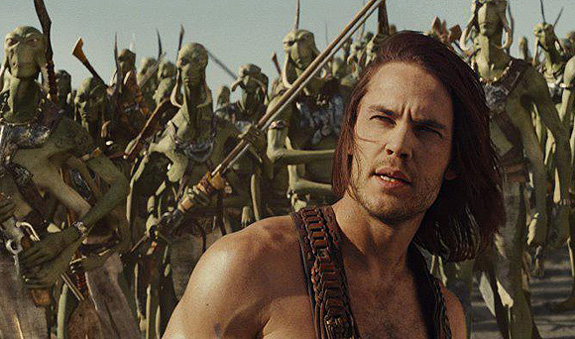
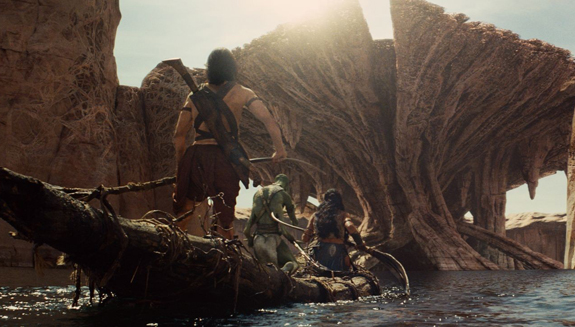
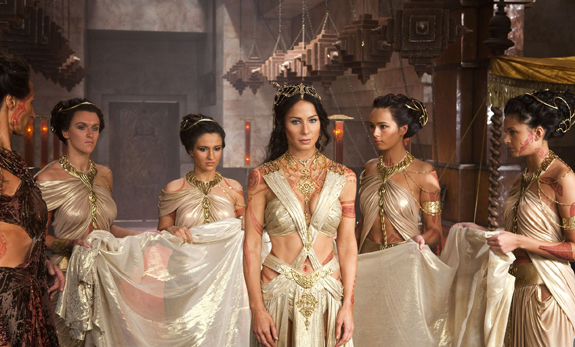
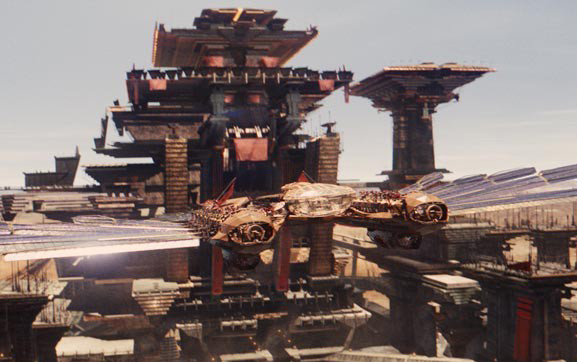
Although the story of John Carter of Mars may not be as fresh in everyone’s minds today, its influence has been widespread in both literature and in cinema.  The story first appeared in serial publications all the way back in 1912, written by an imaginative young American author named Edgar Rice Burroughs.  Burroughs’ serial, then titled Under the Moons of Mars, detailed the adventures of Sergeant John Carter, a former Confederate soldier who is magically transported to the planet Mars while on the run in the deserts of Arizona.   Once there, he learns that his strength and agility are increased ten fold because of Mars’ lower gravity and thinner atmosphere. His special abilities catch the attention of a tribe of tall, green-skinned warriors known as Tharks, who quickly adopt Carter into their clan.  Over time he learns their language and gains their trust, especially with regards to the Thark chieftain Tars Tarkas and his estranged daughter Sola.  In time he learns more about the different cultures of Mars, which the Martians call Barsoom. And John Carter learns that Barsoom is just barely clinging on to life, with the oceans dried up and only two major cities left on the entire planet, both of which are entangled in a civil war.  One is a city of scientific research known as Helium and the other is a mobile scavenger city called Zodanga.  The Tharks are a nomadic tribe who avoid contact with the red skinned human-like residents of the two cities, but conflict finds them when a Helium expedition team runs into a Thark encampment, which brings the Princess Dejah Thoris into John Carter’s life and soon brings the outsider into this global conflict.
john carter 4

“When I saw you, I believed it was a sign… that something new can come into this world.”

A lot of John Carter’s plot may seem very familiar if your familiar with a lot of sci-if tropes and superhero origins.  But, it should be noted that John Carter of Mars actually predates most of what we know of science fiction today, so if anything what time has actually done to make people forget how revolutionary a piece of literature it was.  Along with his contemporaries across the pond, H.G. Welles and Jules Verne, Edgar Rice Burroughs was inventing what we know as the Science Fiction genre.  But while Verne was celebrating wonders of science in fantasy, and Welles was using science as a basis for social commentary and cautionary tales, Burroughs’ was using science as a basis for swashbuckling adventures. John Carter was mostly inspired by other larger than life heroes of the era like Zorro and Davy Crockett, only his adventures were taken into a more celestial setting, giving rise to new possibilities in adventure writing.  Burroughs would write 12 novels in total set on the world Barsoom, detailing the exploits of John Carter and his offspring. Not only that, but Burroughs also put so much effort and detail into his novel that he even crafted a dictionary detailing the rich vocabulary of Barsoom and its many cultures, a concept authors like J.R.R. Tolkien would later adopt through appendices and side stories connected to their novels.  Because of the enormous success of the John Carter books, there are decades worth of different works of literature and cinema that have either been influenced or have outright copied it over the years. Of course, the similarities to the origin of Superman are pretty obvious, swapping out a hero sent from Earth with a hero sent from the planet Krypton. But, there are also elements of John Carter’s story found in everything from Star Wars, to He-Man, to even James Cameron’s Avatar (2009).   So, why did it take so long for John Carter to make it to the big screen himself?

For the most part, it was just several cases of bad timing and filmmakers not finding the right angle on the story. Several attempts were made through the years to bring John Carter to the big screen.  Warner Brothers worked with Edgar Rice Burroughs directly to bring an animated version of the character to life in a project that would’ve predated Disney’s Snow White and the Seven Dwarves (1937) as the first full length animated feature.  Sadly, the project never took off, mainly due to budget concerns and all that remains of the project is demo reel recently discovered in the Edgar Rice Burroughs archives in Tarzana, California. Live action versions surfaced off and on over the years, including one in the 80’s directed by Die Hard (1988) helmer John McTiernan and starring Tom Cruise as the title character. Sadly, this two never gained traction.  Disney stepped in twice over the years, once in the 70’s and again in the 2000’s to get a John Carter movie made, and it wasn’t until the second time around that the film finally gained footing.  Part of Disney’s confidence in the project came from their successful collaboration with the Burroughs estate, adapting the author’s other popular character Tarzan into an animated film.  And with CGI becoming much more reliable, it seemed more possible to bring Burroughs’ vision of Barsoom to reality, magnificent creatures and all.  To undertake the adaptation, Disney gave directing duties to Andrew Stanton, an award winning animation director from Pixar, who had never directed a live action feature before. It was an unusual choice, but Stanton was a proven storyteller, with his enormously successful Finding Nemo (2003) and Wall-E (2008) earning huge raves. But, as was soon apparent, bringing John Carter to the big screen proved to be more difficult endeavor than anyone anticipated, and there is no easy answer as to why.
“I tell you truly, John Carter of Earth, there are no Gates of Iss.  They are not real.”

Opening in Spring 2012, John Carter struggled immediately at the box office, falling way short of it’s production budget and causing Disney to declare a huge shortfall for their company profits that year, leading to a write off.  And though part of the failure of the film falls upon the quality of the film itself, it’s not entirely to blame.  John Carter was a nightmare for Disney’s marketing department, leading to several title changes, until ultimately doing away with the “of Mars” moniker and just labeling it with the very bland sounding John Carter.  While the title didn’t help much, the main struggle was the fact that there was nothing here to distinguish John Carter from every other sci-fi film of the last half-century, which is ironic given that the John Carter novels are what introduced the world to the concept of science fiction.  As a result, John Carter became an unfortunate victim of it’s own legacy.  Too much time had come between the introduction of the character and his eventual appearance on the big screen, with the movie ultimately being released on the character’s centennial anniversary in 2012.  But, did the fault come from an outdated story-line?  Frankly, having read the first book on which this movie is based, I was astonished how little about it was dated.  Sure, some of the morals and racial undertones don’t quite fit today’s standards, but Edgar Rice Burroughs’ writing style is so timeless and easily comprehensible that it can be just as easily enjoyed today as it was when it was published 100 years ago.  The main problem is not the text, but the fact that it’s become too absorbed into everything else in science fiction, making it far too familiar to newer audiences.  Disney could have done something interesting with the text and make John Carter either a uniquely artistic interpretation of the source, or give the story a very modern twist that could help set it apart.  Instead, they went the safe route, and basically rip off all the other properties that John Carter had inspired, creating a mobius strip of mediocrity.
john carter 3


“When I was little and we would look up at the stars, you would tell me of heroes whose glory was written in the sky.”

One big thing that was lost in translation between the book and the film was actually the character of John Carter himself.  In Burroughs’ original novels, we are treated to a first hand account from the main character himself, helping to put us right inside the mind of John Carter on his journey.  By doing this, Burroughs perfectly illustrates the wonders of Barsoom by putting the reader into the mind of the outsider, experiencing this new world first hand.  We also get to know the man John Carter much better this way, seeing him as a somewhat arrogant but still very courageous and cunning hero.  In the movie, that first person experience is minimized.  In the movie, Carter (played by Taylor Kitsch) recounts his story through his last will and testament to his beneficiary, Edgar Rice Burroughs (played in the film by Daryl Sabara).  It’s weird to see Burroughs himself depicted as a character in a movie based on his own creation, but it’s actually something they adapted correctly from the book.  From there, the movie has Burroughs reading the account of Carter’s journey, but once the flashback begins, the movie begins to fragment, moving away from the first person perspective.  This is unfortunately where the movie falters because by cutting away from Carter’s story to tell the larger political plot across Barsoom, we ultimately loose focus on the character.  And unfortunately, Taylor Kitsch is not a good enough actor to fill that charisma hole and make John Carter interesting.  Instead, he’s purely there to look good in the costume, which is sadly true for the rest of the cast.  Everyone, including some good actors in the cast like Dominic West, Mark Strong, and Bryan Cranston are purely in costume drama mode and hardly ever make an impression in the movie.  The only characters with a little personality in the film are the CGI animated Tharks, especially Tars Tarkas (with the voice of Willem Dafoe) who is by far the best realized character in the movie.  But, by trying to remove the focus off of the main hero, and tell the story in a more standardized way, it robs a little power away from John Carter’s character in the process.

A lot of the remaining problems with the movie, besides the bad timing of it’s release and the loss of focus on his character, is the fact that there is no passion behind it.  It seems like Disney put the film into production purely as an obligation, and the end result is a paint by numbers approach to epic film-making.  Andrew Stanton is a fine filmmaker and a brilliant storyteller, but he was clearly out of his element here.  Unfortunately, he was tasked with adapting a story that modern audiences were unfamiliar with, and yet also had this monumental legacy behind it.  Too much pressure was put upon his shoulders and all he could do was just ride out the storm.  Unfortunately, by just checking off the list of familiar story tropes, he was left with a film that lacked any resonance.  At best, he made a movie that looked pretty, but had no memorable dialogue, no distinguishable characters, and no sense of adventure.  But the task shouldn’t have been dealt with so lazily by Disney.  Burroughs’ novels are tailor made for the big screen and the only thing that was holding them back was the fact that technology couldn’t fully present Barsoom in the way it needed to be seen.  Disney held up that end, but they didn’t allow the story to define itself.  A large reason for that is because too many science-fiction films today have become action packed extravaganzas, and Disney didn’t want their film to feel too different.  Therefore, much of John Carter is filled with needless action set pieces that don’t advance the story in any way.  Only a standout scene in an arena where Carter fights Martian White Apes actually stands out, and that’s mainly because it comes straight from the source; and has of course been imitated in countless other sci-fi stories (the Rancor pit in Return of the Jedi for example).  Couple this with a lack of character development, and you’ve got a movie that is neither immersive nor engaging.  It sadly becomes a cliff notes version of Burroughs’ original story, stripped down of actual originality in order to appeal to all audiences, and appealing to none in the end.
john carter 1


“Did I not tell you he could jump!”

But, does this reflect badly on the original novels themselves?  I don’t believe so.  John Carter of Mars has been around for over a hundred years now and will continue to stick around long after.  And the movie itself could have been a lot worse than it is.  It doesn’t exploit the novels in a bad way; it’s not even that bad of a film overall.  It’s just a disappointment in the end.  A great film could have come out of this had a more creative vision been behind it.  Sadly, John Carter could not escape the fact that too many years had passed the story by, and everything that it had pioneered had already become normalized in other works of science fiction.  By the time this movie came out, it had nothing original left to add.  That’s not to say something new and interesting could have been done with it.  By playing it safe, Disney spoiled any chance of actually bringing John Carter back to relevance again in it’s second century of existence.  What I think they should of done is take the same route they took with Edgar Rice Burroughs’ other famous creation, Tarzan, and make an animated feature based on John Carter.    It probably would have retained more of Burroughs’ original vision of the character and the world he inhabits had they chosen that medium, but working in live action with the tools we have now is not unreasonable either.  Sadly, Disney was one and done with John Carter; scrapping plans for a trilogy and letting the rights revert back to the Burroughs’ estate, who can shop the story out to other studios now.  Still, it is admirable that Disney allowed for the movie to be made, given the long wait for the character.  Hopefully, we’ll get a better John Carter of Mars movie in the future.  For now, you can find it in any book store, and the stories remarkably hold up to today’s standards.  But, what this proves is that even earnest adaptations can go astray and it may be as a result of not knowing how to handle the story right, or trying to deal with it too delicately for it’s own good.  Time was not on John Carter‘s side, but a failed movie shouldn’t be an indicator of a flawed story.  John Carter still stands as a legend and hopefully his time will come again.
Off the Page – The Road

Road 1


There are few if any American authors today who are as influential as Cormac McCarthy. And even fewer are as popular with Hollywood filmmakers at this moment.  The now octogenarian writer has been actively writing since the 1960’s and has published a series of highly acclaimed novels over the years. A few of these have especially drawn the attention of some high profile film producers, who are drawn to McCarthy’s very unique sense of storytelling.  Working mostly in the Western and Southern Gothic genres, McCarthy’s novels often deal with the loss of the American frontier and the plights of the isolated rugged individual dealing with the growing modern world. His novels are often bleak and are not usually known for having a happy ending.  In fact, another characteristic of McCarthy’s writing is the lack of traditional beginnings and endings, as if the story just plops the reader into the middle of an already unravelling plot.  But, what really makes McCarthy a favorite amongst readers are his vivid characterizations.  McCarthy says more about his characters in just a few short words than more authors do in an entire chapter, and he has created some of the most interesting character dynamics we’ve seen in modern literature.  While his stories are grim, they are nevertheless captivating, and they have rightly helped underline the definition of the modern Western narrative. And of course, when your novels are popular in print, they are almost certainly destined for a trip to the big screen, whether or not that’s a good thing.

Luckily for Mr. McCarthay, his novels have largely been treated respectfully when adapted for the cinema. Actor and director Billy Bob Thornton was the first to take a chance on a McCarthay novel, with his movie version All the Pretty Horses (2000), which tackled the first in what has been dubbed McCarthay’s “Border Trilogy.”  Unfortunately, despite critical acclaim, the movie didn’t do well enough at the box office to justify completing the rest of the trilogy, and the remaining novels, The Crossing (1994) and Cities of the Plain (1998) have yet to be adapted.   But in a few short years, Cormac McCarthy would explode onto the Hollywood landscape in a big way when the Coen Brothers decided to bring his 2005 five novel No Country for Old Men to the big screen. The end result was a huge success, performing well at the box office and winning all sorts of awards, including the Oscar for Best Picture of 2007.  Suddenly the author was in high demand, and the rights to his next novel was quickly scooped up. Surprisingly, McCarthay’s follow up was a complete departure in terms of genre. Instead of staying true to his Western roots, McCarthay decided to tackle a post-apocalyptic world with his 2006 novel, The Road.  But even despite this change in genre, McCarthay’s writing style remained true to form and The Road became the author’s most successful book to date, winning even the prestigious Pulitzer Prize.  To bring the novel to life, rights holders The Weinstein Company tapped Australian filmmaker John Hillcoat, whose 2005 film The Proposition became an instant modern Western classic for many filmgoers, and a perfect indication to what was needed to bring The Road to life.  While hype was strong for the movie, the end result was sadly mixed, and in this Off the Page article, I will explain how even well intentioned and faithful book adaptations can go astray.

Road 2

“God never spoke.”

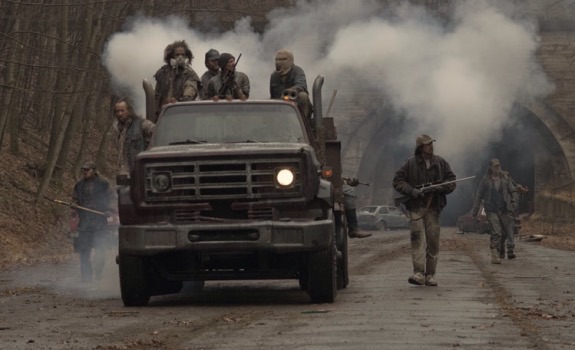
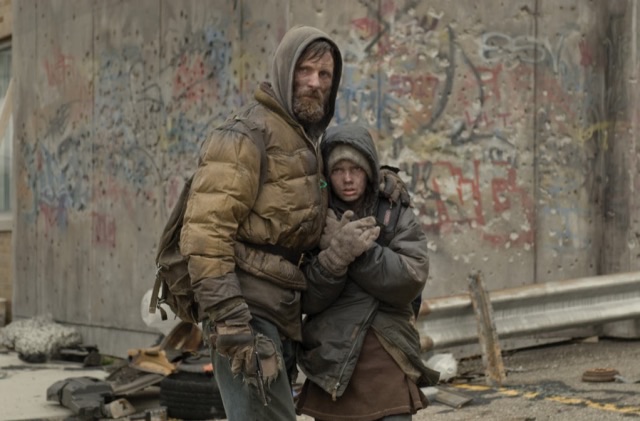
One of the biggest challenges in adapting a novel is to decide what needs to make it into the film, and what can be left out.   This is not as difficult as you would think. Oftentimes, it’s just about finding the central element and focusing on it to drive the story along, whether it be a character or a McGuffin device.  Other things like subplots and character details can often be minimalized without damaging the effectiveness of the story.  McCarthay’s The Road is especially challenging in this sense, because of the way McCarthay writes. His novel is told entirely from the perspective of two characters, a father referred to only as The Man (played in the movie by Viggo Mortensen) and his son known only as The Boy (Kodi Smit-McPhee).  And telling the story only from their point of view limits an element that helps to make translations to the big screen easier for the filmmaker which is the perspective.  In The Road, we witness an account of a cataclysmic event on Earth, but without the why and the where.  McCarthay never states what caused the sudden destruction of the planet’s environment (some readers theorize an asteroid strike or a supervolcano eruption), and his narrative is far more focused on the aftermath. But even still, McCarthay is scarce on details, with his writing style instead focused on the thoughts and actions of the present in these character’s lives.  This works amazingly well on the page, giving the reader a very “in the moment” reaction to the horrors that the characters encounter, but it also makes the transition all the more difficult.  A filmmaker needs to have a sense of place from the page in order to make it come alive for audiences.  When you have a writer who is purposefully vague in his descriptions, it tends to leave the filmmaker in an awkward position of trying to figure out what’s being seen and if that lives up to the author’s intent.

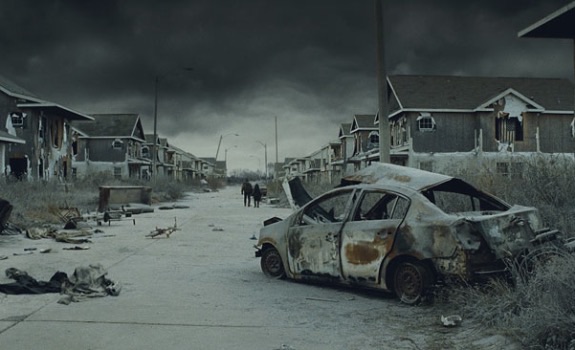
Now thankfully for John Hillcoat, the author is still present and has been helpful in the past consulting on adaptations of his work.  No doubt the visualization of The Road meets the author’s standards, but even still, McCarthay is not the only one who holds up high standards over the look of his settings. The enormous popularity of The Road has also made its readers especially judgmental about how the film should appear. The unfortunate by product of McCarthay’s intentionally vague sense of place is that it has opened up infinite possibilities in people’s minds about what the settings should look like.  The only consistencies throughout are images of vast expanses of fire-ravaged woodlands, open fields devoid of vegetation now covered in ash, ghost towns devoid of activity, and the final destination being a rocky, coastal beach against a tumultuous ocean.  McCarthay makes all these places memorably haunting, but they could also be located anywhere in the world.  I think the only certainty is that it’s set in the Western United States, or what’s left of it after the cataclysm.  When I read the novel for myself, I had the image in my mind that the characters were making their  way across my home state of Oregon, because most of what McCarthay describes coincides with a lot of the rural scenery that I’ve benergy familiar with growing up there, at least in a pristine and alive state (especially the coastline).  This was further reinforced by the movie, which indeed shot significant parts of the film on location in Oregon.  But, I’m sure other readers from other parts of the country imagined something entirely different, and probably closer to home, and this is the dilemma that director Hillcoat had to face.

Road 3

“I told the boy when you dream about bad things happening, it means you’re still fighting and you’re still alive.”

I think the most mixed result of Hillcoat’s adaptation of the novel is with it’s visuals.  For the most part, the movie does a commendable job of bringing the novel to life, particularly in imagining the desolate wastelands that the characters must cross. But, it’s also here that the movie has some of its shortcomings, and that’s a result of its adherence to the source material. Cormac McCarthay only allows for certain details in his account of the settings, which limits what Hillcoat is able to visualize and it opens up the risky challenge of trying to expand upon the text.  Director Hillcoat works at his best with smaller settings that come vividly out of the book, like the macabre horror house of ranging cannibal hunters or the clean and sterile  safe haven of the storm shelter bunker.  But other moments feel out of place, or not quite up to the scale that was presented on the page.  Whether it was due to budget constraints or not, some of the larger set pieces feel surprisingly small in the movie.  A search through a shipwreck from the novel is almost non-existent in the film.  But most of this is the result of the risks you take when adapting a novel to the big screen.  Hillcoat may have had to lose some of the novel’s most memorable set pieces in service of the story, but it was in order to make the ones that matter most stand out all the more prominently.  Hillcoat also ran the risk of going too far with the visuals, making the world he was depicting feel too visually striking, which would have looked artificial as a result.  Thankfully, his gritty style was perfectly suited, as the movie feels very true to the overwhelmingly bleak landscape of the novel, with grey and brown tones dominating every frame.  Some of it is quite oppressive, giving the viewer a very realistic sense of what a dying world would look like.

Road 4

“Do you ever wish you would die?”

“No.  It’s foolish to ask for luxuries in times like these.”

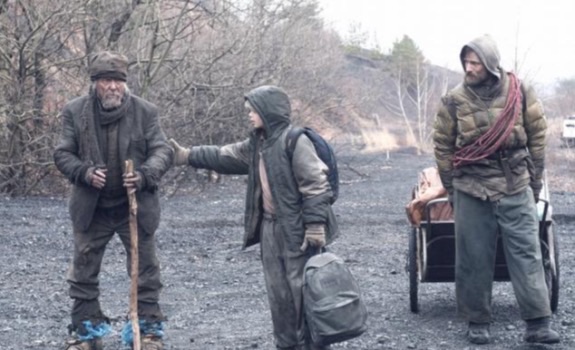
I think where John Hillcoat succeeded the most, and may have even bettered the novel, was in his depictions of the main characters. Translating Cormac McCarthay characters can be a daunting task, because they are entirely of their own world, and are so defined by the way McCarthay writes them. For an actor to make these characters work, they must have a good sense of Cormac McCarthay’s intentions for the characterizations are and make it feel natural. These characters often have to live by their own code and exist outside of the what society has set out for them. This is made even trickier by the thinly detailed characters we get in The Road, who exist without names or backstories.  Given these limitations, it’s incredible that the characters work as well as they do in the film.  The pain of everyday life that McCarthay describes in his book is read completely on the faces of the actors, and they manage to believably live in this gritty, dangerous world.  Viggo Mortensen feels especially right at place in this movie, given the method actor’s proclivity for delving completely into character. He pulls off the disheveled look much better than most actor’s would have.  Same with Kodi Smit-McPhee, whose character may have been even harder to believably portray based on how he is in the book. But what the movie does best is to bring the minor characters to life.  John Hilcoat manages to make these briefly seen characters work as highlights in the movie by casting them perfectly. The likes of great character actors such as Guy Pearce, Garret Dillahunt, and Michael K. Williams lend great support, while at the same time disappearing into the fabric of the film. But, even they are overshadowed by an unrecognizable Robert Duvall in a very memorable role as the Old Man. The already blessed cast is made even better by the presence of the legendary actor, who makes this minor character in the novel shine bright, and exceed what was on written on the page.

But, if there was a place where the translation suffered the most between the novel and the movie, it would be in the story itself.  And it’s primarily in how John Hillcoat tries to force the elegance and simplicity of McCarthay’s writing into the film’s screenplay.   The movie does fine with the script for the most part, but because McCarthay’s novel is defined by long dialogues between the Man and the Boy, it unfortunately leads to long talky exhanges in the movie, which kind of gets distracting after a while.  Thankfully, most of the things said are interesting, but you also get the sense that the less said between the two might carry more impact.  Silence is the best asset of the story, given the empiness of the setting, so trying to include a lot of dialogue works against the movie ultimately.  What also becomes problematic is Hillcoat’s attempts to depict the internal struggles going on in the character’s psyche, which is presented in the film through voice-over narration.  This is always one of the big cliches in movie adaptations of famous books, as the filmmakers try to spell out everything from the text that can’t be explained in the dialogue.  The unfortunate side effect is that it exposes the film’s literary roots and takes the viewer out of the immediacy of the setting.  I for one think the movie would have been better off trying to leave the McCarthay prose out, and instead let the story drive itself along.  There’s still enough said by the characters and events that take place that still bears the mark of the author’s style.  Sometimes it just becomes a product of a director trying to be faithful to a fault with the source material.  The movie isn’t spoiled by such decisions, but it does encumber what could have been a real game-changing film, and instead just makes it about average as film adaptations go.

Road 5


“You have to keep carrying the fire.”

While far from perfect, John Hillcoat’s film adaptation of The Road is still a commendable effort.  It’s perhaps that the reputation of the novel may have overwhelmed any possibility of this movie ever becoming just as popular.  Hillcoat is risk taker as a filmmaker, but perhaps he played things too safely with Cormac McCarthay’s masterpiece and made a movie that was passable but unremarkable.  Maybe separated from its place in time, the movie will eventually find an audience.  Hell, if something cataclysmic like this does happen, Hillcoat’s bleak vision of the apocalypse could even become more prophetic then the book. But even still, I’d say that if you want to see a perfect cinematic translation of McCarthay’s writing, you’re better off with No Country for Old Men. The Road, in the end, is a perfect example of taking a well intentioned approach to cinematic adaptation and coming up with something just ordinary.  It’s not a bad film, but it won’t replace the novel in anyone’s eyes either.  Most literary adaptations usually fall under this category, especially the ones that try to take on an acclaimed source.   Its the result of just giving enough thought into the adaptation of the material, while at the same time avoiding any risks.  Hillcoat took enough risks to avoid failure, but the movie just feels too encumbered by avenues not taken.  At least it did show the value of Cormac McCarthay’s status as a writer.  His library of work is still untapped for the most part, and is just waiting for capable filmmakers to bring them to life. The best thing that can be said about the movie The Road is that it took probably the riskiest of McCarthay novels and did something respectful with it, which hopefully sets a good standard for any other adaptations in the future.

Off the Page – The Shining

shining finale

You’ve heard the old adage about movies adapted from other material; that the book was better.  In many case that is almost certainly true.  Books and movies live by different rules, and when the story itself is highly complex, it’s more than likely that a book will more satisfactorily accomplish what the story needs to do.  With books, the reader return to a story through multiple sittings, and absorb all of the material at their own leisure.  Movies on the other hand have to accomplish the same feat, but within an unyielding two hour time frame; three hours if they’re lucky.  To make this happen, the filmmaker has to do the drastic move of cutting or just outright changing whole pieces of the story in order to make it fit within the confines of it’s run-time.  Some things are easy to get rid of, like a character’s inner monologue, but then again, a filmmaker also runs the risk of changing the wrong things, and completely changing the intent of the story overall.  It’s a tricky tightrope for filmmakers to accomplish, and yet adaptations have dominated the Hollywood landscape since the very beginning.  Indeed, it seems like today that Hollywood is more likely to adapt an already proven bestselling title rather than come up with something completely original.  But, on the other hand, there are novels that lend themselves perfectly over to film and one hopes that it falls into the hands of the right filmmaker.

Given all this, I have decided to begin a new series of articles where I look at some of the more famous translations between the written word and the big screen.  With these articles I hope to showcase the many interesting ways that stories evolve between the two mediums.  Also, to make this series a little more interesting, I will also be reading the source novels beforehand as well as watching, or re-watching the movies.  Primarily, I want to read books that I haven’t read before and see how much it and the movie line up together.  More than likely the books I read will be from movies that I have already seen, but there might be cases in future articles where I will be going into both cold, which might give me a very different reaction to both altogether.  For the most part, I just want to use this as an incentive to get me reading more books and allow me to share my thoughts on both with you the reader, in the hopes that it will help you see the value in each, and how the process of adaptation works.   For this inaugural article, I took it upon myself to look at an appropriately dark and Gothic story that fits very well the mood of this Halloween season.  It’s Stephen King’s 1978 classic, The Shining, which of course was turned into an equally renowned 1980 film adaptation of the same name directed by Stanley Kubrick.  The reason why I chose to look at these two is because of the differences between the two; differences of which created a rift between the filmmaker and the author.  Did Kubrick change too much of King’s novel?  Did he change enough to make the film better or less than the novel?  Is the book indeed better than the movie?  After reading both the novel and re-watching the movie, the results surprisingly are more complicated than you’d expect.

shining overlook

“Some places are like people; some shine and some don’t.”

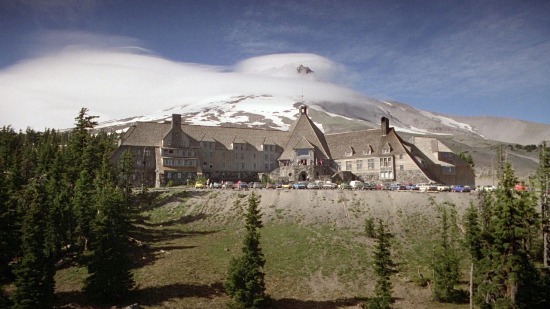
The truth is that both are brilliant pieces of work in their own right, though neither will give you the entirely same experience of the other.  They are like two different views of the same events, told in their own author’s particular style.  Kubrick removes some of King’s more famous supernatural elements, while at the same time adding some of his own.  And while that may tick off some King purists, many people have actually seen Kubrick’s additions as improvements.  I won’t lie and say that during my read of the novel, I was actually looking for those famous moments from the movie, and was just a bit let down when they didn’t appear.  But, that’s not to say that the book itself let me down.  There was a lot of things that the novel itself had that made me wish they were in the movie.  In particular, Stephen King conveys a lot more of the evil presence of the Overlook Hotel in his novel, with vivid descriptions of all the noises and disembodied voices that haunt the main characters throughout the story.  It’s unfortunate that stuff like that gets lost in translation, but at the same time, you can easily see why Kubrick made the changes he did.  Kubrick himself was very selective with his choices of projects, and usually he was more inclined to work outside the Hollywood system and make movies with risque themes and content.  But, with King’s novel, this became a rare case where Kubrick could take on a commercially proven property and still satisfy his artistic tastes.  And indeed, Kubrick’s mark is all over the finished film, creating a truly memorable and chilling adaptation of the novel.

Unfortunately, one of the film’s biggest detractors was Stephen King himself.  He didn’t like Kubrick’s version of his story at all and for many years he dismissed the project as a perversion of his novel.  Years later, King would himself undertake an adaptation in a three part miniseries made for TV.  The 1997 miniseries starred Steven Weber of Wings fame and it stuck much closer to King’s original vision.  Though King himself was satisfied, audiences were not, and the miniseries was critically panned.  The unfortunate thing for Stephen King was the fact that Kubrick’s movie had become such a beloved classic overtime, with many of the most memorable moments becoming ingrained in our pop culture.  Stephen King may have satisfied his own artistic intent, but he failed to recognize the artistry that Kubrick had put into his adaptation, and King’s more standard looking miniseries failed to resonate with it’s visuals.  But that’s not to say that Stephen King can’t tell the story better than Kubrick.  Kubrick is a visual artist, and can create images through the lens of a camera that will stick with you forever.  But Kubrick is only building upon the foundation that King had laid out for him.  What King is brilliant at is painting an image in the mind’s eye, and indeed, much of the strength of the novel is the remarkably vivid atmosphere.  King also lays out the internal struggles within the characters, giving the reader a deeper understanding of the character’s motivations.  Kubrick in turn has to work through shortcuts and reliance on his actors to achieve the same, which does work remarkably well.  In time, King began to understand Kubrick’s impact, and though he still retains reservations about it, he nevertheless now respects Kubrick’s work.

shining twins

“Come play with us Danny.”

In the end, you can watch one and read the other, and still get a satisfying experience.  Both give their audience a wonderfully disturbing descent into darkness, and both accomplish the feat of just being the most epic of ghost stories.  Essentially, all of the elements that matter are present in both.  You’ve got the Torrence family snowbound in the ominous Overlook Hotel during the winter, as they all try to keep themselves from going insane due to the isolation and the fact that the Hotel is also haunted.  The ghosts are mostly the same, though there are exclusions and inclusions of note, and the descent into madness by Jack Torrence (a memorable performance by Jack Nicholson) is roughly about the same.  Where the two depart the most is in how much of an influence the Hotel is having on it’s characters.  In the novel, the Overlook Hotel itself is a sentient entity, infecting the minds of it’s inhabitants, and leading them towards committing heinous acts, thereby collecting more souls into it’s collective body.  Though King never explains how the Hotel came to have a mind of it’s own, it nevertheless comes across in a very vivid way, especially when it takes control of Jack’s mind and leads him towards murdering his family.  We can see that same influence also take hold of Jack’s wife Wendy and his son Danny, as they are tested by the Hotel’s illusions as well.  Kubrick’s movie hints at this, but never overtly states that it’s the Hotel itself that is making Jack turn murderous.  Instead, Kubrick makes Jack much more responsible for his own murderous intent, which diminishes the impact of the evil presence of the hotel, but makes Jack a more frightening character as a result.  It’s one of the many cases where something that’s lost at one point in the story is gained somewhere else.

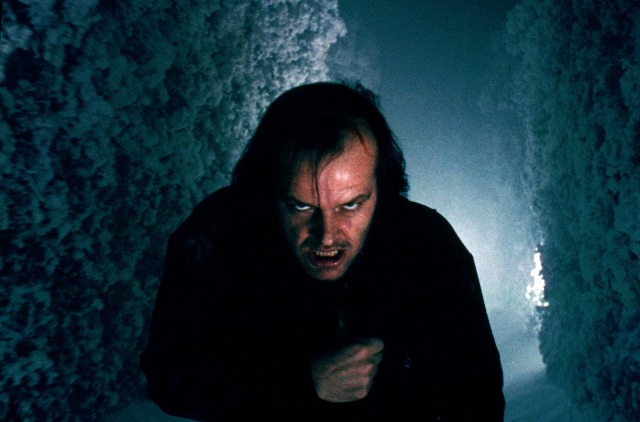
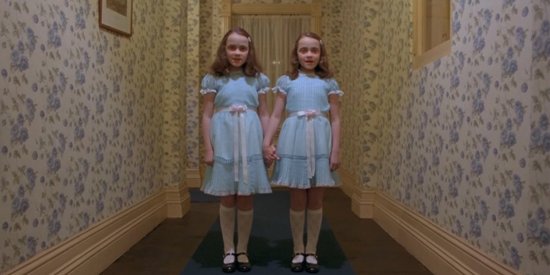
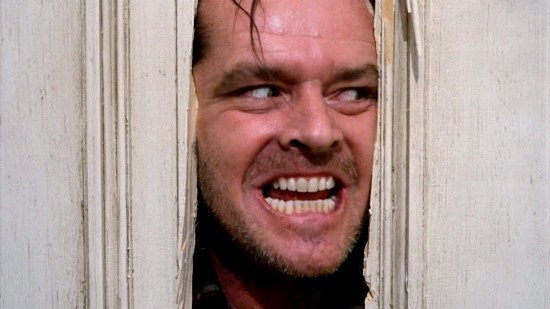
For the most part, Kubrick makes the Overlook Hotel more of a standard haunted house rather than a collective body of evil power working it’s magic on others.  In the hands of a lesser filmmaker, this could be a move that can otherwise miss the mark of the original story entirely.  Thankfully, whenever Kubrick made a change in the story, it was for all the right reasons.  Notably, he removes some of King’s sillier attempts at scares, like party favors and balloons appearing in the elevator and a fire hose turning into a snake, and replaces them with some truly horrific images, like the elevator full of blood.  He also gives the different ghost of the Hotel much more defined personalities, thanks to some very chilling performances.  British actor Phillip Stone in particular is a standout as the deeply sinister Delbert Grady in what is probably the movie’s most chilling scene. Kubrick also added the presence of Grady’s murdered daughters, standing creepily at the end of a long hall in what has since become one of the most iconic images in movie history.  The “All work and no play” scene was also an addition, and it represents probably Kubrick’s biggest departure from the book, as it makes Jack more self aware of his own murderous intent.  By doing this, Kubrick makes Jack a much more frightening villain; something that Jack Nicholson plays up with amazing gusto in his performance.  When the results work this well, it’s easy to see why many people look to the film as their favorite version of the story.

shining jack

“Here’s Johnny!!”

But if there is something missing in Kubrick’s film, it’s the slow burn to that moment of psychological breakdown.  The movie is limited by it’s runtime, and even at nearly 2 and 1/2 hours long, it still has to cram in a lot.  King’s novel is allowed more time to establish the history of the Torrence family and show how things have gotten to the state that it’s at.  By showing all this, he makes Jack’s descent feel more natural, and helps the reader get a better sense of how easily he’s taken in by the hotel.  Danny Torrence is also better defined in the novel, as the book also works as a coming of age tale for the gifted boy.  In the movie, the character of Danny is limited by how well he is played by the actor, and though young Danny Lloyd does a fine job with the role, he’s still is limited to the common inexperience that you see in most child actors; mainly reacting instead of actually acting.   The relationships between father, son and mother make up the bulk of the novel and King makes it clear how the bonds of family is the primary theme of his novel.  Kubrick’s movie removes much of the slow build-up and instead pushes us into the darkness much quicker, which is exactly what helps to keep the pacing more taught on the big screen.  It’s not until the last half that the book and the movie flow along a more parallel path, and at this point it’s clear why both versions took the needed routes that they did.  Movies need to be more visceral and to the point, while novels can round out the details, and both versions of The Shining illustrate this difference very clearly.

Probably the thing that separates the two artists the most is their outlook on the stories and characters, especially with regards to where they leave off.  Stephen King puts his characters through a lot of darkness, but ultimately they make it out triumphant, having overcome evil.  This is true in The Shining as Danny and his mother escape the Hotel as it explodes due to an explosion from it’s basement boiler, taking the possessed Jack and all the evil spirits down with it.  The heroes live; the villains die.  Kubrick on the other hand doesn’t let things end on such a positive note.  Danny and Wendy still escape, but not without sacrifice.  Dick Hallorran, the Overlook’s cook, arrives to save the family thanks to a telepathic connection between him and Danny, and he escapes with the two, helping them down the mountain.  Played by Scatman Crothers in the movie, the same character does not make it out alive, instead falling victim to an ax in the stomach from Jack, who was hiding in the shadows.  Still his sacrifice gives Wendy and Danny a way out, but it also gives the movie a surprising twist that I don’t think any reader or viewer saw coming.  Also, instead of the movie ending with the Hotel destroyed, Kubrick instead takes the conclusion outside into the icy bleakness of a frozen garden.  There Danny eludes Jack, leaving the maniacal father to freeze to death.  The movie ends with Jack dead, but the Hotel still intact, leaving on a final image of a vintage photo of the Overlook Hotel.  The only difference is that Jack Torrence is now shown in the same photograph, having now joined all the other souls that have come before him.  It’s one of the only indicators of King’s idea of the evil presence of the Hotel, and Kubrick leaves his audience with the chilling conclusion that states that the Overlook has added to it’s collection and is lying in wait for the next one to come.  Where King sees a light at the end of the tunnel, Kubrick only sees more tunnel.

shining danny

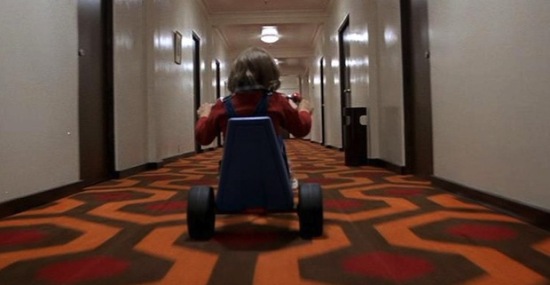
“REDRUM”

So, having looked at both, it’s clear that both stand on their own merits.  It’s hard to tell if one has more worth than the other.  Since I was already very familiar with the film by Kubrick, my reaction to the novel may have been a little muted.  I did find the slow deterioration of Jack Torrence’s psyche fascinating to read, especially when you learn read the story through the character’s own perspective.  But at the same time, I already knew where the story was going, even though the road to the end deviated somewhat from what I was expecting.  Overall, if some of you are approaching the story of The Shining entirely cold, than I can tell you that either format will still give you a satisfactory experience.  Fundamentally, The Shining is just a solid story from beginning to end, and though Stephen King may have found the changes troublesome, he should still see it as a true honor that an artist like Stanley Kubrick managed to bring the story to the big screen in such a grand and visceral way.  Let’s face it, there are some things that translate well into celluloid, and other things that should just remain on the page (living hedge animals, for example).  Kubrick’s changes were risky, but they still retain the atmosphere of King’s novel and fit well within the story.  Some of them may even be seen as improvements, like the vivid portrayals of the ghosts and the spookier imagery.  But, overall, comparing the two only makes you appreciate both in the end.  It’s one of the rare examples of both pieces being brilliant works of art, while still remaining markedly different.  In future installments of this series, the same may not be true as either the book will clearly be better or the movie may be the greater of the two.  In this case, you won’t find a better spooky tale to entertain you this Halloween season than The Shining.