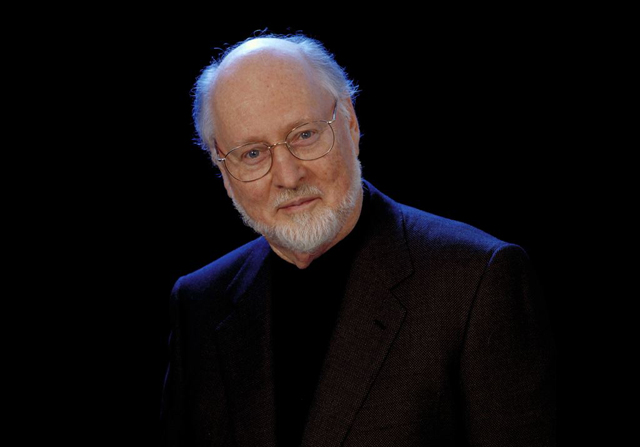
There probably is no other person in the business of filmmaking that has more control over setting the tone than the one who composes the music. From the beginning of cinema itself, music has been an integral part of the experience. Silent pictures always had to have accompanying music, often played live in the theaters themselves either on a piano or a pipe organ, depending on how grand a theater was. Eventually, Hollywood figured out how to put a synchronized soundtrack on the film itself, and this changed the way music was used to accompany a film even further. One of the few benefits that Hollywood got out of the wartime period was that many of the great European composers of the time had moved to America to escape the rise of Fascism and the horrors of the Holocaust. This included legendary maestros like Franz Waxman (Bride of Frankenstein), Erich Wolfgang Korngold (The Adventures of Robin Hood) and Max Steiner (Gone With the Wind). These artists helped to elevate the artform of composing music for film, and suddenly the most popular orchestral music was no longer being written for the concert halls, but rather for the movie palaces. These composers helped to raise the bar of music in cinema, and many other great composers would follow in their footsteps. Future film score composers like Elmer Bernstein, Jerry Goldsmith, Maurice Jarre, and Ennio Morricone would continue to define the high standard of musical composition over the years, but perhaps no other film composer has left a bigger mark over the industry than a boy from Long Island named John Williams. While John Williams certainly had the talent to become a legendary composer, he also had the benefit of becoming friends with Hollywood power players like George Lucas and Steven Spielberg. In a career that spanned over 50 years, Williams would define the standard of epic musical scores in the Blockbuster era of Hollywood. No other film composer has won as many Oscars as him (5 total) nor have received as many nominations. He is quite simply in a league of his own, and yet he still retains a low profile, choosing to let his music speak for him. It’s hard to encapsulate what John Williams means for the history of Hollywood as a whole, but with this Top Ten List, I hope to spotlight the individual pieces of music he wrote that have come to define his legacy. So, here are the Top Ten Musical Themes Composed by John Williams.
10.
“SETTING THE TRAP” from HOME ALONE (1990)
There probably is no stronger example of a composer’s influence on a film than John Williams work on the Chris Columbus holiday comedy Home Alone. Williams took what was an ambitious but still fairly small scale Christmas movie and made it feel like an epic. The music of Home Alone is just as iconic as the comedic pratfalls that play out throughout the film, and the two often go hand to hand. In many cases, a lot of the music in this movie have become standards on Christmas time playlists. There of course is the slightly ominous opening credits theme as well as the rambunctious theme that plays over the McCallister family’s mad scramble to get to their airplane in time. But for me the peak of Williams’ work on this film is the scene when Kevin (Macaulay Culkin) rushes home to set traps for the Wet Bandits, who are planning to break in and rob him. The music of this scene just feels so grand, and it’s a perfect tone setter for the mayhem that is about to follow in the movie’s third act. Williams also brilliantly keeps it sounding very Christmas-y, with the jingling of the choir bells underscoring the main theme. In the movie itself, this music has an excellent interlude, as it builds from an actual church choir singing “O Holy Night.” In the film, when Kevin leaves his pew in the church and begins to run, Williams hits you with that cacophony of a transition from the choir to the score, and it makes that moment feel so grandiose. Really, nothing about the movie really called for a musical score this ambitious, and yet John Williams over-delivered as usual. The whole score is beautiful, including the original choir piece, “Somewhere in My Memory,” but it’s the piece called “Setting the Trap” that really shows what John Williams was capable of as a composer; elevating a moment in a movie to iconic status. It would be something that he would continue to deliver on in every movie he worked on over his multi-decade career.
9.
“CATCH ME IF YOU CAN” from CATCH ME IF YOU CAN (2002)
It should be noted that John Williams wasn’t just a great composer when it came to big sweeping musical moments. He could also write subtler pieces as well that were just as brilliant. The best example of this is the jazzy sounding main theme from the Spielberg thriller Catch Me if You Can. This theme which plays over the opening credits is a beautiful self contained piece that definitely feels like a throwback to 1960’s Hollywood, which matches the tone of the movie itself perfectly, given that it very much is an ode to the era. With this, it does feel like Williams returning a bit to his roots as a composer. Before he was an award winning movie composer, Williams started off his music career as a jazz club pianist. This was how he paid his way through college while attending UCLA and it eventually led to him getting musical internships in Hollywood that would eventually lead him to where he is now. With Catch Me if You Can, he finally was able to tap into that past life working in the jazz clubs of LA during the 1950’s and 60’s and put it into one of his own musical scores. This main theme is a beautiful tone setter for the film, which becomes a fun little cat and mouse game between Leonardo DiCaprio’s chameloen like con artist and Tom Hank’s hardlined government agent. The musical piece is playful, but with a sense of underlying danger beneath it. The music also goes perfectly with the animated opening credit sequence (a rarity for a film by Spielberg). The rest of the musical score is standard stuff for Williams, doing a great job supporting the tone of the film. But it’s this opening title theme that really stands out and is a great example of John Williams showing his versatility as a composer. When you first hear this piece in the movie, you know that you’re in for a fun ride. And it’s also a prime example of a composer never loosing the lessons that he learned in his early years when he was a struggling artist.
8.
“MAIN TITLES” from JAWS (1975)
John Williams had been working around Hollywood for a while before he had met a young rising filmmaker named Steven Spielberg. In fact, by the time the two had met, Williams already had an Oscar on his shelf for his score adaptation of the musical Fiddler on the Roof (1971). But it would be that fateful joining of forces between Spielberg and Williams that would forever change the course of each other’s careers, and it all started with their work on the movie Jaws. Spielberg tasked Williams with writing the music for his movie about a killer great white shark, and when Williams presented Steven with the first few notes that would become the Jaws theme, the director thought it was a joke at first. It was just two notes, repeated over and over again, with building tempo. But this was the brilliance behind what Williams envisioned. Williams subtle but chilling score is meant to invoke a creature lurking beneath the ocean waves, searching for it’s next victim. The faster the tempo builds, the closer you know that that the monster is to attacking. Of course Williams fleshed out his theme to be more than just those two notes, with more and more instruments like horns and strings building to a cacophany of sound by the time the shark attack happens. But what still sticks in your mind through it all is those original two notes, like a heartbeat that matches ones own thrilling reaction to watching the movie. Spielberg of course warmed to Williams’s score, and indeed he needed to rely upon it a lot given the struggles his production team had with the mechanical shark they used in the film. Because the shark only has a scant few moments of screen time, it’s the musical score that does most of the work making it’s presence felt throughout the movie. John would of course win his second Oscar for this film, and his first for writing an original piece of music. The Jaws theme is still one of the most instantly recognizable in movie history (which is true for a lot of Williams musical scores) and one of the most imitated as well. Of course, it’s that original piece that still resonates today, and continues to make us fear going back in the water.
7.
“MAIN TITLE MARCH” from SUPERMAN: THE MOVIE (1978)
It’s hard to believe that there was a time when super hero movies were not considered viable at the box office. The old Hollywood thinking was that no one was interested in seeing comic book characters on the big screen. That of course would change with the arrival of Richard Donner’s 1978 big screen adaptation of Superman. This film would become the gold standard for many years of how to do a comic book movie right, with it’s then ground breaking visual effects and earnest performances from the likes of Christopher Reeve, Gene Hackman and Margot Kidder, bringing their comic book characters fully off the page and into real life. But, perhaps more than anything, it was John Williams’ score that really sold home the belief that a man could fly. Williams’ score throughout the movie is thrilling and epic in all the best ways, but it’s with his introductory overture that Williams really works his magic. His “Superman March” is an iconic piece of work, perfectly setting the tone for the adventure that we are about to watch. It’s Williams at his most operatic as well, really emphasizing that we are about to see something truly beyond belief. It’s placement in the film couldn’t be more perfect either, playing over the now iconic opening credits, with the names of the actors and crew members flying across the screen through the vastness of space. Williams’ Superman theme would go on to set the bar high for all the comic book movies to follow, and only a few have ever come close to matching what Williams accomplished with his music here (examples being Danny Elfman’s Batman theme and Alan Silvestri’s Avengers theme). In fact, the music still follows the character of Superman to this day. When James Gunn made his own Superman movie last year, he passed on having a new theme written for the character, and instead incorporated a new variation of John Williams’ original theme. That’s when you know you’ve made an iconic piece of music, when a filmmaker has the opportunity to replace your theme with something new, and chooses not to, knowing well that you can’t do better than perfection.
6.
“MAIN THEME” from SCHINDLER’S LIST (1993)
Writing music for a movie with this kind of heavy subject matter was never going to be easy. Steven Spielberg took on the daunting task of adapting the Thomas Keneally book of the same name that told the story of Oskar Schindler, an war profiteer who managed to save the lives of over a thousand Polish Jews during the Holocaust. For the first time, Hollywood was tackling one of the worst crimes against humanity on the big screen and doing so in a stark and realistic way. Spielberg, a Jewish American himself, had a lot of weight put on his shoulders to get this story right and fully pay honor to the survivors of this horrific moment in human history. When it came to having music written for this film, Spielberg put his trust in his old friend John Williams. Williams has never identified with any religious affiliation himself, but he has collaborated with many artists over the years who were from the Jewish community, including many people who either survived or fled the Holocaust. One artist that he had gotten to know over the years was violinist Itzhak Perlman, the son of Polish Jews who fled to British Palestine before the German invasion. Perlman had become world reknowned solo violinist, often playing many classical works along with pieces written within his own ethnic Jewish community. Williams was looking for inspiration for his musical score for this film, one that would sound like it was representative of the Polish Jews depicted in the film itself, and Perlman’s upbringing would make him a valuable consultant on William’s orchestrations. Williams’ score is certainly a melancholy piece, emphasizing the tragedy that befell the Jewish people during the Holocaust, but underneath it, there’s still a stirring of hope, emphasizing the perseverance of the Jewish people, even through the worst suffering imaginable. As part of the recording of the film’s score, Williams had Itzhak himself perform the violin solos, which are beautifully stirring on their own. It may be a much less rousing piece of music compared to Williams’ other scores, but his Schindler’s List theme is still a brilliant work of musical composition, offering a profound and fitting tribute to those who were lost and those who managed to survive to tell their stories.
5.
“DUEL OF THE FATES” from STAR WARS: EPISODE I – THE PHANTOM MENACE (1999)
Of course John Williams’ most career defining work would be the many amazing musical themes he wrote across the whole Star Wars franchise. Spanning 9 films and over forty years, John Williams was the man responsible for creating the soundscape of that galaxy far, far away. So, it may be a little surprising that one of his greatest themes in all those years was in one of the worst film of that franchise. Suffice to say, The Phantom Menace is a very flawed movie, and one that sharply divides the Star Wars fan community. But across all the people who love or hate the film, the one consensus that everyone agrees on is that John Williams’ musical score for the film is still amazing. And one musical track in particular, “Duel of the Fates” is considered to be among the very best pieces in the franchise as a whole. It’s another example of John Williams over-delivering. The scene that this piece of music plays under is not exactly one of the most iconic in all of Star Wars. It accompanies the fight between Qui-Gon Jinn (Liam Neeson), Obi-Wan Kenobi (Ewan McGregor) and Darth Maul (Ray Park), which is a fine fight scene, but not among the greatest of all time in the series. And yet John Williams makes this moment feel operatic with his music here. The opening with the chanting choir particularly establishes this as something grand, and Williams just keeps building the piece to some chilling levels of grandeur. 20th Century Fox certainly knew the power of this piece of music as well, and they put it out individually as a single as a way of building hype for the film and it’s soundtrack. There was even a promotional music video made for it aired on MTV’s Total Request Live series, showing just how respected John Williams was in the musical community that even the pop music world was paying tribute to him. The movie may be a let down for some, but John Williams’ musical score certainly lived up to the hype. It had a companion piece in Episode III – Revenge of the Sith (2005) called “Battle of the Heroes,” but “Duel of the Fates” was still undeniably the highlight of the prequel era of Star Wars, and proof that John Williams still had the magic touch after so many years.
4.
“SLAVE CHILDREN’S CRUSADE” from INDIANA JONES AND THE TEMPLE OF DOOM (1984)
If there was a series that John Williams was renowned for creating iconic music for as much as Star Wars, it would be the Indiana Jones series. Just like the movies themselves, his scores for the Jones movies are incredible throwbacks to old Hollywood, with Williams taking especially heavy inspiration from the work of Max Steiner, who wrote many of the great action scores of the classic era. While the first Indiana Jones film, Raiders of the Lost Ark (1981), is a great iconic score on it’s own, I feel like it is outdone by the absolute brilliance of the score that came after with the sequel Indiana Jones and the Temple of Doom. From beginning to end, Temple of Doom isn’t just the strongest musical score of the series, but probably one of the most complete scores that Williams has ever written across his entire career. There is not a single weak track on that entire soundtrack, and many of it’s themes are still among the best things that Williams has ever written. The best piece of them all is a track called “Slave Children’s Crusade,” which plays over the scene where Indiana Jones helps to save the enslaved children held captive in the mines under the titular Temple of Doom. Even more so than the iconic “Raider’s March” that acts as Indiana Jones theme music, I think that this is the piece of music that defines what makes the Indiana Jones series as great as it is. This is simply one of the best musical themes for a fight sequence ever composed. The way it serves the story in the movie too is quite brilliant, with all the ups and down of the fight being felt within the music. You also hear little references to other parts of the score depending on what’s going on in the fight itself, including parts of Short Round’s theme, Mola Ram’s theme, and even a little bit of the Raider’s March. This music also does a great job of building up the mythos of Indiana Jones himself, emphasizing his own presence as a crusader in this moment. It’s still a chillingly cool moment when you see Harrison Ford’s Indy appear backlit out of the mist in the caves with this music playing underneath. In a score that’s full of some of John Williams’ best overall work in general, “Slave Children’s Crusade” stands out as something truly special and unmatched.
3.
“FLYING” from E.T. THE EXTRA-TERRESTRIAL (1982)
Another case of John Williams over-delivering. Steven Spielberg’s charming coming-of-age tale about a boy befriending an alien from another world would have almost certainly connected well with audiences. But when you add John Williams to the mix writing the music for the film, you have the makings of an all-time classic. Williams’ stirring score for the movie is a brilliantly tender musical score that really emphasizes the child like wonder of the adventure that these characters go through in the movie. This is certainly true with the theme called “Flying.” Variations of this theme can be heard throughout the whole film, as it is the defining piece of the whole movie, but it hit’s it high point in the scene where E.T. uses his powers to make the bicycle of his friend Elliot (Henry Thomas) fly off the ground. This is the famous scene where the two fly past the moon in the sky, an image so iconic that it now serves as the logo for Spielberg’s own production company, Amblin’ Pictures. It’s a pretty grand feat when John Williams can successfully capture the sensation of flying through just music alone. When you hear the piece hit that crescendo moment where the strings build to the moment of take off and then go into that main theme, it’s just a magical moment. It’s easy to see why this was one of John Williams Oscar wins (his fourth in fact) and you can’t imagine the movie E.T. without Williams music as a part of the experience. The “Flying” theme would also be a major part of the epic finale piece that ends the movie, played during the moment when E.T.’s ship closes it’s doors, with him and Elliot possibly seeing each other for the last time ever. Not only did John Williams create a piece of music that could make us feel in awe as we watched a bicycle fly, but he could also use that same music to make us cry as two friends say goodbye forever. That’s what makes Williams so special as a composer; that mastery he has in controlling the way we feel while watching a movie. E.T. certainly wasn’t the only musical score he wrote that could do that, but it may have been the best example of what he could do, and it’s still one of his most iconic pieces.
2.
“WELCOME TO JURASSIC PARK” from JURASSIC PARK (1993)
The year of 1993 was trully a marquee year for both Steven Spielberg and John Williams. If they only had the movie Schindler’s List alone released that year, it still would’ve been a great year for both of them, and indeed Williams won his fifth and to date final Oscar for Schindler’s List, but the duo also had another all time classic come out in the same year. Jurassic Park indeed is a movie that displays both Spielberg and Williams at their very best, showing just how fruitful their decades long partnership had been. John Williams music at this point has made us travel to far flung galaxies, made us believe a man can fly, and defined the friendship between a young boy and extra-terrestrial life. Now, Williams was about to make us gaze and awe and wonder as dinosaurs walk the Earth again. “Welcome to Jurassic Park” is perhaps John Williams at his most symphonic. The theme plays under the moment when Sam Neill, Jeff Goldblum, and Laura Dern’s characters spot their first sightings of a dinosaur. Spielberg brilliantly doesn’t show you what they are seeing at first, instead letting their look of amazement set the moment and then the moment we finally see the dinosaur (a brachiosaurus to be exact), that’s when John Williams’ music kicks in and it makes the scene feel all the more special. Williams perfectly captures that moment of disbelief, that we’ve seen the impossible become possible, and it’s played with an almost comforting tone. Of course, in the typical John Williams style, the music keeps building and building towards a crescendo and that’s where the main theme of Jurassic Park hits it’s high point. Of course, the rest of the movie then shows us how dangerous a place the park can be, but in that first moment of wonder, Williams certainly makes us feel the majesty of what Jurassic Park could be. It’s like he was trying to reach for something akin to Beethoven’s Pastoral rather than just the kind of music you would typically write for a theme park. Even Disneyland doesn’t present itself to guests in such a profound way at it’s main gates. Spielberg and Williams together have given the world some of the greatest music ever written, and Jurassic Park’s main theme perhaps it the greatest proof of their collaborative magic overall.
1.
“MAIN TITLE” from STAR WARS EPISODE IV – A NEW HOPE (1977)
Of all the things that have defined John Williams career as a film composer, none stand out more than his work on the Star Wars films. His pieces from across all the films including the Cantina theme, the “Imperial March,” the Han and Leia love theme, and the aforementioned “Duel of the Fates.” But none of those would have become classics had John Williams not set the tone perfectly with the very first notes of the score for the first movie. Fans of Star Wars everywhere remember how iconic those first few moments were when they witnessed this opening for the first time. First the 20th Century Fox studio logo with the iconic fanfare, and then 10 seconds of silence as the words, “A long time ago in a galaxy far, far away” appear on the screen. And then the Star Wars logo flashes instantly on screen with the blare of Williams’ blast of an opening note. And as the scroll of the prologue text unfolds on screen, Williams’ iconic main theme plays out, perfectly setting the tone for what’s to follow. It could be said that cinematic empire that is Star Wars was built on the foundation of that crucial opening scene, and John Williams was a critical part of making it work. For a while, George Lucas was uncertain that his space opera would actually come together. The shooting off the film was not exactly going smoothly for the still untested young filmmaker, and there were plenty of doubts rumbling through 20th Century Fox at the time that it would turn into a financial disaster. But, Lucas managed to save his film in the editing room, and a crucial final piece would be having John Williams there to make the film feel grandiose in the final product. For Williams, he found inspiration in the music of composer Igor Stravinsky, a composer who helped to redefine orchestral music in the 20th century with pieces like The Firebird and The Rite of Spring. In Stravinsky’s brass heavy musical pieces, he found the kind of soundscape that would fit perfectly in an adventure set across the reach of space and interplanetary battles. And with that huge blast of an opening note, Williams helps the movie announce itself to the world in a big way. When AFI put together their list of the Top 25 movie soundtracks of all time, it was a pretty unanimous choice to pick John William’s Star Wars as number one. Also, it wasn’t the only John Williams score on that list too, which tells you a lot. Even after all the many brilliant scores he’s written for other movies, I don’t think he’d be insulted if you called him the “Star Wars” guy, because he certainly is proud of the work he’s done in the series as a whole. It’s a central part of all the concerts he’s conducted over the years, so it shows that he himself holds a special place in his heart for the work he did in those films.
Williams’ career is unparalleled as a film composer. No other score writer has had the same level of consistent success as he has had. A lot of that has to do with knowing the right people at the right time, and you can certainly not go wrong with having friends like Steven Spielberg and George Lucas by your side. But John Williams has the talent to back up his place in the history of film. Few other composers have written as many iconic pieces of work; the kind of music that you can easily identify within just a couple of notes. Of course he’s known best for Star Wars, but he’s also the mastermind behind the iconic themes of the Indiana Jones and Harry Potter franchises as well. After writing the score for Indiana Jones and the Dial of Destiny (2023), John Williams went into a semi-retirement. His days of studio work are over, but he’s still open to writing music as special favors for friends, and indeed he has a new score coming out this Summer for the movie Disclosure Day (2026), Steven Spielberg’s new sci-fi thriller, continuing their long time partnership for yet another film. At the ripe old age of 94 as of this writing, John Williams has more than earned a well deserved retirement, but it’s still nice to know that he still has that creative spark still in him, and that he’s willing to continue to compose new music even in his old age. We’ve been more than blessed to have had someone of his caliber writing the soundtracks of our lives over these last 50 years. It should also be noted that he hasn’t just composed for movies alone. He’s also the guy who wrote the main theme of the Olympic Games that plays on the television broadcasts from NBC. He also has composed unique pieces solely for orchestral concerts throughout the years, many of which he personally served as conductor for, which is another talent that he has. There certainly are a lot of other great film composers who have worked throughout movie history, and many who are still leaving their mark on the industry today, and even they will tell you that John Williams is certainly in a class all his own. Hopefully these picks I made for this list give you a good idea of just how prolific and versatile a composer he was and continues to be.