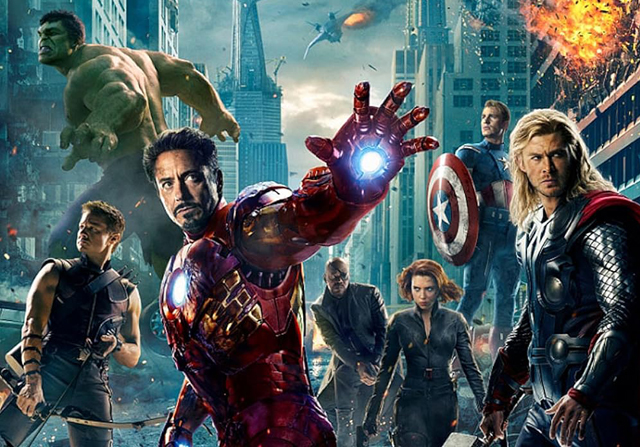
It wasn’t until the break of the new millennium that Hollywood began to figure out that comic book movies could be successful at the box office. Sure, Superman and Batman had carried their own franchises for a while, but in the 2000’s, Hollywood began looking to other potential comic book characters to build franchises around. This was coinciding with the resurrection of a long struggling comic book publisher named Marvel. Marvel had been struggling throughout the 90’s and nearly fell into bankruptcy at one point. While they were trying to dig themselves out of a dire financial hole, Marvel still had their stable of characters to help them pull through. Chief among them was the iconic and immensely popular Spider-Man. Though the webslinger had been a staple of comic book fandom for many years, he had never made the jump to the big screen, but that was about to change. In 2002, director Sam Raimi took on the challenge of bringing the iconic character to the big screen for the first time, and the results were a phenomenal success. Spider-Man (2002) broke ever box office record in the book at the time, and with it ushered in a new era for both Marvel and comic book movies in general. But, due to Marvel’s shaky decade prior, a lot of their creative control over these movies were out of their hands. They lacked the organization to make movies themselves, so they let the rights to their characters go to anyone who would take them. That is why the rights to Marvel characters didn’t belong to any one studio. Fox, Sony, Universal, and Paramount all had their claims to these iconic characters. But, while many of the Marvel properties were succeeding at these other studios, a few others were not, and Marvel wanted to get that control back over their own characters. Then in the late aughts, an ambitious young producer stepped up. Kevin Feige had been serving under the guidance of Spider-Man producer Amy Pascal as her assistant and he came to Marvel with the plan to create a studio of their own. Under the Marvel Studios plan, Marvel would be the ones creating the movies for the all the studios holding onto the rights, and with that cooperation, they could also create something that had not existed before in the movie industry; a shared cinematic universe.
Before it was believed that only the individual characters in comic books would be the ones to carry their own franchise, but what Feige believed was possible was that the universe that all of the Marvel characters exist in would be the thing to center their franchise on. They could still tell stories focused on their characters, but each film would also tie in with another. Events that take place in one movie would have ripple effects across the others, and even more importantly, the different characters could meet each other outside of their own narrative. This was nothing new for fans of the comic books, as cross-over events happened all the time on the page, but no one had ever tried to do that in a movie before. But this was the bold plan that Feige and his team had for the future of Marvel, and surprisingly, they got cooperative support from some of the studios to put this plan into action. Paramount and Universal, which held the rights to characters like Iron Man, the Hulk, and Captain America, put their trust into Feige’s plan, and this helped to launch what would be the beginning of cinema’s first Cinematic Universe. But then something unexpected happened. Disney, which was the one studio that had up to this point been sitting out the whole comic book movie craze, decided they were ready to jump in. But they went a step further. They weren’t just ready to make a deal with Marvel, they were ready to buy them outright. In a landmark $4 billion deal, Disney CEO Bob Iger made the acquisition to absorb all of Marvel’s business, including the comic book publishing division and Feige’s new Marvel Studios. While this was a dramatic shift for the still fledgling studio, it also was fortuitous for them as well. What Feige needed was a single deep pocketed studio to help streamline the productions of these movies, similar to what Marvel’s rival DC had over at Warner Brothers. Under the ownership of Disney, Marvel finally had a singular home, but unfortunately, the other studios held onto the rights to many of their characters. Unfortunately Fox and Sony decided not to cooperate and hold onto their movie rights. But Paramount let theirs revert to Disney without a fight, and Universal cooperated as well by granting Disney permission to use the Hulk in their movies (as long as he was a supporting player). And so, the Marvel Cinematic Universe was ready to go with a limited, but still ideal starting line-up of heroes. What follows is a look at what is now deemed Phase One of the MCU and how it revolutionized comic book movie franchise on the big scree.
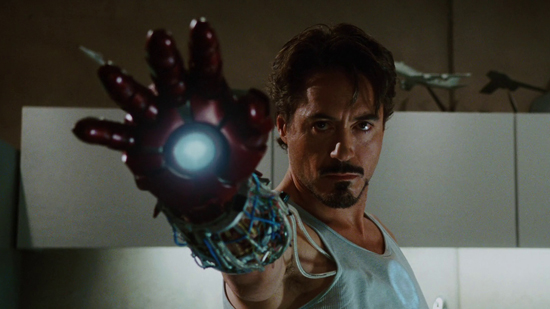
IRON MAN (2008)
Directed by Jon Favreau
They say first impressions are everything, so for the MCU to work, they need to get their first film right. Of all the characters to launch a new cinematic universe with, you couldn’t ask for anyone better than Iron Man. One of the central characters of Marvel comics, Iron Man had the right kind of mix of selfless heroism and self-indulgent charisma. He was also a character who had yet to take the spotlight in Hollywood, so he would also be a fresh face that movie audiences would be discovering for the first time. Marvel had tried for years to get an Iron Man movie off of the ground, including at one point having Tom Cruise attached to the role. But for the version of Iron Man they wanted to carry this new cinematic universe, they needed someone who would just look good in the Iron suit, but would embody everything about the character outside the suit as well. Enter Robert Downey Jr. Casting Downey was a bold choice, given that his career had been on the skid for many years due to time he served in prison over his drug addiction. Movie studios wouldn’t insure him anymore because he was such a liability and that made him toxic in Hollywood for a long time. But Jon Favreau, who was tasked with directing this new Iron Man movie, saw things differently because he knew Downey was the only person who could play the part. It’s not just the suit that makes Iron Man iconic, it’s the persona as well, and Downey was the one who would emphasize the “Man” in Iron Man. While the Iron Man fight sequences are cool, it’s Robert Downey’s performance as Tony Stark that really makes the movie work as well as it does. He really is this character in every way; the genius, billionaire, playboy, philanthropist to a “T”. And with great support from heavy hitters like Jeff Bridges and Gwyneth Paltrow, Favreau’s movie sets up Tony Stark as an ideal character to center this cinematic universe around, because he is just so much fun to watch. And audiences agreed too, as Iron Man was a big box office success, even in face of competition with Christopher Nolan’s The Dark Knight (2008). But was also exciting was that this was just the beginning of something even bigger. As Samuel L. Jackson stated in his surprise end credit cameo in the movie (playing the role of Nick Fury), he was part of a much bigger world, he just didn’t know it yet.
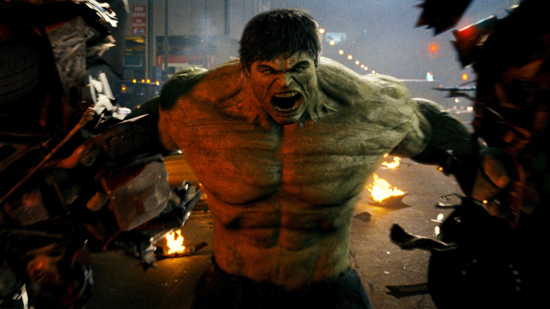
THE INCREDIBLE HULK (2008)
Directed by Louis Leterrier
Often seen as the black sheep of the MCU’s Phase One, this movie didn’t quite land as hard as Iron Man did in the same Summer, and yet it too would leave it’s own mark. A few years prior, Universal tried and failed to launch a Hulk franchise, with Ang Lee’s Hulk (2002) being considered one of the biggest misfires ever in the genre. But, with the launch of Marvel Studios and this MCU initiative, Universal saw the potential of a reboot for the big green guy. While the movie may not have the gloss or swagger of the Iron Man, you can still look at The Incredible Hulk as a valiant attempt to bring back relevance to the character, and more importantly help to launch him into this new cinematic universe. One of the best choices they made was casting Edward Norton in the role of Dr. Bruce Banner; the man who becomes the Hulk. One of the problems with the Ang Lee film was they cast an already large actor in the role of Banner (Eric Bana), which made the transformation far less dramatic. While Norton is not a small guy per say, he’s still slighter in build than Bana, and that helps to make him feel better suited for the role, despite Eric Bana’s best efforts. Norton does a fantastic job of portraying someone whose trying to do the best he can while at the same time trying desperately to hold the monster inside back. The Hulk himself also looks better this time around, appearing far less neon green than Ang Lee’s version, and his power set is also closer to how he functions in the comic books. Unfortunately, while Marvel had big plans for the Hulk’s future in the MCU, Edward Norton was far less interested in sticking around. He was one and done after making this movie, which itself left Marvel Studios in a bind. If they were to keep the character still involved in the MCU, they would have to recast, which sparked plenty of outrage amongst the fans. But, attitudes would change once a replacement was found. Shockingly, even though this is often the most forgotten of all the Phase One movie, it still had a lasting legacy beyond, as William Hurt would continue to play General Thaddeus “Thunderbolt” Ross for many years and movies afterwards, and other co-stars like Tim Roth, Tim Blake Nelson, and Liv Tyler would all make returns in the MCU over the years. So while Edward Norton’s departure was unfortunate, it thankfully didn’t de-rail the MCU as a whole.
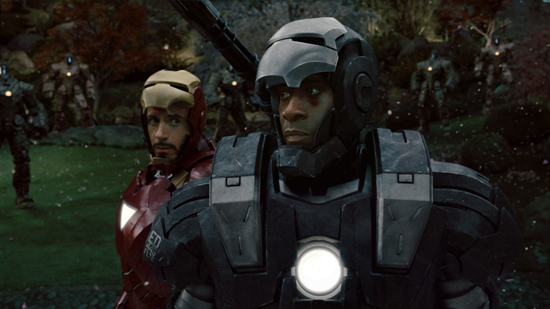
IRON MAN 2 (2010)
Directed by Jon Favreau
Given how big a success the first Iron Man was it’s no surprise that a sequel was fast-tracked into development. The whole crew would be back; Downey, Favreau, Paltrow, as well as Samuel L. Jackson and Clark Gregg with expanded roles as representatives of the Strategic Homeland Intervention, Enforcement and Logistics Division, better known as S.H.I.E.L.D. But there would be an even more important addition to the cast in this film, with the introduction of Scarlett Johansson as Agent Natasha Romanov, aka the Black Widow. Even though she would be piggybacking her debut off of an Iron Man sequel, Black Widow still leaves a bold impression in this movie and asserts herself as one of the key players moving forward in the MCU. The movie also deals fairly well with another unfortunate off screen dilemma. In between movies, the role of Captain James Rhodes, Tony Stark’s military liaison and close friend, had to be recast after the original actor Terrence Howard refused to return. Don Cheadle stepped into the role and masterfully took it over and now 16 years later he’s still playing the part. One of the key moments for Rhodes (or Rhodey as he’s affectionately called) in the film is when he steps into one of the Iron suits himself, which eventually leads him towards becoming the hero War Machine. There is now doubt that Cheadle was in the right place at the right time and he’s been able to masterfully elevate this character throughout the MCU. The only downside with this movie is that it seems to struggle with finding an effective foil for Tony Stark this time around. Iron Man doesn’t have the most robust rogues gallery. To compensate, the filmmakers decided to double up the villains in this movie by having Iron Man go up against rival billionaire Justin Hammer (Sam Rockwell) and a vengeful mercenary named Whiplash (Mickey Rourke). Of the two, Whiplash has the more meaningful presence, but neither villain is really given the right amount of screentime to be all that memorable. If anything, Stark’s his own worst enemy is himself, as he lets his own bad habits get the best of him in this film. Even with the film’s faults, it still delivers on the thrills and again Robert Downey Jr. is pitch perfect as Iron Man.
THOR (2011)
Directed by Kenneth Branagh
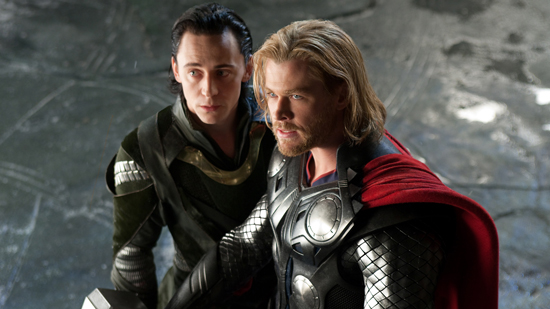
Perhaps the biggest gamble in the earliest phase of the MCU was in getting audiences to care about the character of Thor, the Norse God of Thunder. A character of actual ancient mythology, Thor has surprising fit in well as part of Marvel’s comic book universe. His comic books have managed to perfectly weave his origins as a celestial being from the heavens (or as a visitor from another world) and allow him to also work as a hero here on Earth just like the other heroes in the Marvel roster. But, how would that work on the big screen. To make the Thor comics translate to film, someone would have to significantly rethink how to make a super hero movie in the first place. Enter, Kenneth Branagh, the Shakespearean trained stage and film actor who also has been instrumental in adapting some of the most famous adaptations of the Bard’s work to the big screen. As it turns out, Branagh is also a fan of comic books as well and in particular was an avid reader of the Thor comics. He saw the Shakespearean undertones of Thor’s story on the comic page; his often fraught relationship with his father Odin, the betrayal of his brother Loki, and the way in which Thor had to overcome his own pride in order to become a better hero. So, when Marvel set out to do an adaptation of Thor for the big screen, they lucked out in having someone with Kenneth Branagh’s talent interested in the job. And Branagh does a magnificent job of not just establishing Thor as a character in this film, but in making his world something wonderous to behold. The movie feels operatic in it’s scale and tone, especially in the moments set on Asgard. But, there were a lot of skeptics about the movie, particularly with regard to the casting choices. A lot of people were shocked when instead of searching for marquee stars for the key roles of Thor and Loki, he instead cast a couple of “nobodies” named Chris Hemsworth and Tom Hiddleston in the roles. Branagh, of course, knew what he was doing, and his choices of Hemsworth and Hiddleston were not only the correct ones, but also the most ingenious, as the two have since become iconic in their respective roles. The movie also has a stellar supporting cast with heavyweights like Anthony Hopkins, Natalie Portman, Renee Russo, Idris Elba, and Stellan Skarsgard in key roles. Also, we get a surprise cameo from another future Marvel icon with Jeremy Renner’s debut as the bow and arrow wielding Hawkeye. The Thor movie may have been a gamble for Marvel, but it’s a gamble that paid off big.
CAPTAIN AMERICA: THE FIRST AVENGER (2011)
Directed by Joe Johnston
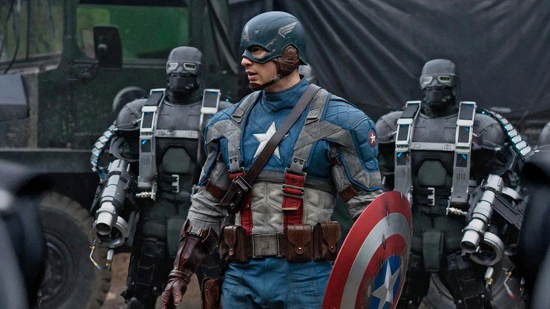
Apart from Iron Man, the other most important character that needed to be established in this first Phase of the MCU was Captain Steve Rogers, aka Captain America. This is because in most of the big crossover events of Marvel comics, he’s often the de facto leader. But just as important as it is setting this character up in the MCU, it was also important to set the tone of the character just right. One important choice Marvel made was giving the direction of this film over to veteran Joe Johnston. Johnston has been a reliable action film director over the years, consistently tapping into his background as a visual effects artist before he stepped behind the camera. Of all the movies he’s made, one that has become a beloved cult hit is The Rocketeer (1991), a fun throwback action film that did a beautiful job of recreating the WWII era time period of the movie’s setting. Since Marvel wanted to create that same vibe with their WWII origin story for Captain America, Johnston was an ideal choice to direct. But it was important that they find the right man to fill Cap’s boots. Surprisingly they turned to someone who already had experience playing a Marvel super hero in the past. Not that long before, Chris Evans had appeared in Fox’s Fantastic Four movies as Johnny Storm, aka the Human Torch. The strange thing is that Johnny Storm is a very different kind of character from Steve Rogers, so a lot of people we uncertain about Evans in the role. Thankfully, he proved to be perfect for the part; absolutely nailing the sweet natured, boy scout aspect of the character while also being physically adept to make Captain a strong presence in the fight scenes. He also fits in well with the throwback aspect of the film’s tone, like you could imagine him fitting in perfectly in a 1940’s wartime setting. The movie also filled out the cast with a lot of great actors in the supporting rolls, including Tommy Lee Jones and Stanley Tucci. Some of the most important supporting players, like Hayley Atwell as Agent Peggy Carter and Sebastian Stan as “Bucky” Barnes would also have a profound influence on the MCU in the years after. Also, Hugo Weaving made for a perfect choice to play iconic Captain America nemesis Red Skull. And while future Captain America adventures would leave the nostalgia behind, it still makes this first outing special and unique amongst all of Marvel’s films.
MARVEL’S THE AVENGERS (2012)
Directed by Joss Whedon
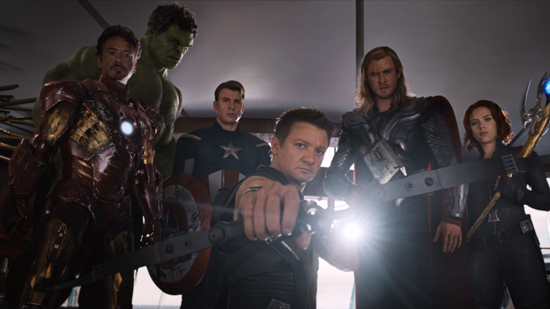
This is what it was all leading up to. Kevin Feige had a plan when he launched Marvel Studios and ushered in the MCU, and that was to have all of these Marvel heroes who were all coming from of their own individual franchises, and have them meet and share the screen together. This was the culmination of that plan; or at least the first phase of it. Iron Man, Captain America, Thor and the Hulk all working together to save the world. This is what comic book fans have always dreamed off seeing on the big screen, and now it was finally becoming a reality. But who would be the one to make it happen. Instead of seeking out an established name in film, Feige instead gave the job to someone from the world of television. Joss Whedon had made a name for himself as a successful showrunner, creating shows with cult followings like Buffy the Vampire Slayer and Firefly. But apart from a Firefly spinoff movie Serenity (2005), Whedon had not directed any other film for the big screen. Still, Feige believed that he not only could make a great standalone Avengers film, but that he could also tie all the story arcs of the other MCU movies together. And remarkably it all works. You never feel like any of the super heroes get short-ended in the movie. Iron Man, Captain, Thor and Hulk all get their chance to shine, as does Black Widow and Hawkeye for that matter. Even a supporting player like Clark Gregg’s Agent Coulson gets his hero moment in the movie. The film also improves on the character of Loki in this film, elevating him to one of Marvel’s greatest villains ever. While he wasn’t terrible in the movie Thor, Hiddleston really didn’t come into his own as the character until this movie, and he steals every scene he is in. Another important thing about this movie was that it marked Mark Ruffalo’s debut as Bruce Banner. Given that there was a lot of doubt surrounding his casting after he took the role from the absent Edward Norton, Ruffalo had a lot to prove and not only did he masterfully step into the role, he has since made it his own and become one of the best parts of the MCU as a whole. On top of all this, this movie is every comic book fans dream, delivering fan service that feels earned and not forced. One of the most iconic moments in the film, when the Avengers assemble together in a glorious 360 degree shot is still one of the greatest crowd pleasing shots in any Marvel movie, or any comic book film for that manner. And, just like how every Marvel movie before teased about what was next on the horizon, this Avengers movie left us with a glimpse of a certain large purple man sitting ominously on his throne, waiting his turn.
So this was the first Phase of what would become the Marvel Cinematic Universe. And as far as franchise launches go, you couldn’t have asked for anything better as a Marvel fan. There were some stumbles at first, especially when key roles like Bruce Banner and Captain Rhodes had to be re-cast, but other than that, Marvel did exactly what it needed to do with these characters which was to make us instantly love them and want to continue watching them on the big screen. If this first batch of films did not work, the entire MCU would not have lasted as long as it has. Feige’s master plan needed a strong foundation to stand on, and Phase One was a resounding success in accomplishing this. One of the key elements to Marvel’s success was it’s absolutely perfect choices in casting. Picking the right people for these roles was not easy, but they managed to find all the right people to play these characters. Robert Downey Jr. especially was an inspired choice to play Iron Man, and it’s to Marvel’s credit that they were able to look past his year’s of self-destruction and recognize that nobody else would be better suited to put on the suit. Also, it worked out taking a chance on unknowns like Chris Hemsworth and Tom Hiddleston for the parts of Thor and Loki, as they proved to be exactly right for the parts as well. And Chris Evans was able to show his range by trading in one super hero for another and showing that he was perfect for that role as well. But what was also important about the rise of the MCU was that it showed these movies could be successful by fully embracing their comic book origins. In the years when Marvel movies were being made by all the different studios without their creative control, it was almost like those movies were a bit ashamed of the comic book aesthetic. The all black leather costumes in X-Men being a prime example of Hollywood trying to run away from the comic book page. In the MCU, everything about the comics are embraced, including the sillier stuff. All of the heroes are brightly colored and the movies never try to make these characters edgier for no reason. This was key to making Marvel the box office juggernaut that it would become in the 2010’s, and what would eventually lead so many other studios to create their own cinematic universes to compete, including DC and Warner Brothers. But, what would matter for Marvel was how they would continue as they entered Phase Two. We’ll cover all that in a few months, just in time for the next Avengers movie, Avengers: Doomsday, hitting theaters this holiday season. There was no doubt that Marvel changed cinema forever with it’s creation of the MCU, and of course they had only just begun to assemble.