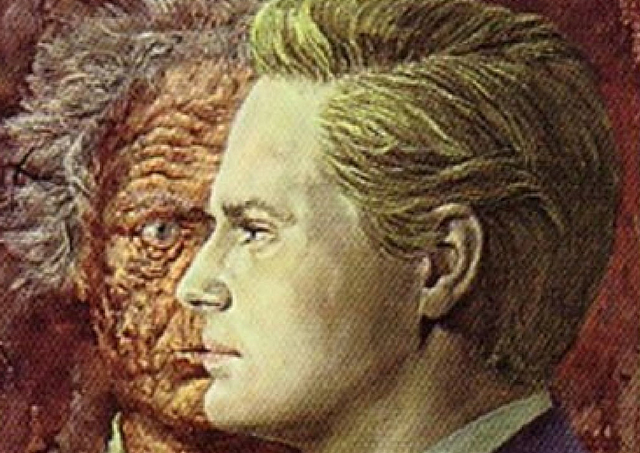
As queer culture has gained more mainstream acceptance over the years, it has helped to elevate icons within the community who were instrumental in helping to shape it and keep queer culture alive in the face of societal repression. One of those icons that gained a reputation over time was famed playwright and author Oscar Wilde. Wilde was not say instrumental in the fight for queer rights over the last century. He in fact spent much of his life hiding the fact that he was indeed a homosexual, and even went to court to protect his public image, which in turn backfired and led to his imprisonment under Victorian England’s then stringent “decency” laws. But, even despite his closeted existence, he still represented an ideal of what the queer community believed was core to their identity in the early years in the movement. He was unapologetic about his “dandy” public persona, and his intelligence and wit helped to set him apart in Victorian society. While he maintained his closeted lifestyle, he nevertheless pushed the limits of what he could get away with. Even at the height of his popularity, he was still controversial, as he challenged the morality of the Victorian era in much of his writing. His satirical plays skewered the social hypocrisies of English aristocracy and even challenged the social norms when it came to class and gender. Controversial in their time, people today celebrate Wilde’s critical eye towards moral hypocrisies, particularly among the queer community who now hold Wilde up as one of their pioneers. And of all the works that Wilde wrote over his brief but influential career, the one that perhaps best represents his complex look at the social nuances of Victorian society the most is the only novel he ever wrote; The Picture of Dorian Gray.
Wilde wrote Dorian Gray on a commission for the American literary magazine Lipincott’s Monthly in 1890. The idea for his novella stemmed from a portrait sitting he had while on tour in Ottawa, Canada with artist Frances Richards. Upon seeing his finished portrait, he pondered on the idea that as he will grow older this portrait of him will remain forever young. This sparked the idea in his head of an opposite effect, where the portrait would fade and age, but the subject would remain young and beautiful. What interested him about this concept was the notion of what this would do to the person who had this blessing of eternal youth. In his story, he saw this as a potential road to ruin for his character, as vanity leads to destructive ends. Wilde drew upon many classical works as inspiration for his stories, and in this case, he was inspired by two works in particular, the myth of Narcissus and the story of Faust. The Narcissus myth details how someone destroyed their own life after falling in love with their own image. And in Faust, a man makes a deal with the Devil to achieve their own dream, but in not understanding the pact they made they also doomed their own soul. In combining these two concepts, Oscar Wilde created the character of Dorian Gray. Dorian, whose name comes from ancient Greece in reference to idealized beauty, ponders that same idea that Oscar Wilde had when he saw his own portrait, and makes the wish to have his portrait age while he remains eternally young. Magically, the wish comes true, and Dorian Gray lives out all of his hedonistic desires without care, knowing that his youthful beauty will never fade. But the scars of all his sins still manifest on that portrait, which over time has grown more grotesque. Dorian hides it away as it is a reminder of his own moral decay, but no matter how much Dorian looks away from it, the portrait becomes a specter that he can’t escape. He finally destroys the portrait as his life of criminality begins to close in on him, but in doing so, he releases the bind that the portrait had on his soul. He is found dead soon after, with his body morphed into a grotesque monstrosity, while his portrait is once again beautiful. In Dorian, Oscar Wilde found an ideal subject to portray the fallacy of idealized beauty. In putting one’s self interest above all else, Dorian Gray is the epitome of vanity’s corrupting influence, which was a key theme of Wilde’s critique of Victorian decadence. Often portrayed as a villain, Dorian Gray has become an iconic character in literature, as well as on the stage and screen. Here we have a look at some of his most noteworthy, as well as notorious, screen appearances over the years.
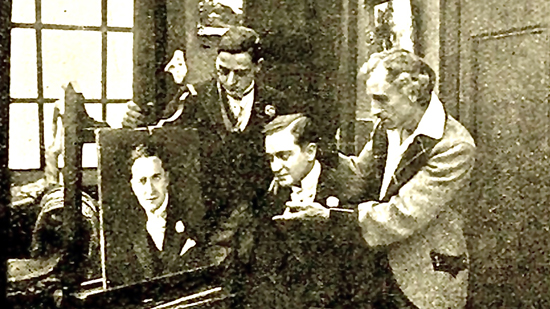
HARRIS GORDON from THE PICTURE OF DORIAN GRAY (1915)
Not long after Oscar Wilde’s death in 1900, his novel would receive numerous adaptations for the stage, helping to ensure the novel’s continued presence in the new century. With the run that this story had on the stage, it wasn’t long before this new artform called cinema would also see the potential in bringing Wilde’s work to life. A lot of the adaptations of The Picture of Dorian Gray from the early days of cinema are lost to time, but this 1915 American made two-reel adaptation has managed to survive for over 100 years. It’s a very condensed and straight forward adaptation of the novel, but it still contains the central themes of Wilde’s story. We still see the corruption of Dorian Gray unfold as he allows for his vanity to overtake his moral senses, and it all gets imprinted on the portrait as it ages and withers. In many ways, the medium of film allows for this story to flourish, because through the process of editing, we are able to see that transformation on the portrait happen magically before our eyes, which further emphasizes the terrifying hold it has on Dorian Gray himself. Young actor Harris Gordon does a fine job of portraying Dorian as he further descends into madness through the course of the story. The one thing that certainly differs in his portrayal from the way Wilde described the character in the novel is that Harris is a bit more traditionally handsome rather than the idealized beauty that Wilde portrays Dorian as; described as being an made “out of ivory and rose leaves.” Harris’ more masculine beauty is what post-Victorian society would have valued more, and that is more a product of when this was movie was made, rather than a revision of Wilde’s work. The story essentially remains the way Wilde wrote it, and while this movie does have a somewhat different Dorian Gray in mind than what Oscar Wilde had imagined, the actor still manages to convey the essential aspects of the character and helps to sell it with his impassioned performance.
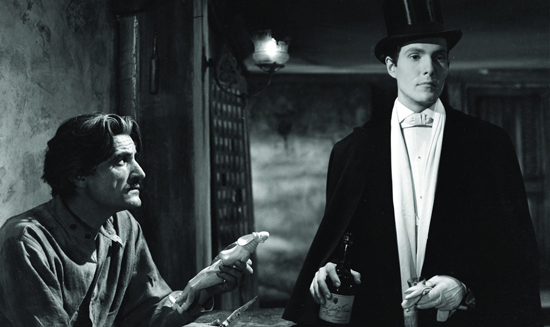
HURD HATFIELD from THE PICTURE OF DORIAN GRAY (1945)
This is undoubtedly the most famous cinematic adaptation of Wilde’s novel. It’s also one where the more controversial subtext of Wilde’s story is minimized the most. This lavish MGM produced production also fell under the limitations of the Hays Code, which meant that the homosexual subtext between Dorian Gray and his male admirers had to be excised from the plot. Instead, this production plays up the more gothic horror aspects of the story. The movie is famous for having used color cinematography for the brief inserts of showing the portrait itself. In a movie that is primarily in black and white, those color shots have all the more impact, especially when we see the portrait reach it’s most grotesque point. One thing that also helps to make this a darker take on the story is the very cold and sinister portrayal of the character of Dorian Gray by actor Hurd Hatfield. American born Hatfield managed to perfectly embody the persona of a Victorian aristocratic dandy very well, and it’s in his chilling understated performance that he really helps to sell the corruption of Dorian Gray’s soul as he becomes more detached from his humanity. He’s also closer to how Wilde described him in the book, with well defined facial features and smooth unmarked skin. Over time, Hatfiled actually resented the fact that he played this character too well, because he thought it typecast him as this Victorian dandy type, and possibly hurt his chances as a leading man with range over the course of his career. Still, he did manage to make a lifelong friend with his co-star Angela Lansbury, with The Picture of Dorian Gray being only her second on screen role in her still blossoming career, as well as her first Oscar nomination. Despite how Hurd Hatfield felt about the part, he still put in an iconic performance, and made Dorian Gray one of the most fascinating and chilling screen villains in classic Hollywood. While the movie was still compromised because of the censorship of the day, it still felt to be in spirit with Oscar Wilde’s original story, especially when it came to the portrayal of Dorian Gray himself.
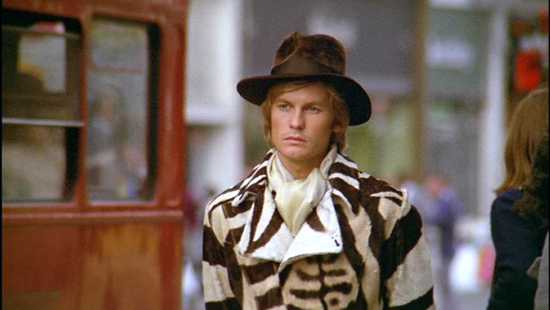
HELMUT BERGER from DORIAN GRAY (1970)
When the Hays Code broke down in the 1960’s, filmmakers were more liberated to explore more taboo themes on film. So in this more libertine time period, it was seen as worthwhile to look at Wilde’s Dorian Gray once again, and this time allow it to fully tackle subjects on the big screen like it hadn’t before. In this joint Italian and English production, the story of Dorian Gray is brought forward into the modern day, with Dorian as a male model in the London fashion scene. The movie does stick to much of the same beats of the original story, just minus the subtlety. This is very much a product of the era it was made, with a strong psychedelic aura and far more exploitative regard towards sex and violence on screen. Oscar Wilde himself would probably admire the film’s lack of restraint, but might have also balked at it’s crudeness. This movie certainly didn’t have the gloss of MGM’s adaptation, but it also doesn’t seem to care. At it’s center is Austrian actor Helmut Berger in the title role, who does spend most of the movie in various forms of undress. He definitely fits within the sexual liberation standards of beauty, being less aesthetically beautiful and more just exerting a sexual aura about himself. Berger does portray the vanity of the character quite well, but his performance also lacks the chilling restraint of Hurd Hatfield’s portrayal. The degradation of this version of Dorian Gray’s soul doesn’t come across as that shocking in the long run, because he’s already starting off in the story as a vain, ego driven person. The corrupting influence of the portrait doesn’t have that same kind of weight as a result. It’s where the more libertine approach of the story kind of works against how the story should unfold, because given the social taboos that Oscar Wilde was responding to during the Victorian era, it made his story all the more powerful in the way it broke all those down. It doesn’t quite work in contrast when you set the story in an era where those cultural taboos are already front and center. Still, by bringing the story up to the present day, it still showed that a character like Dorian Gray still had a strong cultural presence, and represented a major shift in the moral standards that had changed over the years.
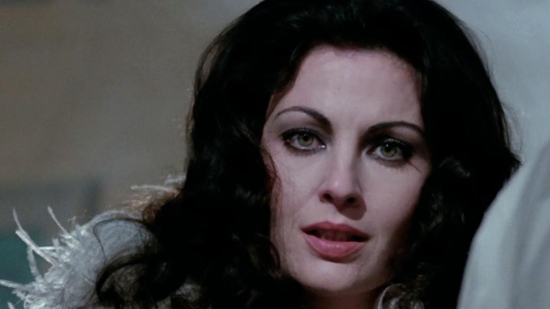
BELINDA BAUER from THE SINS OF DORIAN GRAY (1983)
Taking a wild departure from this Wilde story, this made for TV adaptation not only changes the time period and the setting, but also changes Dorian Gray’s gender as well. Here, Dorian Gray is a female model looking for work in modern day New York City. Instead of preserving her youth through a painting, her soul is captured in an audition tape, which allows her to remain young while her image on the tape grows older. Even despite all these changes, the movie does stick closely to Wilde’s story, and shows that it has more universal meaning beyond just the gender binary. The movie shows the corrupting influence of having to maintain youthful beauty in a world that values nothing else. Though Oscar Wilde never imagined it in the first place, his story seemed to predict just how corrupting the fashion and beauty industries would become in the following century, with fading beauty driving those who live and work in those worlds to desperate ends. This is depicted well in the performance by Belinda Bauer as the female version of Dorian Gray. As she remains young and beautiful while everyone around her grows older and grayer, she becomes more detached from her place in the world, and that leads her down darker paths. Though the movie is not quite as stylish nor as polished as other adaptations before, given the limited TV budget this had, it still manages to convey the themes of Wilde’s story, and that’s mainly thanks to Bauer’s performance throughout. The changing of genders also sheds some interesting perspective on the queer subtext of Wilde’s original story, as so much of Dorian Gray’s spiral into darkness stems from how he/she responds to being the object of affection for so many other men. This story reminds us that pressure to maintain beauty standards comes with a price over time, and it’s just as destructive for women as it can be for men, if that person is so consumed with their own sense of self beautification. While this movie is small in scale compared to other adaptations, it still manages to remain true to that theme.
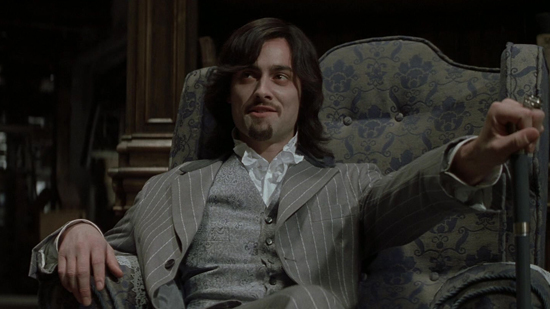
STUART TOWNSEND from THE LEAGUE OF EXTRAORDINARY GENTLEMEN (2003)
This disaster of an adaptation of Alan Moore’s classic series of comic books is notorious for a number of reasons. It sadly became a lackluster final screen performance from the legendary Sean Connery and it was also a colossal box office bomb that prevented there from ever being another adaptation of these comics ever again. The premise basically can be described as Marvel’s Avengers, but with classic literary characters. The line-up of the main characters is different in the movie than in the comics, and one of those character changes was in the presence of Dorian Gray in this movie. Dorian Gray only has a minor cameo in the comics, but here he’s elevated to supervillain. Marking one of the least surprising heel turns in action movie history, Dorian betrays the other heroes and reveals himself to have been on the bad guy side the entire time. The film also changes how the portrait works from Wilde’s story. Not only does it prevent him from aging, but it also makes him invincible as well, incapable of dying no matter how many times you shoot or stab him. But his powers only last as long as he doesn’t look at his own portrait, which for some reason he still keeps close by. The movie is a mess and the portrayal of Dorian Gray completely misses the point of Oscar Wilde’s original. In the movie, he is portrayed by Irish actor Stuart Townsend, who joined this film after he left the role of Aragorn in Peter Jackson’s The Lord of the Rings trilogy. Imagine the alternate timeline where that bit of casting was different. Suffice to say, this movie didn’t do his career any favors. He certainly is a handsome actor, but perhaps in a way that makes him a bit too roguish for the character of Dorian Gray. The point of the character was that he was the epitome of unspoiled, youthful beauty and that this was a shell for an empty soul that continued to corrupt over time while on the outside he remained the same. Townsend’s Dorian already has the outward appearance of a scoundrel, which of course clues you in immediately to how his part in the story will play out. Suffice to say, this is a prime example of how not to bring this character to life on the big screen.
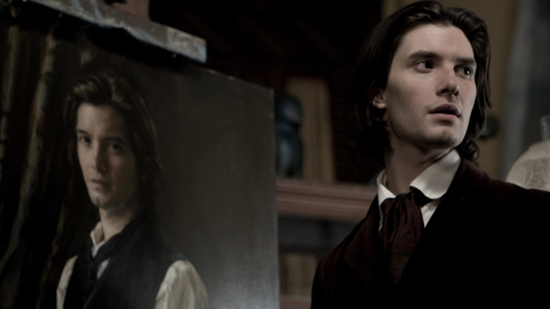
BEN BARNES from DORIAN GRAY (2009)
This more traditional adaptation brings the story back to it’s Victorian roots, while at the same time bringing a modern sensibility to the story. In this version, the character is played by British actor Ben Barnes, who does fit closely with the version described by Oscar Wilde. In an interesting departure from Wilde’s version, this movie takes a more nuanced look at the character of Dorian, making him more than just a villain in the story, but rather a tragic by product of a corrupting society. We see Dorian before the influence of high society as this impressionable youth. As he is drawn into the decadence of Victorian aristocracy, we see him change, and it more has to do with holding onto the things he’s gained rather than maintaining the youth that he gave up his soul for. The movie also delves more into the queer subtext of the story, showing his closeness with the Colin Firth’s Lord Henry being more than just a casual admiration of his status in life. It also portrays Lord Henry as more of an antagonistic force than most other screen versions of the story, showing that he very much is responsible for making Dorian into the monster that he is. The movie doesn’t let Dorian off the hook, though, as he is still very much a corrupted soul by the end of the story, but the movie is asking more about the way society pushed him into becoming the monster that he is, and not just limiting it to his own sense of vanity. Barnes does a fair job of portraying Dorian throughout the film, though his portrayal does indulge a bit more into the monstrous side of the character. The movie definitely is evocative of classic horror movie cinema, and it wants to create a spooky aura around the character of Dorian Gray. But, that kind of detracts from the way that Oscar Wilde depicted him in the novel, where he was outwardly a gentleman while hiding a darker soul. Barnes does a good job of capturing the charm of the character, but something gets lost when he has to become the monster. Still, it is worthwhile seeing the story reach back to it’s Victorian roots to help inform the societal taboos that have since been broken down over time thanks to provocative stories like this one.
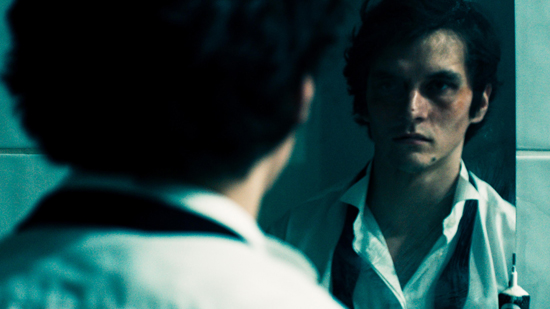
FIONN WHITEHEAD from THE PICTURE OF DORIAN GRAY (2021)
The story received another translation to the modern day with this re-telling, but does so in a way that really plays up a new relevance that this story manages to embody in our world today. It takes Oscar Wilde’s Dorian and turns him into a social media influencer. This is a smart way to bring the story up to date, because if there was ever a place like Dorian Gray to flourish, it would be through social media. The film explores the idea that anyone is capable of becoming corrupted through a social media presence, because it’s a place where people project a version of themselves to the world that they want to represent the best version of themselves. This often leads people to mislead their online followers, putting themselves out there as a person that is not their true selves. In this movie, there is no portrait of Dorian Gray, and in fact, it reverses the scenario where Dorian’s online version of himself stays young while he himself grows more decrepit in real life as a consequence of his actions. It’s an interesting study of social media culture that Oscar Wilde’s story surprisingly fits well into. British actor Fionn Whitehead does a fine job of portraying Dorian in this version of the story, taking him from a naive novice when he starts putting himself out there on social media to the depraved, washed out online addict who will sink lower and lower just to get more clicks. The downside of the movie is it’s limited scope, given that it was a Covid-production that was largely filmed over the course of the pandemic with the actors either zooming in or working alone on a set. Even still, the point it gets across is a poignant one. Social media has made us all care too much about our public image, and it’s corrupting us just like the portrait did to Dorian Gray. The movie asks us to consider what the cost of maintaining a false sense of self will do to us as a whole, and through the example of Dorian Gray, we see that it can lead us to some pretty twisted ends. Just like with Oscar Wilde’s original story, it’s a cautionary tale about the dangers of vanity, and how social media is perhaps the most toxic way we have succumbed to our own vain indulgences yet in society.
Oscar Wilde himself knew his was not immune to the pitfalls of vanity. He famously was quoted as saying, “I have nothing to declare but my genius” when he went through customs on his travels to America, so he obviously had a pretty inflated opinion of himself. But, he was also observant of the fact that vanity is often the thing that leads to a quick ruin in people. In the influencer culture that we currently live under, that sentiment seems all the more prescient, as we are witnessing the quick rise and falls of people who have chosen to present a carefully curated version of themselves online. Celebrity influencers can reap rewards for their online following, but they can also open themselves up to a severe drop in favorability once their influence wanes. What’s even more dangerous is how influencer culture has an affect on the ones who consume the content that is being made. We’ve seen the rise of some toxic communities like the Manosphere come out of social media, with influencers pushing some rather backwards ideas about beauty standards and what gender norms should be. Though Oscar Wilde lived long before anything like social media would have even been thought of, he still had a keen sense about the false fronts people put forward to present themselves to the world and how that can be a very bad thing in general for the world. Despite the moral confinements he lived under, Oscar Wilde always pushed back at the idea of accepted norms and was one who embraced individual eccentricity. This is why he is celebrated so much as a queer icon, because he challenged us to embrace our own selves regardless of what the rest of society thinks. Through Dorian Gray, he showed us the dangers of stunted growth; desperately clinging to a past version of ones’ self while the world passes by. In the end, Oscar Wilde believed it to be better to embrace all those wrinkles and scars that life gives us, because that’s what gives us character. Sure, Wilde was aware of his own vain inclinations, but he was also aware of how vanity drives us toward being closed minded, which was something he knew all too well in Victorian England. His story of Dorian Gray is a powerful reminder of just how easily we can fall into our own loop of self importance and it’s a story that remarkably feels more modern today than it did well over a century ago, as demonstrated by so many movies choosing to present the story in a present day setting. Wilde’s story remains universal, and it still has a critical thing to say about us as a society.