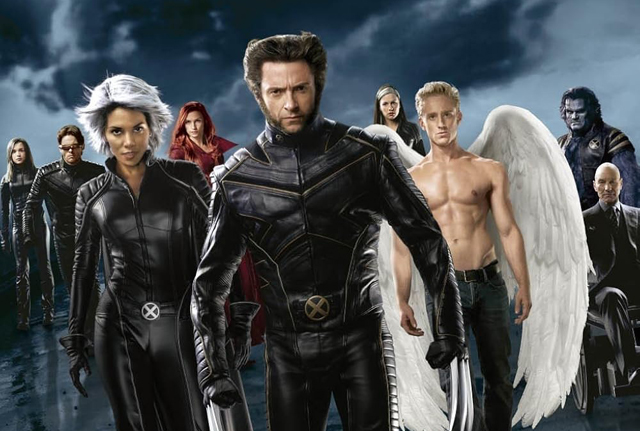
It could be said that the era of dominance with comic book movies at the box office began at the turn of the millennium in the year 2000 with the release of Marvel’s X-Men. The X-Men comic book series had been around for many years before. Created in 1963 by the legendary team of Stan Lee and Jack Kirby, it had long been one of the pillars of Marvel Comics, and one of the most widely read franchises in all of comics period. But unlike their rivals over at DC Comics, Marvel couldn’t manage to get theatrical adaptations of their comic stories off the ground for the longest time. Animation was a different matter, with characters such as Spider-Man and the Fantastic Four managing to spotlight some popular Saturday Morning cartoons. But perhaps the most acclaimed series based on a Marvel comic was the 90’s animated series of the X-Men. Praised for it’s dramatic writing and mature handling of complex themes, the X-Men series hit a note with both young audiences as well as grown ups who had been familiar with the comic books since their youth. The show aired on Fox Television’s afternoon lineup of cartoon shows, and it’s popularity helped to convince their parent studio 20th Century Fox to invest in a big screen adaptation. The film would be very different from other comic book movies at the time. In stark contrast to the campy Batman & Robin (1997), X-Men would be much grittier and take it’s subject matter much more seriously. The film was directed by Bryan Singer, who 5 year prior directed the Oscar-winning The Usual Suspects (1995), and his style of direction fit with the new tone that Fox and Marvel were wanting to push for this series. The cast would include some heavy hitters like Sir Patrick Stewart (who was practically born to play Charles Xavier), Sir Ian McKellen, Halle Berry, Anna Paquin, and a then unknown Australian actor with a background in musical theater named Hugh Jackman. Upon release, the film received instant acclaim from fans across the board, and the film indeed help to set the tone for all the comic book movies that followed. You don’t get to Sam Raimi’s Spider-Man (2002) or even the entire MCU without this original trend-setter. Here was a comic book movie that actually stood for something more than just selling more comic books or toys. X-Men showed that a comic book movie could actually be as compelling as any other serious drama on the big screen.
In three short years, Bryan Singer and company followed up their hit film with a sequel, and it was even more popular than the first film. X2: X-Men United (2003) took an even bolder stand on it’s themes. Stan Lee and Jack Kirby always reaffirmed that their X-Men comics were meant to reflect the civil rights struggles in American culture; with the opposing frenemy characters of Charles Xavier and Magneto being strongly inspired by civil rights leaders Dr. Martin Luther King Jr. and Malcolm X. Mutants in the world of the X-Men are a class of people facing prejudice in society, and the movie doesn’t shy away from that aspect. In X2, Bryan Singer even brings his own personal experience to the themes of the movie, connecting the struggle for LGBTQ rights into the allegory of the movie. The film has a scene where the character of Iceman (Shawn Ashmore) essentially “comes out” to his family as a mutant, to which his mother asks “Have you ever tried not being a mutant.” It’s a heavy handed allegory, but it still lands and was pretty bold in the regressive years of the Bush administration for the LGBTQ community. The film also included some incredible moments like fan-favorite Nightcrawler (Alan Cumming) sneaking his way into the White House. And it also included a scene-stealing performance from Brian Cox as the villainous General Stryker. The movie concluded with a tease for what was to come, with a hint for the arrival of the fearsome Phoenix Force, but unfortunately a few things ended up derailing those plans. Instead of returning for another X-Men film, Bryan Singer left Marvel to take up another job at DC, where he was going to re-boot the Superman character for the big screen. This left a major vacancy to fill with Fox’s X-Men franchise, and the longer the studio waited, the less likely they were going to guarantee the return of their all-star cast. There was hope that someone of Singer’s caliber would ideally take the job, but sadly they were not so lucky. The job went to Brett Ratner, a filmmaker with, shall we say, a somewhat controversial reputation in Hollywood. While most of his negative aspects wouldn’t come to light for years after, he was still viewed at the time to be a somewhat bad fit according to fans.
Ratner’s claim to fame came from being the director of the successful Rush Hour movies starring Chris Tucker and Jackie Chan. He’s not exactly a visionary director, but proved to be competent enough behind the camera to deliver some strong results at the box office. However, what he had shown was that he could deliver with action comedies. Directing a comic book movie was another matter. And not just any comic book movie, but one in a franchise known for having a message behind it. It became pretty clear early on that Brett Ratner was not going to fit in as easily with this X-Men team as Singer had done prior. What was particularly apparent during the making of this was Ratner’s behavior on set. It must have been striking for the returning cast to go from being under the direction of an openly gay filmmaker like Bryan Singer to being directed by a guy who casually used homophobic slurs on the set. But that was just the beginning of Ratner’s bad behavior. Elliot Page, who prior to transitioning had played the role of Kitty Pryde in the series, stated in a 2017 interview that he had experienced first hand homophobic abuse from Ratner during the filming of the movie. Elliot had just recently come out as a lesbian to friends and family, but was still in the closet professionally due to the prejudice that LGBTQ actors still faced at the time. According to the interview, another actress was told rather callously by Ratner, in front of the whole cast and crew at a pre-production meeting, that she should sleep with Page to remind her that she is gay. Keep in mind, Page had barely turned 18 at this point in his life, making the remark even more disgusting. Not surprisingly, Ratner has been revealed to be a known associate of Jeffrey Epstein, so this kind of inappropriate behavior from a person like him towards a co-worker (let alone a barely legal age one) becomes pretty clear. Thankfully Page had allies amongst his fellow castmates, including a queer icon like Ian McKellen and out and proud bisexual Anna Paquin, and it likely helped him to eventually tell his story years later after becoming more comfortable with his own true identity as a trans male. Of course, Brett Ratner is an awful person in private, but did his bad behavior contribute to a bad movie?
The answer is almost certainly yes, but Ratner alone was not the only thing that sank the film as a whole. The movie X-Men: The Last Stand is a perfect example of a studio mishandling the direction of a franchise once it has lost it’s creative direction. With Singer’s departure, there was no clear plan in place for what to do next in the series. They had some ideas about what the future might be, thanks to the Phoenix teaser at the end of X2, but there was no outline for how to implement the story. What’s more, they had to keep up the storylines set up in the first couple movies and build onto those as well. Unfortunately, with a cast as big and costly as the X-Men was, doing justice to all of them was going to be tricky. And unfortunately, Fox played some dirty tricks to coax some actors back while minimizing their role in the film. Halle Berry stated that she would only come back if her character storm had a more impactful presence in the storyline, similar to the role the character plays in the comics as one of the team leaders. She signed on thanks to a script that included a scene where Storm saves a group of kids in Africa. However, it was later revealed that this script was a fake one, meant to trick Berry into signing a new contract. Director Matthew Vaughn, who was at the time was developing the film as it’s new director, ended up quitting due to this double dealing deception from the studio. In the end, Storm is in the film, but barely has any role to play. But at least she gets more screentime than poor James Marsden as Cyclops. Marsden had always been given the short end in the prior X-Men movies, with Bryan Singer and company not really knowing what to do with the character, instead putting more focus onto Hugh Jackman’s Wolverine. Now truth be told, Marsden was going to have a small role no matter what in this movie, because he was following Bryan Singer over to DC to appear in Superman Returns (2006). But the rather uncermonious off screen death that Cyclops has in the movie feels like an insult, especially to longtime fans of the comic books. Cyclops is the de facto leader of the X-Men in the comic books, so to see him be treated so disrespectfully by the filmmakers in these movies felt especially sour for fans of the character. And that’s just the problems with the characters that get the minimal amount of time.
One of the biggest problems with the movie is it’s mishandling of the Dark Phoenix Saga storyline. The Dark Phoenix Saga is one of the most iconic runs in the X-Men comic book series, involving the telepathic mutant Jean Grey’s possession by the sometimes malevolent Phoenix Force. The Phoenix Force, in the comics, is a celestial power that takes over the body of Jean Grey and gives her almost godlike abilities. At the same time, the Phoenix Force grows corrupted while inhabiting Jean and turns her into a threat to human and mutant alike, with the power to destroy the entire world. For the makers of X-Men: The Last Stand, they seemed to be reticent to the idea of taking this series into a more cosmic direction, so they decided to make the Phoenix more earthbound. Jean is just born this powerful, making her godlike from the beginning. What this unfortunately does is to take away any agency in her character as well. The first two movies established Jean (played by Famke Janssen) as a powerful telepath, but one whose powers are in line with the rest of the X-Men team. The first two movies did a good job of showing Jean struggling to balance out her powers with the tendencies to push beyond them bubbling under the surface. In this film, there’s no transition between good Jean and bad Jean. She’s a villain from the moment she shows up, already in Dark Phoenix mode. We learn that some of her anger is stemmed from mental blocks that Charles Xavier had put on her from when she was still young, as a way to keep her in check. We’ll circle around back to the theme of limiting human power, but this revelation doesn’t fully explain why Jean makes the choices that she does in the movie. Some moments show her having her full faculties when committing some truly villainous acts, while other scenes show her committing carnage while being in a trance like state. The movie can never quite decide what it wants Jean Grey’s Phoenix form to be, and that’s why many comic book fans felt robbed by this movie. The Phoenix Saga is a legendary run in the comics, and one that could have been amazing to witness on the big screen. Instead we get a Phoenix-ish character that feels like it was shoehorned into this movie. And sadly, it wouldn’t be the last time that Fox would underdeliver when it came to portraying the Dark Phoenix on the big screen.
But what was especially insulting about how they treated the Phoenix Saga is that they paired it with another story line from the comics that was not compatible with it at all. The other storyline that was used was one called Gifted, written by future Avengers director Joss Whedon. In the Gifted story arc, the mutants face a new kind of crises as a “cure” for the X-gene that has mutated human DNA has been found. The question becomes whether it is ethical or not to allow the “cure” to be implemented. Some mutants desire the “cure” because for some of them their mutations are curses and not gifts. But there are others who rightly worry that this could be used as another weapon to eradicate mutant kind. It’s an ethical debate that divides the X-Men as well, which leads to some tough choices throughout the story. Of course, a movie like X-Men: The Last Stand doesn’t have the intelligence to bring nuance to a plot line like that. What’s even worse is that it takes the worst side possible in this debate. The movie defends the idea of having mutants seek the “cure” in an attempt to be “normal.” The idea that the movie takes of not being a mutant as being “normal” is antithetical to everything that the X-Men comics has stood for over the years. The very reason that the X-Men exist is to show the heroism in being an outsider who still fights to save everyone they can regardless of who they are. It’s a storyline that has long fought to end prejudice, and here is a movie that is basically saying that it’s for the better to meet the prejudicial people halfway. It’s especially shameful given how the movie series started in the first place. The X-Men movies started as a thinly veiled allegory for LGBTQ rights and here is a sequel movie that is essentially pro-conversion therapy. Sure, some of the X-Men rightly refuse the “cure” such as Storm, but in the movie Magneto is portrayed as the villain because he wants to put an end to the “cure” and stop it from being used to control mutants; both good and bad. Sure, Magneto takes extreme measures, such as moving the Golden Gate Bridge in an admittedly cool scene. But, when you look at his motivation, he’s for the most part justified in his attitude towards the cure.
What’s especially irksome about how the movie misuses the Gifted story line is that it puts the defense of the “cure” into the wrong characters. One of the film’s greatest casting choices was bringing in Kelsey Grammer to play Dr. Hank McCoy, aka Beast. Grammer’s erudite persona was such a perfect fit for the highly intelligent, fan favorite blue fur skinned X-Men. Even under the heavy amount of prosthetic make-up, Grammer manages to let the personality shine through in his performance. Unfortunately, the movie also misuses the character, making Beast a defender of the “cure.” If there was ever a character that represented the best aspects of mutantkind, it’s Beast. Despite his outward appearance of a wolf like creature with blue fur, he’s managed to excel as an intellectual, earning his Ph. D. and also rising up in esteem as a diplomat respected by all. He’s the best example of a mutant not needing to be cured in order to become the best version of himself. And yet in this movie, he’s making the case that some mutants should have the option to seek the “cure” to bring normalcy into their lives. It comes back to that false idea of what normal should be. There’s a patronizing aspect to the movie’s message that an oppressed minority should consider assimilating more into the culture of their oppressors as a way of making things better. It’s even worse when people of that same minority are put into the role of making that argument, such as seeing gay and lesbian people being hostile towards people who are trans; forgetting that their struggle is still linked with their own. It’s sad to see any character in the X-Men team making the argument that mutants will have a better future if they “cure” their more extreme powers away, but it’s even worse when they put Beast into that role. The movie also shamelessly tries to tie this argument in with the Dark Phoenix story line, showing her as proof that mutants need to be controlled by eliminating their powers. Charles Xavier is uncharacteristically shown to have been guilty of taking that side himself, purposely nerfing Jean Grey’s immense power, largely without her consent. Yes Jean’s power can be terrifying, but in taking away her self-determination, Charles may have made her descent into madness even worse. Again, it’s Magento whose got the most morally consistent position in this film; standing up for the rights of mutants to be as abnormal as they choose. And for that, he’s the villain, who also ironically loses his own powers in the process.
That in the end is why X-Men: The Last Stand is not only a bad sequel, but in the long run over the last 20 years has also proved to be a morally reprehensible movie as well with a pretty toxic position it chooses to hold. It was a bad time for comic book movies, as it looked like the revolution that Bryan Singer’s X-Men films started was quickly waning due to lackluster sequels like this one. Things also didn’t work out well for Bryan Singer either. His re-launch of Superman also proved to be a box office failure. X-Men: The Last Stand did open to over a franchise record of $100 million, but poor word of mouth also saw the movie lose it’s audience rapidly in the weeks thereafter. Couple this with another embarrassing failure two years later with X-Men Origins: Wolverine (2008) and the once mighty X-Men franchise was on life support. Thankfully a couple years later, Fox decided to reboot by digging deeper into the origins of the X-Men. Matthew Vaughn gave the X-Men another chance and he delivered one of the best films in the franchise with X-Men: First Class (2011), showing the backstory of Charles Xavier and Magento’s friendship and how they formed the X-Men in the first place. Bryan Singer even returned to direct X-Men: Days of Future Past (2014) and X-Men: Apocalypse (2016), though even that franchise wore itself out as well; and sadly we’ve also learned that Singer is just as much of a creep as Brett Ratner. Now the X-Men are looking at yet another era of renewal, now that Fox has been bought by Disney and Marvel Studios finally has creative control over these characters again. A new X-Men team is currently being assembled, with Jean Grey already making her debut in Spider-Man: Brand New Day (2026), played by Sadie Sink. But at the same time, Marvel is also acknowledging the strength of what has come before, and they are granting the original X-Men actors to return in Avengers: Doomsday for what will hopefully be a better finale than what X-Men: The Last Stand delivered. Seeing James Marsden return as Cyclops, with a full comic accurate suit to boot, is especially exciting and hopefully he finally gets a chance to shine this time. Without a doubt, X-Men: The Last Stand is the movie that represents the series at it’s worst; not so much in quality (as Origins: Wolverine and Dark Phoenix are worse made films) but in what it stands for. It’s a movie that dares to say that mutants should give up being special in order to live a life more “normal.” Since it’s inception, the X-Men comics have prided itself in showing the bravery and wisdom of the outsiders, and a movie that doesn’t get that point and even runs contrary to the message has no right calling itself an X-Men movie.