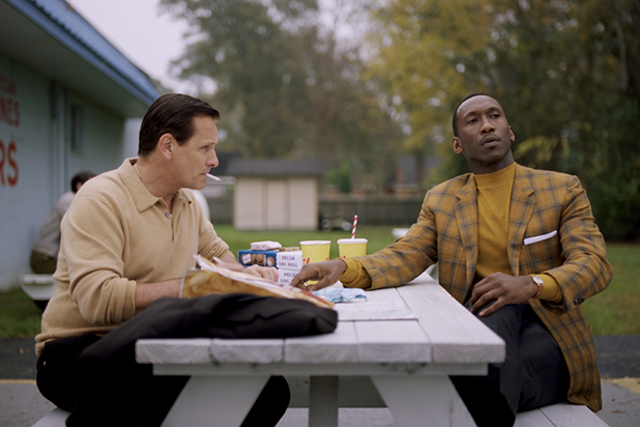
The Problem With Green Book – How the Way the Academy Votes Leads to Unpopular Choices

In the wake of last week’s Academy Awards, there’s a strong impulse to shrug of the disappointment and look ahead to next year, because obviously not everyone’s picks are going to be the same and many people everywhere understand that the Academy doesn’t always get it right.  But, this year in particular, there seemed to be a much louder outcry than normal in response to the results of the 91st Academy Awards, and it’s one that in many ways exposes the true disconnect between audiences and the industry.  And it’s all in response to a little movie called Green Book (2018).  Immediately upon the announcement from actress Julia Roberts as she opened up the envelope up and read the movies name, there was a visceral negative response across the internet.  I myself was caught up in it, as you’d expect from my feelings on the movie from my Oscar picks last week right here.  The consensus generally came down to Academy having made the worst choice for Best Picture since the movie Crash (2005) won the award over the heavily favored Brokeback Mountain (2005).  Los Angeles Times critic Justin Chang had a lengthy rebuke of the Oscars written up in almost lightning speed a mere hour after the ceremony ended, and he thoroughly dismantled the decision with a special emphasis on how the movie represented a much larger trend of the Academy loosing touch with it’s audience.  It almost seemed like a fitting end to such a troubled lead up to the Oscars that the aftermath would spark it’s own level of controversy.  But what the Best Picture win for Green Book illustrated the most about the Oscars is the still unfortunate draw backs that the Academy continues to struggle with in a changing world, and how much of it stems from the archaic and largely antiquated way that the awards are voted upon; particularly for Best Picture.

The Academy of Motion Pictures Arts and Sciences, founded by MGM Mogul Louis B. Meyer in 1927, has always put itself forward as the supreme authority within the industry when it comes to preserving the works of the past, establishing a level of quality within the market, as well as brokering good relations amongst all branches working across the industry.  As part of the establishment of the Academy, the board of Governors invites members from across the five branches (since expanded to 20) of the industry (Actors, Directors, Producers, Writers, and Technicians, etc.) and helps to mediate among other things labor standards, codes of conduct, and awards of merit.  This last aspect of the Academy’s purpose has evolved into their most primary of functions, being the distribution of an annual Academy Award.  Categories exist upon each branch, which gets to select a winner based solely on their discipline within the industry like Actors voting for actors and Directors voting for directors, and so on.  And then the Academy membership as a whole, which is now 6,000 strong, collectively votes together on the Award for Best Picture; the highest honor given out each year.  Now, with a large deliberative body like the Academy, you would think that a straight forward popular vote is what actually determines the winner for each category; but it’s not that simple.  A popular vote is best used when it’s between two choices, but most categories at the Oscars consists of 5 or more; with Best Picture reaching as many as 10.  What happens is that in many cases, the votes come down to each movie receiving less than 50% of the total vote, with the one in the lead sometimes even reaching as low as just a quarter of total votes, which makes it hard for the Academy to determine if that really makes it the Best Picture when it’s not even the favorite by a majority.  So, in addition to determining the Oscars by popular choice, they have also instituted another factor into their voting system and it’s something that in many ways just causing even more headaches for the Academy.

What the Academy uses to determine the winners of their categories, in particular the Best Picture category, is a weighted system.  In this, they allow Academy voters not only to select their favorite choice for the Award, but also their runner up choice as well on the ballot.  From this, the Academy’s accounting firm of PricwaterhouseCoopers tallies not just the results of the initial first choice vote, but also the one for the second choice.  When the initial vote for the category doesn’t result in a consensus winner that achieves the necessary percentage needed, the second choice factor is weighed in as an extra boost, and when everyone’s second choice ends up being the same, that could potentially earn the movie enough points to push it over the top.  This usually doesn’t become a problem when the races are far less competitive, but in a year like this one, where there was no clear front runner for the race for Best Picture, this weighed voting system starts to become a little problematic.  In the past the Academy has had to face questions over their voting systems before, particularly when it came to the acting categories.  Before, the Academy had a consensus vote determine the winners of it’s Leading and Supporting performances categories, which was the result of an unfortunate accounting anomaly in the 1931 where actors Fredrich March and Wallace Berry ended up in a statistical tie, despite an approximately 50 vote margin between them.  To avoid such an incident again, the Academy opted for the weighted system for many years to avoid another tie.  That was until then Academy President Gregory Peck instituted a change where a straight popular vote would determine the acting choices, even if it resulted in a statistical tie.  Now only the final tally would matter, and wouldn’t you know it, the first time this was put into place, it resulted in an exact tie between Kathrine Hepburn for The Lion in Winter (1968) and Barbara Streisand for Funny Girl (1968).  That’s the risk the Academy took, but in the end, they knew that the vote decided upon without question of validity.

Which is where the problem arises for the Academy today.  Do they continue to tally their votes in the same way, using their weighted system to avoid the potential of a statistically unpopular Best Picture winner, or do they actually go with the base number of votes like any normal democratic system uses.  This is not a new problem today, and in fact has plagued the Academy for several years now.  In many cases like Green Book, it seems like the movie that is generally liked but not quite universally loved is the one that benefits the most from the Academy’s voting system.  Green Book may not have come out as the first choice for perhaps the majority of the Academy’s voters, but it more than likely picked up the majority of the second choices on people’s ballots, and that in itself is what probably propelled it to the top.  In a field where the vote was split, the one that had the most second place votes gets the victory, and that’s the simple way of explaining how what happened, happened.  It wouldn’t surprise me that a similar thing happened with Moonlight’s surprise win over La La Land in 2017.  The vote came pretty close to begin with, and then Moonlight swept up the most second choices to put it over the top, despite the heavily favored La La Land likely being the winner of the first vote.  It’s a result that I’m sure most people didn’t expect would happen, and indeed no one balked at first when La La Land was mistakenly announced as the winner.  But, people are balking now because of Green Book, because it became clear to many that the system in which the Academy uses to determine Best Picture didn’t result in a choice that upset the order in a good way, but instead threw the Academy backwards in terms of progress, revealing more of the insulated, safe, down the middle of the road attitude that has put the Academy out of touch with the rest of the industry as well as most audiences who have long been watching the Academy Awards.

And why was Green Book the movie to inspire such a backlash.  The movie itself is a feel-good, harmonious look at race relations in America during the 1960’s, where a slick-talking and racist Italian-American played by Viggo Mortenson is shown the error of his feelings when he befriends the cultured African-American musician played by Mahershala Ali, and in turn helps that same musician find confidence in himself to embrace his own cultural identity.  In other words, it takes on a tough subject and presents it in an easily digestible way that offends nobody and only reaffirms the target audience’s own perceived progressive attitudes.  In many ways, Green Book feels very old-fashioned, like something that would have easily won the award 30 years ago, and you could argue that it actually did, given it’s many thematic similarities to Driving Miss Daisy (1989), another movie that distilled racial tensions down to a quaint difference of character; only it’s the white person driving the car this time.  Had there been no discussion of Best Picture surrounding it, as well as the politics that surround the Academy, Green Book might not have become this lightning rod post Awards and could have just been treated as a naive but unoffensive film that would have just existed on it’s own.  But, in a year that was in many ways seen as a breakthrough for African-American film-making, honoring Green Book above all others just did not fit the narrative that Hollywood had carved out for itself this year.  Here we were given a movie written and directed by white men that was telling a story about racial prejudice in America, and it did so through the eyes of it’s white protagonist, who I might add is depicted as a racist and is never really brought to task over his behavior in the movie.  Now, I’m not saying that the people involved with this movie should be condemned for making it the way they did, and there is nothing innately racist about their film either (quite the opposite).  But, when you stack it’s sugar-coated presentation against some of the more pointed and challenging films this year regarding race, the fact that the Academy awarded it above the others really shows how much they really didn’t get it this year.

For one thing, the Academy should have really taken into account how it’s newly admitted members of color felt about such a movie.  The Academy has made significant strides in improving diversity within it’s membership it should be noted, but it’s still a predominately white and male dominated collection of voters.  Many of the voting body of the Academy likes to think of themselves as progressive, forward thinking individuals, but their attitudes towards issues is often clouded by their own regards for their self worth and value for their own values.  This often leads to unfortunate self-serving injections of themselves as part of the solution to the world’s problems.  You could see this in past Best Picture winners like Argo (2012), where the Academy voters favored it not because it was a taught, well made thriller, but because it showed the film industry in a heroic light.  The same kind of out of touch, self-posturing can even be seen in the speeches given by winners as well, like George Clooney’s cringy Best Supporting Actor acceptance speech in 2006 where he stated that Hollywood was at the forefront of civil rights when it gave Hattie McDaniel an Oscar for Gone With the Wind (1939) long before the Civil Rights movement even began.  Right George; forget Dr. King.  Hollywood should take credit for stopping segregation in America (facepalm).  Essentially, the way the Academy votes is reflective of how they view themselves, and the voting body of the Academy is made up of privileged, well-meaning liberals who want their self-righteousness to be applauded and reinforced in a very public way.  They are attracted to movies that show the redemptive arcs of flawed characters, like the one in Green Book that delivers the obvious statement that “racism is bad” and celebrates the transformation of it’s “enlightened” white protagonist.  But, there is a problem with voting in a way that reaffirms one’s perceived progressive attitudes on important issues; it doesn’t allow for an outside perspective to have it’s say in the matter.

A lot of the outcry over Green Book‘s Best Picture win is coming from the industry’s representatives of color, who feel that the movie doesn’t come even close to accurately portraying the real situation in America with regards to race.  In particular, a large amount of criticism has come from the fact that the movie seemed to have been made with little regards to the African-American perspective that could have helped to make it more authentic.  The movie was co-written by Nick Vallelonga, the real life son of the character Viggo Mortenson plays in the movie; Tony Lip.  The film was meant to be a celebration of Lip’s long time friendship with Dr. Don Shirley, played by Mahershala Ali, and how their friendship became a bridge between racial divisions that was reflective of those across America over the years.  Unfortunately, Vallelonga wrote the screenplay without the consent of Dr. Shirley’s own family, and it’s clear that the script was more or less self-serving in presenting a more rosy picture of his own father rather than making about the friendship between the two.  The Shirley family has since disavowed the movie, saying that it is not true to what actually happened and that it especially takes too many liberties with regards to how both men approached racial divides.  What it essentially says is that the African-American experience did not matter in the making of this movie; all that mattered was that it was going to be this universal story about understanding that made it easily digestible for older Academy members.  And it’s that lack of regard for the Black perspective that really rubbed people the wrong way.  You could especially see that in Spike Lee’s own reaction during and after the awards, where he turned his back to the stage and even attempted to walk out after Green Book was announced as the winner.  Many other African-American representatives within the industry also voiced their doubts about the validity of Green Book’s nomination, rightly pointing out that their voice was not considered as part of the discussion, and this is the thing that has especially fuel the backlash against the movie.

So, with the combination of an absurdly complicated voting system and a voting block of privileged, out-of-touch Academy members who have no real experience with the actual issues that they are judging these on, you get the result of what is now the least liked Best Picture winner in over a decade, and maybe even ever.  Green Book‘s win is a perfect storm of all the bad things that the Academy is known for and it shows just how little their well meaning attempts at becoming more in touch with the times have actually not come to fruition.  It’s hard to get really angry at the Academy most of the time, considering their noble attempts to diversify the Academy and also the fact that an Oscar win means very little in the long run.  But, this year’s result is particularly troubling given the fact that it seems to intentionally ignore the concerns of people out there whose voices have long been overlooked, especially in a benchmark year like this one for filmmakers of color in the industry.  It’s particularly insulting in a year where movies made by black filmmakers, telling uniquely afro-centric stories that spoke to their own experiences, made such incredible progress in gaining mainstream success still ended up losing to a movie made by white filmmakers that tried to lecture us all on race, from a white liberal point of view.  Spike Lee was justified in his disgust, because it showed him that the Academy still wanted to address the evils of racism in America, but on their own terms.  Considering that movies like BlacKkKlansmanIf Beale Street Could Talk and Black Panther could be uncompromising in presenting a defiant African-American perspective and still succeed with mainstream audiences shows that the Academy’s position is greatly out of touch with contemporary tastes.  Hell, Black Panther was the year’s highest grossing movie; how can the Academy ignore those numbers.  That, above everything else, is what left a sour taste in people’s mouths over this years Oscars, regardless of race; that a powerful, insulated body of industry elitists still showed it’s unwillingness to hear from outside voices.  Even if consolations were given out in many of the other categories, the fact that Green Book, a deeply flawed portrayal of a very important subject, was given the highest honor the industry can bestow shows that the Academy’s problems extend far beyond just low ratings.

The 2019 Oscars – Picks and Thoughts

So, we come to this moment once again.  The Award season comes to an end this Sunday with the 91st Academy Awards, honoring the films of the previous year.  In many past years, you often find the Awards reflecting the mood of the industry as well as it’s response to the state of the world given the choices that the Academy makes when the awards are handed out.  But the interesting thing about this year’s Oscars is not the external turmoils, but rather the internal ones.  The last few weeks have been nothing short of a nightmare for the planners of this year’s Oscar ceremony.  In a seemingly endless string of bad PR and short-sighted tinkering, the Academy of Motion Pictures Arts and Sciences (AMPAS) not only has to enter this year’s Awards ceremony without a host for the first time in over 30 years, but also with many industry professionals bitter over the Academy’s attempts to remove them from the spotlight.  It’s been a frankly terrible year all around for this year’s lead up to the Oscars.  First, the Academy received immediate blow-back from professionals and audiences alike when it was announced that they were considering the addition of a “Popular Film” Oscar.  The idea was swiftly sidelined, but not entirely shelved, which may become an issue in years to come.  Then, the decision to have comedian and actor Kevin Hart be the host for this year’s ceremony fell apart once decade old homophobic jokes were unearthed, forcing Hart to recuse himself in order to not be a distraction and deal with the fallout on his own.  Then, just this last week, the Academy made it’s most egregious error when it decided that four of the categories would not be aired live on television, and would instead be handed out during commercials, which was universally condemned across the entire industry.  The Cinematographer Guild (one of the affected categories) was even threatening a boycott.  So, needless to say, this year’s ceremony is coming to us already hobbled by it’s own self inflicted wounds.  That’s not to say there might not be some pleasant results that’ll come Oscar night.  Regardless of how the night goes, the movies will live on and whatever wins will still enjoy the glow of victory.

Like years past, I will be giving my personal picks for this year’s Oscars, as well as giving my detailed thoughts on the primary categories.  Those categories of course are Best Picture, Best Director, Best Actor, Actress, Supporting Actor, Supporting Actress, as well as both Adapted and Original Screenplay.  In addition, I will share which movies I believe will win the Oscar, as well as the ones that I believe should win.  Because I want my choices to come from an informed place, I have made the best effort to watch all the nominees in each of these categories; including the obscure short subject ones.  So with all that said, lets take a look at the nominees.

BEST ADAPTED SCREENPLAY:

Nominees: Eric Roth, Bradley Cooper, Will Fetters (A Star Is Born); Charlie Wachtel, David Rabinowitz, Kevin Willmott and Spike Lee (BlacKkKlansman); Nicole Holofcener and Jeff Whitty (Can You Ever Forgive Me?); Barry Jenkins (If Beale Street Could Talk); Joel and Ethan Coen (The Ballad of Buster Scruggs)

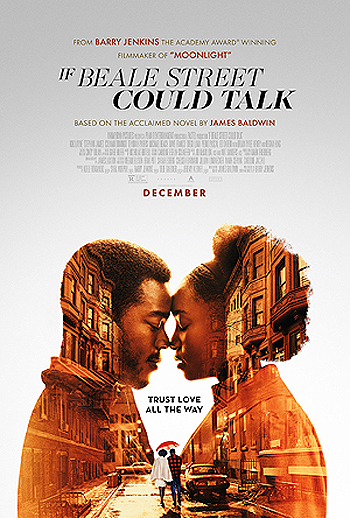
This year’s nominees for adapted screenplay are an interesting mix of faithful adaptations as well as movies adapted in the loosest possible sense of the word.  Barry Jenkins, who won previously for the movie Moonlight (2016), delivered a very reverential interpretation of the beloved novel by James Baldwin, which has long been appreciated in literary circles, but had never been given a cinematic treatment before.  Though it’s heartfelt and perhaps Jenkins’ best work yet as a screenwriter, his status as a past winner unfortunately lowers his odds of repeating.  The same for the Coen Brothers’ Buster Scruggs, which is perhaps too episodic for the academy’s tastes, and their nomination was the one surprise inclusion here.  The A Star Is Born screenplay does the impressive feat of taking an already familiar story that’s been remade multiple times already throughout the years and makes it feel fresh again, mainly due to it’s very resonant themes that remain relevant today.  But, the familiarity does leave the movie with few surprises as well, which holds the script back a bit.  One of the more pleasant surprises was the charmingly witty Can You Ever Forgive Me? screenplay from Holofcener and Whitty.  But, the screenplay that outshines all of these is the multifaceted one for the movie BlacKkKlansman.  Spike Lee and his co-writers created a screenplay that has to accomplish multiple jobs; taking the real life story of Detective Ron Stallworth from the account from his own memoirs, and making it work as both a detailed police procedural while also addressing the larger issues of it’s subject and drawing those connections to the turmoil of today.  Lee, always the provocateur, likes to make pointed political statements with his movies, and while it’s definitely there in BlacKkKlansman, it’s also reserved to the point where it doesn’t overwhelm the already fascinating story.  He even manages to surprisingly work some humor in as well, especially given the subject matter.  Lee, who has yet to win any Oscars, is long overdue, and this is certainly his best shot yet, and it’ll be well deserved.

Who Will Win: Charlie Wachtel, David Rabinowitz, Kevin Willmott and Spike Lee; BlacKkKlansman

Who Should Win: Charlie Wachtel, David Rabinowitz, Kevin Willmott and Spike Lee; BlacKkKlansman

BEST ORIGINAL SCREENPLAY:

Nominees: Paul Schrader (First Reformed); Nick Vallelonga, Brian Hayes Currie and Peter Farrelly (Green Book); Alfonso Cuaron (Roma); Deborah Davis and Tony McNamara (The Favourite); Adam McKay (Vice)

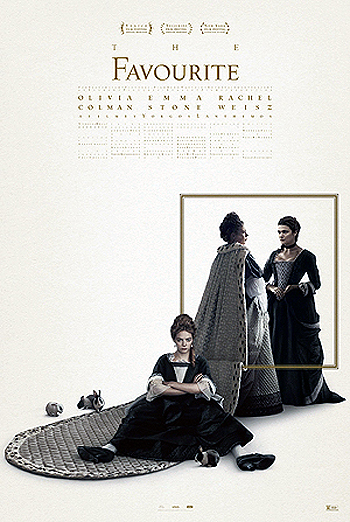
For this category, the real contenders should really only boil down to two of the year’s best.  Unfortunately, this is where Hollywood has unfortunately put it’s blinders on, and given chances to some movies that really shouldn’t belong in this category.  I’ll say this right now; I thought Green Book was the most overrated film nominated for Awards this year.  It’s depiction of race relations in the deep south during the 1960’s is so patronizing and surface level that it almost trivializes the real horrors that were commonplace in that time.  It’s a movie solely made for white Hollywood liberals; exactly the kind of movie that they like to pat themselves on the back for to show that they’ve made real progress on addressing racial divides, when in reality it does the minimalist of effort.  And sadly, it’s the screenplay that most likely to win, because that’s the target audience that the Academy voters represent.  The same applies to the politics of Vice, though there is more creativity in Adam McKay’s script, despite it being much less focused than his winning screenplay for The Big Short (2015).  Okay, with my rant over, I believe that the Oscar should really go to the equal parts classy and subversive screenplay for The Favourite.  As much as I do love Alfonso Cuaron’s autobiographical work for Roma, it’s The Favorite that resonates even more, especially for the mean spirited jabs that are thrown between Rachel Weisz and Emma Stone.  It’s a screenplay that also continually throws surprises at you and doesn’t just follow a predictable line.  More to the point, it’s the most subversive of the nominees here, throwing conventional expectations of lavish period dramas out the window as the characters grow more vicious, perverse, and nihilistic towards one another.  Let’s just say that it goes places that you never thought a movie of it’s type would ever go, and that was exactly what made it such a joy to watch. Considering that it’s also from a first time published screenwriter (Deborah Davis) is also impressive, given how daring it is.  And that’s the thing that I want to see the Academy honor, a movie that actually takes chances rather than one that plays by the book like, well, Green Book.  Sadly, because Green Book is preaching to an already convinced choir, it will probably rob a real original like The Favourite from getting it’s true reward.

Who Will Win:   Nick Vallelonga, Brian Hayes Currie and Peter Farrelly; Green Book

Who Should Win: Deborah Davis and Tony McNamara; The Favourite

BEST SUPPORTING ACTRESS: Amy Adams (Vice); Emma Stone (The Favourite); Marina de Tavira (Roma); Rachel Weisz (The Favourite); and Regina King (If Beale Street Could Talk)

This year’s supporting actress nominees represent a very strong field.  Amy Adams again proves she is one of the industry’s most versatile talents, but her time as an Oscars bridesmaid is likely going to continue further.  Marina de Tavira’s nomination was one of the most unexpected and pleasing surprises of this year’s awards, and her passionate portrayal of a recently divorced mother is another of the many beautiful things about Roma.  And then there is the amazing, dynamic duo of Emma Stone and Rachel Weisz in The Favourite, who again are just incredible to watch as they try to outwit each other in the film.  But, if there was ever a category this year where there has been a clear front runner from the beginning, it is veteran actress Regina King for her remarkable portrayal of a strong willed mother in If Beale Street Could Talk.  Even with the impressive ensemble cast that gives so much life to Beale Street, King is the true stand out.  Her character feels so down to Earth and yet larger than life, especially when she takes it upon herself to set things right and make a normal life for her pregnant daughter once again after her loved one has been wrongfully imprisoned. Regina King also is very well beloved in the industry, having been a stalwart performer for over 20 years in various critically acclaimed films such as Boyz In the Hood (1991), Jerry Maguire (1996) and Ray (2004).  Surprisingly, she has never been nominated until now, so this is a long overdue honor for her, and the fact that she’s going into the ceremony as a heavy favorite is not at all surprising.  She’s been a hard worker her whole career and this is the Academy finally giving her that recognition.  But it’s more than just a career award.  The performance, a beautiful mix of strength and compassion, is well deserving too, even in a strong field such as this one.  And considering that Beale Street was regrettably snubbed in so many categories, it’s still a relief to know that it will get it’s due recognition with King’s noteworthy performance.

Who Will Win: Regina King, If Beale Street Could Talk

Who Should Win: Regina King, If Beale Street Could Talk

BEST SUPPORTING ACTOR:

Nominees: Adam Driver (BlacKkKlansman); Mahershala Ali (Green Book); Richard E. Grant (Can You Ever Forgive Me?); Sam Elliott (A Star is Born); Sam Rockwell (Vice)

The supporting actor category is likewise also pretty well decided at this point.  Unfortunately, it’s for that movie Green Book which I already explained my dislike for.  However, if there was one Oscar to go to that movie that I’d be okay with, it would be the one in this category, going to Mahershala Ali.  His performance as famed musician Dr. Don Shirley is the one redeeming thing about the movie, and he would not be undeserving of the honor.  In a role that could have easily slid into caricature like the rest of the film, Mahershala brings a strong sense of stature and, as he constantly asserts within the film, a level of “dignity.”  And it goes a long way to elevate the movie as a whole, though it doesn’t quite salvage the whole thing.  In addition, the timing couldn’t be better for Mahershala’s, given that his role on the HBO series True Detective has been winning him extra acclaim throughout awards season congruently; something which also benefited Matthew McConaughey’s road to Oscar five years ago.  The only road block in Mahershala’s way is the fact that he already won the same award two years ago for Moonlight, and some Academy voters might want to spread the wealth out a little more to some of the first timers in this category.  That would exclude last year’s winner Sam Rockwell who also is nominated here for Vice.  And Adam Driver’s career is still fairly young and there will likely be many more nominations in his future.  The best opportunities for an upset belong to veteran actors Richard E. Grant and Sam Elliott, who are both beloved performers but have remarkably been overlooked for so many years.  My own favorite here is Sam Elliott, who managed to be the scene-stealer in a movie with heavyweights like Bradley Cooper and Lady Gaga.  And he has one of the best crying moments on film that I have seen in a long while.  So, I expect Mahershala to become a two time winner, but a long overdue Oscar for Sam Elliott would make me very happy.

Who Will Win: Mahershala Ali, Green Book

Who Should Win: Sam Elliott, A Star is Born

BEST ACTRESS:

Nominees: Glenn Close (The Wife); Lady Gaga (A Star is Born); Melissa McCarthy (Can You Ever Forgive Me?); Olivia Colman (The Favourite); Yalitza Aparicio (Roma)

Here we come to what is without a doubt the most competitive category of the night.  Every name here has a great case to make for the award, and all together they represent just how strong of a year this was for movies centered on women.  As of right now, the odds would tend to favor Glenn Close, a veteran actor whose career spans decades and multiple Oscar nominations, but has never won the Award once in all that time.  Here she has perhaps her best shot ever, with a boost from her long career as a respected performer.  She does, however, face a strong competition from Lady Gaga, who broke through many industry expectations to show that she could indeed pull off a serious dramatic role.  Gaga is still guaranteed an Oscar win this year for her inevitable victory in the Best Original Song category, but the goodwill she’s built up this last year with A Star is Born helps to give her a strong chance here as well.  Melissa McCarthy likewise changed my perceptions of her as she took on an uncharacteristic dramatic role and excelled at it, and in a less competitive year, this would have been a significant turning point nomination for her.  Yalitza Aparicio deserves much credit herself as a first time film actress who manages to hold her own in a movie as grand and epic as Roma, especially when director Alfonso Cuaron put her through so much rigorous situations during the shoot.  However, my “favorite” of the bunch actually comes from The Favourite.  Olivia Colman gives the most daring performance in this category, portraying a cranky, self-indulgent brat of a monarch and still managing to find the humanity underneath.  She shifts from vulnerable to terrifying in such unexpected ways in a way that is both hilarious and tragic.  The chameleon like British actress, more than anything, created the most interesting “character” of the year in her film, and that is why I feel she is most deserving of the Award, but if it is indeed Glenn Close’s time, then it will still be a well deserved honor given to one who shouldn’t have had to wait this long.

Who Will Win: Glenn Close, The Wife

Who Should Win: Olivia Colman, The Favourite

BEST ACTOR:

Nominees: Bradley Cooper (A Star is Born); Christian Bale (Vice); Rami Malek (Bohemian Rhapsody); Viggo Mortensen (Green Book); Willem Dafoe (At Eternity’s Gate)

Less competitive than the Actress category, but still not decided enough to have a clear front runner, the Actor category itself is also a fascinating one this year.  Basically it comes down to two performances where the actors went out of their way to become the real life subject that they were portraying.  Christian Bale, who has made a living becoming an actor so method that he literally transforms his body for a role, put on 40-plus pounds in order to play former Vice President Dick Cheney in Adam McKay’s Vice.  Likewise, Rami Malek had to perfect a British accent even through extra large prosthetic teeth in order to portray beloved Queen front man Freddie Mercury.  The strange thing is that both of these dedicated performances appear in movies that are not really deserving of them.  Vice was an unfocused mess that is only elevated by Bale’s exceptional and unflinching transformation.  And Bohemian Rhapsody is a cliche heavy, trivial paint by numbers biopic of one of the most unconventional rock bands of all time; not to mention it’s production was plagued by the incompetence of it’s now scandal ridden director, Bryan Singer.  And yet, despite the disappointments that both films turned out to be, they did feature the two best performances by an actor this year.  It only depends on which one the academy values more.  Christian Bale’s performance may be the more divisive of the two, because his portrayal of Cheney may be seen as too humanizing for some of the more liberal Academy members and too mean-spirited for some of the more conservative members.  That in turn could lead to an advantage for Rami Malek, since he’s portraying a universally beloved icon.  I’m inclined to go with Christian Bale’s performance, just because of the immense amount of work he put into it, but Malek’s performance is pretty transfromative itself, and incredibly entertaining.  In the end, it will be interesting to see who ends up winning, especially considering the fact that it’s the performances that will stand out and not the problematic movies that they came from.

Who Will Win: Rami Malek, Bohemian Rhapsody

Who Should Win: Christian Bale, Vice

BEST DIRECTOR:

Nominees: Adam McKay (Vice); Alfonso Cuaron (Roma); Pawel Pawlikowski (Cold War); Spike Lee (BlacKkKlansman); Yorgos Lanthimos (The Favourite)

The interesting thing about this category is how much it influenced the momentum for the race towards Best Picture.  Without Bradley Cooper and Peter Farrelly getting expected nominations for their respective films A Star is Born and Green Book, it effectively reduced those movie’s chances of getting the big award of the night.  Thank God in the case of Green Book.  But, what’s interesting now is the mix of movies in this category which are very much driven by their respective directors.  Spike Lee gets his long overdue recognition in this category after being overlooked in years past for movies like Do the Right Thing (1989) and Malcolm X (1992).  Pawel Pawlikowski surprised everyone by getting this nod over more higher profile names. And Yorgos Lanthimos earned his first nomination here for his genre busting, uncompromising work for The Favourite.  But, let’s be clear, this is Alfonso’s award to lose.  He has picked up every directing honor so far this year, so his victory at the Oscars is all but certain.  And there’s no arguing against it; he flat out showed the best work as a director this year.  Roma is an absolute stunning demonstration of a film director at the height of his power.  The movie is both intimate and epic, and the real joy of watching it comes in catching all the details that Cuaron puts into his frame.  The fact that it also comes from a personal, semi-autobiographical place really shows just how much dedication he put into this movie.  This decade has been especially kind to Mexican filmmakers already, with Cuaron’s colleagues Alejandro G. Inarritu and Guillermo Del Toro also winning in years past, as well as Cuaron himself previously winning for Gravity (2013).  Considering that Roma is perhaps his best work yet gives him even more of an advantage here.  Alfonso has certainly risen to a point where anything he makes, even something as personal as Roma, becomes a showcase for all the amazing things you can do with the medium of film, and it’s enough to make his almost certain win here just as deserved as anything else.

Who Will Win: Alfonso Cuaron, Roma

Who Should Win: Alfonso Cuaron, Roma

BEST PICTURE:

Nominees: A Star is Born; BlacKkKlansman; Black Panther; Bohemian Rhapsody; Green Book; Roma; The Favourite; Vice

This particularly light field offers some interesting insight into the evolving state the Academy is finding itself in.  For one thing, you do see some progress in recognizing movies that come from a different point of view and challenge the establishment of the Oscar norms.  BlacKkKlansman and Black Panther both show the much needed focus on minority voices in cinema starting to take a hold in the Academy, and Black Panther itself makes history as the first Super Hero film to ever get recognized in this category; a huge win in itself for Marvel Studios and for comic book fans everywhere who have long wanted to see their beloved characters get their due recognition.  However, you do see the Academy also clinging to their out of touch ideas of what constitutes an “Oscar worthy” film.  That’s apparent with the nominations for Green Book and Bohemian Rhapsody, despite both movies being very polarizing among critics and audiences.  The fact that those movies got a nomination here instead of more daring films like If Beale Street Could Talk and Eighth Grade shows that there is still much more work that needs to be done to bring the Academy in line with what’s really cutting edge now.  But, even with that, the signs of change are being reflected in the remarkably strong chances that Alfonso Cuaron’s Roma has at winning the award for Best Picture.  A foreign language film has never taken the top award at the Oscars, but Roma could be the one to break that barrier.  The one road block that it could face is the Anti-Netflix attitude that some Academy members still have.  If Roma does in fact win, it would be one step towards establishing Netflix as a major studio force in Hollywood, which could move the industry further away from theatrical runs and more towards streaming content, which could be very disruptive for many.  And though I still value and prefer the theatrical experience, Roma was still my favorite movie of last year, so it’s the one I want to see win.  The odds certainly are favoring it right now, but it will be interesting to see if the Academy is ready to open that Pandora’s Box that a win for Netflix might bring to the industry.

Who Will Win: Roma

Who Should Win: Roma

And here is my quick little rundown of all the remaining Oscar categories, which I am very happy to note will not be short-changed at this year’s Oscar telecast anymore:

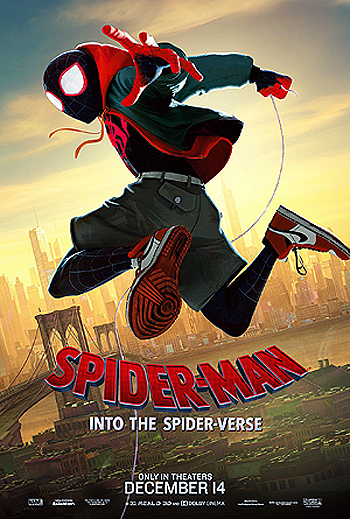
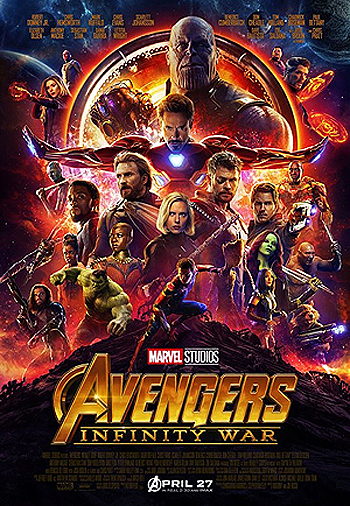
Cinematography: Roma; Film Editing: BlacKkKlansman; Production Design: RomaCostume Design: Black PantherMake-up and Hairstyling: ViceOriginal Music: If Beale Street Could TalkOriginal Song: “Shallows” from A Star Is BornSound Mixing: RomaSound Editing: A Quiet PlaceVisual Effects: Avengers: Infinity WarDocumentary: Free SoloDocumentary Short: Lifeboat; Animated Film: Spider-Man: Into the Spider-VerseAnimated Short: Weekends; Live Action Short: Detainment; Foreign Language Film: Roma

So, there you have my picks for the 91st Academy Awards.  The one thing that is apparent from this year’s nominees is the movement towards change.  The Academy may have made small steps towards recognizing things like genre pictures and films made by people outside the Hollywood elite, especially those of color whose work have too long been ignored.  It will also be interesting to see if Netflix’s presence at this year’s awards may have a ripple effect on the industry as a whole.  Yes, they are disrupting the traditional theatrical format that the industry has relied on since it’s inception, but at the same time Netflix is making some of the most daring movies out there, with Roma being the most prestigious one to date.  Sure, we are all going into tomorrow’s awards ceremony with the knowledge of how much the Academy has messed up the preparation, but you’ve got to remember, it’s just a show in the end.  The Award carries so much significance on it’s own that in time we will forget all about the acceptance speeches and what was everyone wearing that night.  Becoming an Oscar winner carries a lot of weight for how that person will continue to work in the future, whether it be taking the goodwill from the award to advance a higher profile on the things that matter to them or to use it as a certification to continue doing more daring things in the years ahead.  The one big worry is that the Academy is going to put too much stock in trying to make itself more “popular” which will make them make changes that really don’t help in the long run.  The future for the Academy may be to break away from it’s long history on broadcast TV and follow the Netflix example of streaming directly to it’s audience.  That way they wouldn’t have to worry about things like ratings anymore.  It will remain to be seen if the Academy keeps trying to tinker in the wrong way with their ceremony, but at least for this year that will not be the case.  It may be a rocky road to the Oscars, but in the end, the movies will outlast what happens tomorrow and hopefully the ones most deserving will come out on top.

Alita: Battle Angel – Review

The cinematic career of filmmaker James Cameron has been a fascinating one to say the least.  He rarely outputs new films, usually just one or two a decade (especially more sparse in recent years), and yet when he does finally finish a movie, it breaks every known record imaginable at the box office.  Which is all the more remarkable considering that most of his cinematic choices are usually unconventional.  Make a sequel to a low budget action thriller with nearly quadruple the production budget and features heavy use of this new-fangled technology called CGI: welcome Terminator 2: Judgement Day (1992).  Make a movie about underwater explorers and have the entire thing actually shot under water in a massive, custom built tank; hello The Abyss (1997).  Not to mention spending a then unheard of $200 million on a romantic movie set against the backdrop of the sinking of the Titanic, as well as nearly half a billion perfecting motion capture technology to have half his cast play giant blue, cat-faced aliens.  But, despite all these uncompromising visions, James Cameron still has somehow managed to defy expectations every time, and then some.  Titanic (1997) would go on to win Best Picture at the Oscars as well as become the highest grossing film in history, only to be toppled a decade later by his very next film, Avatar (2009), which is still the worldwide box office champ.  The reason why Cameron’s films have the enormously successful run that they have is because the director always puts the most effort into everything, making sure that his movies are not released until it is ready to blow all our minds.  But, given the increasing amount of time in between all of his movies, he also runs the risk of holding onto a project for too long, to the point where it’s window of relevancy and audience interest.  Keep in mind, we are almost at the decade mark since we saw his last directorial effort with Avatar.  Most other directors in that time, like Spielberg, Scorsese and Tarantino have directed three or more features, and have boldly experimented in new things, growing their talents as filmmakers.  With Cameron tinkering so long on the same things, one worries that he’s running the risk of limiting his growth as a story-teller, leaving a lot by the wayside.

And one of those things that sadly has fallen victim to James Cameron’s long-gestating creative process is a project that he’s had in development for nearly twenty years called Alita: Battle Angel.  Based on a Japanese Manga series published between 1990-95, the dystopian cyberpunk adventure was first brought to Cameron’s attention by filmmaker Guillermo Del Toro not long after Cameron’s incredible success with Titanic.  Cameron instantly fell in love with the manga and sought to develop it into a possible future project for him to direct.  A domain name was bought as early as summer 2000 and the project was announced in active development in 2003.  However, Cameron soon realized that the technology wasn’t available to do justice to the highly stylized world and characters of the manga comic, so the project remained in limbo for many years.  Eventually, James Cameron opted to direct Avatar instead as his next project, using it as a testing ground for perfecting the motion capture technology that he hoped could eventually be used for Alita.  Of course, Avatar made a huge leap forward for the technology, and with that, the possibility for Alita to finally go into production was possible.  However, Cameron was once again side-tracked by his continued involvement in creating multiple sequels to Avatar, something which has taken up all his time these last several years.  Still, he and producing partner Jon Landau always kept this movie in their back pocket, but eventually the time came to the point where they could wait no longer, otherwise they would lose their window of opportunity  So, he had to make the tough decision to hand this pet project of his off to someone else.  In stepped Robert Rodriquez, himself a bold DIY filmmaker in the Cameron mold.  With heavily stylized, CGI enhanced films under his belt like Spy Kids (2001) and Sin City (2005), Rodriquez was more than capable of seeing Cameron’s vision to completion on the big screen, and the project finally went into production in 2016; 13 years after it was first announced.  The only question is, did nearly twenty years of development result in a movie worth all that wait, or is it an anti-climatic finish to a waste of everyone’s time.

The movie is set in the far of future date of 2563, where the Earth has been long devastated by a cataclysmic war with the URM (United Republics of Mars) which has left most of the world barren and unlivable.  One remaining community still lives on in the sky city of Zalem, which hangs over the vast sprawling Iron City where refugees from all over the world have gathered.  There, cyborg scientist Dr. Dyson Ido (Christoph Waltz) finds what remains of a long forgotten cyborg in the trash heap that’s grown from the refuse of Zalem.  He discovers that while the cyborg’s body has long been destroyed, it’s core remains alive and intact, so he reconstructs a new body and brings her back to life.  He gives the cyborg the name Alita (Rosa Salazar), which was the same name of his long deceased daughter.  Though Alita enjoys her new lease on life, she remembers nothing of her past, and Ido keeps her sheltered in order to protect her, which she refuses to fully obey.  After she sneaks out to spy on Ido’s late night activities, she discovers that he is a Hunter-Warrior, which is a class of highly skilled bounty hunters searching for humans and cyborgs alike with a bounty on their head.  In the middle of a skirmish against one particularly ferocious cyborg named Grewishka (Jackie Earl Haley), Alita learns that she has fighting skills known as Panzer Kunst, which makes her exceptionally strong and lethal.  She tries to become a Hunter-Warrior independent of Ido’s wishes, and she enlists the help of a scrap dealer named Hugo (Keean Johnson), whom she develops a crush on.  Hugo dreams of reaching the paradise city of Zalem, and he convinces Alita that she would excell in the dangerous sport of Motorball, which she agrees to.  However, the man in charge of the Motorball games is a ruthless businessman named Vector (Mahershala Ali) who’s been stealing all the best cybertronic equipment available in Iron City, with the help of Dr. Chiren (Jennifer Connolly), Ido’s estranged ex-wife.  Upon discovering Alita, and what she can do, Vector and Chiren plot to have her killed and harvested for her advanced hardware, especially when put under orders from the master of Zalem himself, Nova.

Though the movie is directed by Robert Rodriquez, and features some of his trademark style particularly in the action scenes, make no mistake that Alita: Battle Angel is first and foremost a James Cameron flick.  The attention to detail in the world building is very apparent and you can very clearly see the meticulous work that he put into crafting this world in even the most minute detail.  But, like most other Cameron flicks, it’s clear that almost all the work went into the details of this world and almost none into the story itself.  Let’s face it, James Cameron is director first and foremost and a writer second, and his lack of abilities as a screenwriter are even more problematic here.  Cameron co-wrote the movie with Laeta Kalogridis (2004’s Alexander and 2010’s Shutter Island), with extra material added later by Rodriquez, and all the big flaws of Cameron’s writing style seen in all his other movies are likewise found here too.  If you thought the romantic plot of Titanic was childish and cliche, you’ll find the one between Alita and Hugo even more so here.  And if you thought that the political messages in Avatar were heavy handed and clunky, then you’re going to be smacked like a hammer to the head with the ones in Alita.  Cameron’s strongest suit has never been his writing, often relying too heavily on his actors to salvage the words on the page.  And yet, he still insists on writing all his movies himself.  It becomes even more of a problem with the fact that Alita: Battle Angel is also the first time he has had to adapt a story from another source, which means he has to condense years worth of story into a short two hour length.  The one saving grace for this is that Alita is not a bloated 3 hour extravaganza like some of Cameron’s other features, but it’s clear that in order to stream-line the story, he had to cut out huge chunks in order to get it to 2 hours, and that unfortunately affects the flow of the narrative.  The movie has to deal with an immense amount of lore, and it unfortunately gets shrunken down into heavy exposition delivered consistently throughout the film.  As a result, more important stuff like character development and atmosphere building are sacrificed.  The movie builds this incredible world for us to see, but we’re never allowed to develop an emotional bond to it at all because the movie just plows through it.

Couple this with the fact that the movie unfortunately feels like it’s time has passed it by.  That’s where the way too long development of the movie has hurt it’s chances of ever succeeding.  James Cameron’s movie, had it gone into production early on, could have been ground-breaking and ahead of it’s time, because the world had yet to define a sense of what cyberpunk is as a style, which Alita could have very easily influenced.  Sure there were influential films like Blade Runner (1982) on which Battle Angel drew heavy inspiration from, as well as memorable anime like Ghost in the Shell (1987) and Akira (1988) which also helped to define cyberpunk as a sub-genre.  But, a live action Alita could have been this generation’s ultimate statement, and sadly it missed it’s window by pretty much a decade.  Much like how the John Carter (2012) movie felt too derivative of other films like Star Wars (1977) and Dune (1984), which were ironically influenced by the original Edgar Rice Burroughs John Carter novels, Alita comes out in a time where movies that were influenced by the original manga have already come and left their mark and Alita only feels less original as a result.  It’s not even the first manga to get the live action treatment, as other comics like Dragon Ball, Death Note, and Ghost in the Shell have made it to the big screen, and likewise fail every time.  Alita’s timing honestly couldn’t be any worse, because the world has already at this point come to reject this style of movie all together.  That being said, Alita: Battle Angel is a much better film than those, because at least James Cameron is approaching the material with a sense of reverence, and not just using it as a cash grab.  But, had he put more urgency into the project from the beginning, and not waited patiently for the technology to catch up to his vision for how he wanted to make it, Alita could have been that breath of fresh air that might have taken cyberpunk into a whole new level of influence in cinema.

Story issues aside, the movie is lifted up immensely by it’s visuals.  Cameron’s attention to detail is exceptional, as Iron City does feel like a genuine, lived in place.  You could spend countless hours just picking out the large variety of architecture in all the buildings, which range from middle-eastern, to South-American, to inner-city America in influence; feeling very much like how a community of multi-national refugees would attempt to rebuild society in the aftermath of a broken world.  And though his impact on the story is minimal, I do have to credit Robert Rodriquez on his direction of the action scenes, which are well choreographed in the same playful way that he uses to excess in movies From Dusk Til Dawn (1996) and Machete (2010).  Of course, a lot of what people are going to be talking about with this movie is the use of motion capture used to create the cyborg effects on the characters.  This is where the movie unfortunately provides some mixed results.  It’s very clear that most of the work went into perfecting the look of Alita herself.  The thing about her appearance in the movie is that she has to look believably real despite having these giant, anime style eyes, which instantly stands her apart from all the other characters.  That almost makes it an even harder challenge than making the cyber-tronic body of hers appear authentic, because if you make the face look inauthentic, it falls into that creepy, uncanny valley territory.  Thankfully, the effect is done just well enough to not be off-putting and you only occasionally take notice of the effect throughout the movie.  I was, however, more impressed put into the work of another character named Zapan (played by Ed Skerin) whose human face appears on a completely exposed cyborg body, and the effect is incredibly effective and lifelike.  And then there is the opposite end of a character like Jackie Earle Haley’s Grewishka, who might as well be a cartoon character.  Even still, you can tell that the work was put into the visuals of this movie more than anything else, and that’s something to commend all the hard work for.

There’s also a mixed result from the movie’s cast as well.  Again, the actors have to make do with some of that clunky Cameron dialogue, and some fare better than others.  It helps that the movie includes three Oscar winners in it’s cast, and they are usually the ones that work best with the lines they are given.  I did like Christoph Waltz’s role as Dr. Ido, taking a break from his more famous villainous work in other movies to show that he can indeed play a warm, nurturing mentor type as well.  Unfortunately, Mahershala Ali and Jennifer Connolly are sidelined far too often in the movie to ever really give them an ample opportunity to dig into their roles.  Mahershala perhaps fares a little better, given that he’s able to deliver so much menace with just a glance.  Connolly seems particularly wasted, as we know she is capable of far more emotional range than what she is allowed to show here.  Rosa Salazar on the other hand gets perhaps the hardest job in the entire movie as she has to carry the film, and do so underneath her CGI enhanced mask as Alita.  For the most part, she succeeds.  She does manage to make Alita likable enough to want to root for and it is impressive how well she is able to emote through all that motion capture, showing just how far that technology has come.  Though Alita is not particularly well written, she nevertheless stands out as the movie’s most successful character, and she carries the movie well enough to keep it from falling apart completely.  Unfortunately, it’s whenever the story-line with Hugo keeps butting in that the movie completely grinds to a halt.  I’m sure that young Keean Johnson is a fine actor, but he is well out of his limit in this role, becoming the movie’s weakest element overall.  You care so little about Hugo as a character, and I almost feel bad for the actor because there’s not enough natural charisma in the world to save him from his dialogue.  At least with Titanic we had future Oscar winners like Leonardo DiCaprio and Kate Winslet to elevate Cameron’s ham-fisted script.  Rosa and Keean unfortunately can’t match up, and that is why the movie falls apart as a result, since Cameron hinges so much on their expected chemistry.

Is Alita: Battle Angel a complete disaster?  I wouldn’t exactly say that.  I do have to praise the work that went into the spectacular environment of the movie’s setting and the work the CGI animators put into making the Alita model feel right.  I’m sure that an art book of all the conceptual designs made during the film’s development would be absolutely stunning to flip through, especially considering that there is roughly 15 years worth of material to sift through.  I also like how Alita falls once again into the James Cameron trope of a strong female protagonist at the center of most of his movies; descending from a line that includes Sarah Connor from The Terminator (1984), to Ripley from Aliens (1986) to Rose from Titanic.  It’s only unfortunate that this movie came out perhaps a decade too late and is not as polished as some of the director’s more successful works.  Had James Cameron not been sidetracked so much by Avatar and all it’s sequels, we could have has something truly breakthrough from the highly influential director, and something that would have really pushed his own career into interesting an unexpected directions.  Not only that, but think about the impact that Cameron’s Battle Angel could have had on both the cyberpunk genre in film, as well as the influence of anime within the film industry.  We might have been spared some of those awful anime adaptations in the last decade because Cameron would have set the bar high.  Sadly, Alita: Battle Angel comes to us as a compromised vision, feeling disjointed between the visions of two filmmakers, and containing only a fraction of what it could have been.  The world-building and visual effects are impressive, but there is no emotional attachment, and all that’s left are the glaring flaws which become more pronounced with James Cameron’s sub-par script.  But, it could have been worse, as we’ve seen from the cash-grabs made by Hollywood over the years.  Alita at least comes from the heart, as James Cameron is a true fan of what he’s adapting here.  If only he hadn’t loved it too much to the point where it’s time had passed by.

Rating: 6.5/10

Collecting Criterion – Punch-Drunk Love (2002)

February is always marked with a aura of romanticism, mainly due to it being the month of Valentine’s Day.  Typically, this is when movie studios dump a whole bunch of sweet, romantic comedies into theaters, in the hopes of cashing in on all those couples seeking a movie to watch on their Valentines dates.  Strangely enough, however, it is a genre that the Criterion Collection has largely avoided for the most part.  Sure there are romantic films throughout their collection, but they are usually present due to being a part of a filmmaker’s larger body of work.  Because of this, you have romantic movies that span a whole swath of other subgenres in cinema, which goes a long way in helping to broaden the definition of cinematic romance beyond what we the viewers are used to.  There are classic Hollywood romances in there like Charlie Chaplin’s City Lights (1931, Spine #680) and David Lean’s Brief Encounter (1945, #76).  There are also plenty of international romantic movies represented like Max Ophuls’ The Earrings of Madame de… (1953, #445) and Roger Vadim’s And God Created Woman (1956, #77).  You also have interesting explorations into other romantic relationships, like the interracial one from Rainer Werner Fassbender’s Ali: Fear Eats The Soul (1974, #198), and the same-sex one in Andrew Haigh’s Weekend (2011, #622).  But, the romantic comedy genre as we know it from Hollywood is largely unrepresented, unless you count the few from early Hollywood in the collection.  The only movie in the Criterion Collection that comes close to being a representation of this genre is a weird little film from one of today’s most daring and admired artists in film-making; Paul Thomas Anderson’s Punch-Drunk Love (2002).  But, it’s inclusion in the Criterion Collection makes a lot of sense because not only is it a marvelously surreal film that fits well amongst all of Criterion’s other cinematic oddities, but also because when stacked up to others within it’s genre, it stands out as probably one of the greatest romantic comedies of all time; if not the best.

The movie also holds a somewhat peculiar place within the Criterion Collection.  It is the one and only (and probably will forever be) movie in the Collection to star actor Adam Sandler.  Yes, the much maligned star of movies like Jack and Jill (2011) Grown Ups 2 (2013), and Pixels (2015) actually made a movie deemed worthy enough to be included in the Criterion Collection.  But, before you dismiss Criterion for that, keep in mind that if there ever was a movie of his good enough to be included, it would be this one.  Punch-Drunk Love is first and foremost a Paul Thomas Anderson movie, with all the same quirks and dark edges that has made him one of the most celebrated filmmakers of his time.  Made after two back to back hits that firmly put him on the map (1997’s Boogie Nights and 1999’s Magnolia), Punch-Drunk almost feels like it was made on a dare.  After some critics complained that his movies were too long and lacked any warmth, he seemed set to prove the naysayers wrong and he made a short, 90 minute romantic comedy, and to show even more that he could make the impossible possible, he cast Adam Sandler as his lead.  And the remarkable thing is that he did manage to get a sensitive, down to earth performance out of the goofball performer.  Dispensing with all the silly voices and the obnoxious wisecracks, we actually see a side of Adam Sandler in this film that we never really thought was possible.  It’s clear that Anderson was inspired heavily by a young Dustin Hoffman from films like The Graduate (1967) when he wrote the character, and Sandler fit the mold he wanted better than anyone else.  This would prove to be one of the unlikeliest pairings in cinema history, but it’s one that sure enough resulted in absolute magic on screen, and made Punch-Drunk Love a career highlight for both (especially Sandler).

Punch-Drunk Love tells the story of Barry Egan (Adam Sandler), a troubled supplier of novelty toilet plungers, which he sells out of a warehouse with his business partner, Lance (Luis Guzman).  Though he runs his own business, he lives a solitary life, usually spending much of his free time taking advantage of an oversight in a free air miles giveaway by saving single serve pudding cup lids.  In addition, he suffers from rage issues that manifest every time he is in the company of his over-bearing sisters.  One day, he runs into an acquaintance of one of his sisters named Lena (Emily Watson).  He can see that Lena has taken an interest in him, which he also shares in her, but his insecurities prevent him from taking the initiative and telling her how he really feels.  In a moment of desperate solitude, Barry decides to try calling a sex hotline, where he awkwardly shares an exchange with a girl on the other line called “Georgia.”  In time, Barry comes more and more out of his shell and begins to grow closer to Lena, who keeps re-appearing in his life.  The two find themselves falling deeply in love, with Barry finally opening up and putting aside the childish routines that had kept him isolated.  However, their harmonious courtship is interrupted once the “hotline” girl calls Barry up once again, in the attempt to shake him down for more money.  It turns out, she belongs to a syndicate run by a ruthless con artist named Dean Trumbell (Phillip Seymour Hoffman), who is set on getting from Barry what he feels is owed to him, no matter what the cost.  At this point, Barry must confront the mistakes he’s made in his past, if he is ever to have a future with Lena, and find out if love can conquer all in the end; even when it means conquering the monster within one’s self.

All the hallmarks of a great Paul Thomas Anderson film are here in this movie, but it also fits very nicely within the genre of romantic comedy as well.  Chief among the movie’s greatest strengths is the chemistry between Sandler and Watson.  You wouldn’t have never thought that Happy Gilmore himself would have been capable of something tender and heartfelt before, but he manages to do it here.  He plays the character very subtly in comparison to all the other characters he’s been known for, making him very close to a normal human being.  Very much in the way the director wanted, Sandler’s Barry is very Hoffman-esque; quirky and broad when he needs to be, but with a vulnerability that helps to ground him to Earth.  He’s certainly the most relatable character that Sandler has ever played, and it certainly shows that he has more range than we would have ever thought.  But most importantly, he makes it believable that someone like Emily Watson’s character would be attracted to him.  Paul Thomas Anderson devotes the majority of his movie to humanizing his characters and building up their mutual appreciation for one another.  They are typical of the flawed protagonists that Anderson likes to build his movies around, but they also come across as genuine people too. Anderson loves finding the beauty in the mundane as well, and seeing these two (for lack of a better word) outcasts finding mutual admiration together helps to build into this wonderful romance throughout the movie.  The remainder of the movie contains the usual P. T. weirdness, especially in some of the sleazy supporting characters.  The late Phillip Seymour Hoffman is especially enjoyable in his brief moments as the morally corrupt antagonist, and the movie builds to a hilariously anti-climatic confrontation between him and Sandler.  You can definitely see that if the love story didn’t work here, there would be no movie worth seeing, and it’s all the more remarkable that Anderson took the gamble he did in giving that responsibility to Sandler in the first place.

The movie is also a stunning visual achievement.  For one thing, Anderson returns to his favorite source of inspiration from his earliest films; the City of Los Angeles.  In particular, he devotes a lot of attention to capturing the look and feel of the San Fernando Valley.  Now, speaking as someone who lives in the Valley, and has for the last 8 years, this is not the first place you’d expect to set a fairy-tale romance.  And yet, the way that Anderson (who was himself born and raised in the Valley; Studio City to be exact) portrays the setting in the movie almost gives it this air of romanticism that really does not exist.  From the early dawn car crash of the opening scene, to the magic hour sunset of the movie’s finale, Anderson finds the inherent beauty that exists in these characters lives, and captures it so elegantly in the lens of his camera, even if it’s something as drab as an empty warehouse in the industrial side of Woodland Hills.  I kind of love that about the movie, which makes it all the more personally enriching for me since I actually live around many of the places that are shown in the movie.  I think I have even shopped at the grocery store where Sandler picks up his cups of pudding in the film.  But, that’s not to say that Anderson doesn’t also indulge his audience with some exotic locales as well.  There’s a point in the movie where Barry and Lena reconnect in Hawaii, and their reunion at the Hotel leads to the movie’s most unforgettable shot.  Silhouetted in an archway facing the beach, the two embrace in a passionate kiss, with passersby criss-crossing in front of the frame.  It’s an absolutely stunning moment of cinematography, choreographed perfectly with the peculiar choice of a song called, “He Needs Me” from, of all places, the movie Popeye (1980), sung by Shelley Duvall.  It’s at that point that Anderson’s romantic comedy crosses into the sublime, and makes this one of the absolute best of it’s kind.

Criterion didn’t have too much trouble making this blu-ray edition as spectacular as it could possibly be.  Anderson, a purist when it comes to shooting on film, personally supervised the digital transfer for this edition, sourcing it from the film’s original 35 mm inter-positive.  With the director’s involvement, there’s no question that this blu-ray perfectly replicates the original theatrical look of the movie.  The colors are vibrant and the presence of film grain is also pleasant to see on a movie that’s still not too old.  The black and white levels also make a large difference, and it’s good to see them retained very well here.  It’s especially important when taking that amazing silouette shot from the archway I mentioned before.  If the balance between the dark shadows and the light background didn’t feel natural, it would have thrown off the artistry of the moment.  Thankfully, everything is lit, colored and sharpened to the best possible degree.  And like most of Anderon’s earlier films, it makes great use of the widescreen format.  Part of the fun of the movie is seeing the kind of absurd things that the director can throw in on the edge of the frame, which includes some of the movie’s most hilarious sight gags.  It’s strange that Anderson has more recently abandoned the wider frame in his last couple films like Phantom Thread (2017), Inherent Vice (2014) and The Master (2012), all shot in the 1.85:1 aspect ratio.  They are still beautiful movies to be sure, but Punch-Drunk Love shows just how far he can push his visual artistry when the screen is at it’s fullest.  The surround sound track is of course reference quality, as most newer films are, and it compliments the high definition picture splendidly.  On the visual and aural ends of the presentation, this movie again lives up to Criterion’s naturally high standards.

Though P. T. Anderson does gratefully involve himself in giving his movie the best possible home video presentation, he is however less involved in the development of the extra features.  Indeed, very few of his movies ever reach the video aisle with a wealthy sampling of bonus features.  Criterion does however try to fill in the gaps as best they can.  Most prominent is a fascinating behind the scenes featurette made during the filming of the movie called Blossoms & Blood.  It’s interesting because it allows us to see Anderson at work on the set, and most interestingly, him working with Adam Sandler.  It’s clear that Sandler was very content working this time with a challenging director, and watching him take a different kind of direction is fascinating to watch.  There is a bunch of material related to the film’s soundtrack, which was written by Jon Brion.  We first have a new one on one interview with Brion, who discusses working with Anderson and how he found the soundscape for this particular story.  Then there is a collection of behind the scenes clips of Brion at the soundtrack’s recording sessions.  Both do a fairly good job of breaking down the composer’s method and showing him hard at work, contributing to what we hear in the final film.  Another feature discusses the artwork of Jeremy Blake, which Anderson uses in the background of several scenes in the movie.  A conversation between curators Michael Connor and Lia Gangitano is here where they discuss the artwork in the movie, and a separate gallery is available for us to see the artwork itself.  The are interesting deleted scenes, parody commercials not used in the movie featuring Hoffman’s “Mattress Man,” and even some untouched Scopitones, which were used for the film’s title sequence.  Also of note is the full video of the press conference for the film’s Cannes Film Festival premiere, which again is something you would never have seen Adam Sandler be a part of before.  Even with the minimal involvement of the film’s director, Punch-Drunk Love still has plenty of interesting bonus features thanks to the commendable efforts of Criterion.

Punch-Drunk Love may not be everybody’s ideal for a romantic comedy; especially for those more used to the more commercial style that Hollywood puts out.  But, it still fits very much into the mold of that genre and in fact does many of it much better.  It’s extremely funny, whimsical at times, and has a genuine heart at it’s center.  And most importantly, the couple at it’s center has genuine chemistry.  This is made all the more remarkable given that it is Adam Sandler who stars in this.  Sandler had never been challenged like this before as an actor, and it is thrilling to see him rise to the challenge, and show that he indeed was capable of giving a captivating performance.  Sadly, he has spent most of his career thereafter slumming it in the predictable cornball roles that he started his career on.  There are moments when we do see him try a little harder, such as in movies like Funny People (2009), Men, Women and Children (2014) and The Meyerowitz Stories (New and Selected) (2017), but they come few and far between.  To this day, Punch-Drunk Love is the screen performance that he has given, and it should be a calling card for every film director out there who believes that Adam Sandler might be the right fit for their film.  He has it in him, it’s just that too many of us are used to seeing the less subtle side of Adam Sandler.  Still, it is kind of a subversive delight to see one of his movies here in the Criterion Collection, especially given that it’s one of the rare romantic comedies represented in the library.  For anyone looking for something light, passionate, and just all around enchanting, than this is the perfect movie to watch this Valentine’s Day.  Watching Sandler and Emily Watson’s on screen chemistry will warm your hear and Paul Thomas Anderson’s surreal direction will leave a powerful spell on you as you take in the simple but enriching visuals of romance in the most unexpected of places.  And, as it stands from there, that’s that.

All Roads Lead to Roma – The Rise of International Cinema and the Awards Roadblocks that Still Restrict It

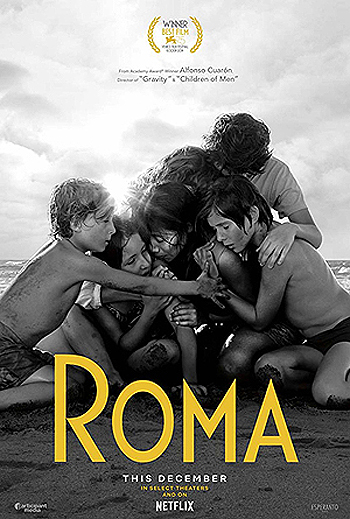
It was going to come to this point eventually in Awards season, and now with the Academy Awards nominations announced a week ago, the entire industry has to take notice and and answer the question: What is Roma?  The Alfonso Cuaron directed film surprised the industry by receiving a total of ten nominations, which it tied for the most with Yorgos Lanthimos’ The Favourite.  This was shocking to some given that it outperformed heavy favorites like A Star is Born and Green Book, and did so without any marquee names attached other than the Oscar-winning director.  What’s more, the movie also has had to face the disadvantage of being a Netflix exclusive film, meaning that it did not run through the same expectant channels that the Academy usually expects all other movies to run through like theatrical runs and waiting periods before premiering on television services.  And it’s also a foreign language movie shot in black and white, which is another set of handicaps in garnering industry and audience attention.  And yet, here we are, a month away from the “Big Night” and Roma not only has had the strongest start, but is now carrying all the momentum at the moment.  And the large reason for this is because people are actually discovering right now just how great this movie really is.  I for one have known this since I saw it during it’s limited theatrical run last Thanksgiving weekend.  The movie blew me away, and it eventually topped my end of the year list here.  But beyond my own personal opinion, the movie Roma is garnering so much attention now because we are finally reaching a point where international cinema is finally rising above the limitations that they’ve been under in the world of Hollywood and showing that Awards front runners can truly come from anywhere in the world now.

To get a sense of how foreign language films have particularly been at a disadvantage over the years when it comes to winning big at the Academy Awards, it helps to look at how the foreign language film market emerged within the industry in it’s early years.  Before World War II, the film industry had exclusively monopolized theatrical distribution, so pretty much everything the played at your local theater had to be industry produced.  Thus, the studios were exclusively in the exporting business out into the international market; never interested in importing anything else from the rising film industries of Europe, Asia, or Latin America.  After the break up of the studio system in the post war years, exhibitors were now allowed to search beyond the studio mandated releases, and that opened up a market for those interested in seeing what the rest of the world were making.  As a result, many influential filmmakers from abroad came to people’s attention, like Jean Renoir, Ingmar Bergman, Akira Kurosawa, and Vittorio de Sica.  And the Academy took notice too.  Beginning in 1947, they began handing out special honorary awards to foreign films screened in the U.S. as an acknowledgement to the rising stars of the international scene.  But, the industry was still interested in promoting it’s own interests, and the foreign language Oscar more or less became a way to separate international films from what they considered the “real” contenders (i.e. the ones made within the Hollywood system).  In 1956, the foreign language Oscar became a competitive category, and it restricted every nation to submit only one movie for contention, despite the fact that many of the booming film industries abroad had many films that could be considered among the best made that year.  And that became an unfortunate inhibitor for many filmmakers over the years, because it enabled a Anglo/American advantage at the Academy Awards, despite the fact that many people recognized that better and more revolutionary films were being made outside the Hollywood system.

Most casual viewers didn’t care too much about this, because there had never really been a movie that challenged that status quo in Hollywood.  That was until director Ang Lee created his martial arts epic Crouching Tiger, Hidden Dragon (2000).  Lee’s ambitious film surprised the whole industry by defying all expectations for what a foreign language movie is supposed to do.  It was a runaway box office success, grossing $128 million dollars domestic, making it the highest grossing foreign language film in North America, even to this day.  And that success helped propel it to 10 nominations, which was second only to Gladiator that year, which had 12.  This year, the Academy finally had to confront the fact that a foreign language movie, made outside of the Hollywood machine and was popular with audiences across the country, was now a serious contender for the top award.  Despite the goodwill that the movie had across the world, the Academy still stuck with the pick of big budget studio flick Gladiator as their Best Picture, while making Crouching Tiger the shoe-in for Best Foreign Language Film.  Even so, Crouching Tiger still bested Gladiator in many technical categories in addition to winning the Foreign Language Oscar, so it made people wonder if that category had been set as a consolation for the movie instead of giving it the top award of the night.  Since then, more and more people have looked at the Foreign Language Oscar as something of a “ghetto” to relegate movies that don’t fit the typical Oscar mold from ever getting near the coveted Best Picture; a complaint also levied against the Animated and Documentary categories.  As other film industries across the world have grown more sophisticated and competitive with Hollywood, it shows the Academy as being more out of touch by putting Foreign Language movies in it’s own category, which only perpetuates this notion that these movies are less than what the industry values, and it only becomes more noticeable when a movie comes along that can’t be ignored.

It should be noted that like Ang Lee, Alfonso Cuaron is no stranger to Hollywood, and that elevated recognition has helped his foreign language film get more noticed than others.  Most of his films have actually been made in English instead of his native Spanish, and a few of his movies are big budget studio projects; including Harry Potter and the Prisoner of Azkaban (2004)and his Oscar-winning Gravity (2013).  It’s through the goodwill he has earned within the industry that has enabled him to return every now and then back to his roots where he can make a Spanish-language film like Roma, and have it garner the same attention as many of his other more high profile projects.  Also, Roma was financed by Netflix, a California based company with an increasing foothold within the industry, so it’s not exactly too far separated from the inner channels of Hollywood as you would likely expect.  And yet, there are still many things that it must overcome.  To this day, no film has won Best Picture without a majority of the dialogue spoken in the English language.  Sure, non-native English speaking filmmakers like Michael Curtiz, Fred Zinnemann, Milos Forman, Bernardo Bertolucci have all succeeded before at the Oscars, but they all did so with movies spoken entirely in English.  Even Cuaron and his fellow Mexican peers like Alejandro G. Inarritu and Guillermo Del Toro have yet to receive honors for films in their own native language.  So, if Roma does overcome the language barrier, it will be the first movie to ever do so, and that in itself will be a huge step forward for all international movies.  Sure, it’s a product coming from within the industry by a long established filmmaker, but think of how that would send a message to film industries around the world that they can receive the highest honor in film-making no matter what language is spoken throughout the movie.  It would also go further to break down the notion of what is and isn’t worthy of Awards within Hollywood itself.

But, beyond the language barrier, there is also the disadvantage about the value the movie has based on a little something known as “star power” in Hollywood.  It matters just as much to the industry on how well a movie can sell itself to audiences as the quality of the final product end up being, and this usually requires the movie to have something heavily marketable attached to it.  Most of the time, this is usually found in the number of headlining stars that a movie has, and the bigger the names, the more attention the movie will get.  Star Power doesn’t always represent quality, as some pretty terrible movies have usually had all-star casts attached to them before, but what the Star Power aspect does do is instantly give the movies a quicker way to be identified with the public, especially when you need it to gain the Academy’s attention.  That’s why you see the “For Your Consideration” campaigns for a movie like A Star is Born promoting their two leads, Bradley Cooper and Lady Gaga, so heavily, because they know that their celebrity will bring more eyes to their movie, and more goodwill in general come Awards time.  Roma is almost devoid of any “Star Power” to speak of.  It’s nominated lead, newcomer Yalitzia Aparicio, has never acted in a film before, making her presence in this year’s Oscar race quite unexpected.  Her fellow cast members are also all mostly newcomers, with only fellow nominee Marina de Tavira having any established acting experience; limited largely to television roles in Mexico.  Their work across the board is exceptional in Roma, but even still, Yalitzia and Marina don’t have the same advantage that a Lady Gaga or a Emma Stone enjoys based on the privilege of their celebrity.  It’s true for a lot of movies made outside of Hollywood, because despite featuring some of the greatest performances ever committed to screen, most never can get their just recognition because of the celebrity factor perpetuated by Hollywood.  And this is one thing that both sets Roma apart in a beautiful way, but also puts it in an unfortunate disadvantage.

One thing that changes the situation, however, is that the industry itself is growing more aware of the international impact on the market.  Before, Hollywood catered to the Anglo/American sensibilities of it’s audience, because America and Great Britain were the two largest bases of movie going audiences.  But, with former third world nations developing into economic powers, like India and China, more and more box office is being generated in these markets, and that is leading to far more influence that those nations have on what movies get made.  China, in particular, now makes up nearly a quarter of all worldwide box office, putting it nearly on par with North America as the largest block.  Now, most movies made in Hollywood have a refocused sense of producing not just for domestic audiences, but those across the entire world.  And this is changing the make-up of the industry as well, with more representation being given to people from all cultures, and though the “Star Power” aspect still favors the traditional American model, that is beginning to shift in a different direction as well.  At this point, the Academy has to acknowledge the changing demographics of their industry’s audience, and see how following their old standards is perhaps putting them out of touch.  Some progress on that can be seen, not just with the wealth of nominations for Roma, but also with the nominations for Black Panther; a movie that not only is a breakthrough for African-American film-making, but also one that celebrates a distinctively African cultural influence.  And it’s a super hero movie, too (another precedent shattered).  If Roma proves victorious, it will be further proof of Hollywood moving away from the standards of the past; breaking from the rigid adherence to a single audience set and instead finally acknowledging that audiences around the world are just as important.

And, in doing so, it will hopefully finally bring an end to the Academy’s rather misguided attempts to create separate categories for specific types of movies.  Calling the Foreign Language film category a “ghetto” is not a term to throw about lightly, but in some way fits exactly what Hollywood has been doing all these years.  By separating movies into the category of Foreign, Animated, or other, you instantly hurt their chances of winning in the top category of the night, making the Academy feel they’ve done enough by recognizing these movies in their own category.  That seems to be what happened to a movie like Crouching Tiger, Hidden Dragon, as well as something else like Guillermo Del Toro’s Pan’s Labyrinth (2006), which wasn’t even nominated for Best Picture, despite going into Awards season that year as a heavy favorite.  Animated movies have had it even harder, with only three Best Picture nominees in the history of the Oscars (Beauty and the Beast, Up, and Toy Story 3).  The Oscars have had to change some of their rules before because of outcry from many people over the years, like the expansion to as many as ten nominees after the noticeable exclusion of The Dark Knight (2008) from the Best Picture race.   But even with that, the Academy seems to use these separate categories as a way of skewing the odds more in the industry’s favor by relegating these game-changing films into these separate categories so that they don’t disrupt the standard.  This became far too problematic when the Academy made their universally derided announcement of a “popular film” Oscar, which effectively said to people outside of the industry that even though your movie is popular, it has no business being in our Best Picture conversation, so we’re going to give them their own consolation prize instead.  We can’t just keep making separate categories to honor differences in the movies we see, but instead view all of them as equally worthy of being a part of the conversation.  Honestly, I see more good being done to the industry with movies like Roma and Black Panther than say what A Star is Born and Green Book represent.  Whether it be in another language, or in another art form, or from a popular genre, a movie should be judged on the merits of it’s art and it’s impact, and not because it just so happens to fall into a separate category.

Because it was my favorite film of last year you can bet that I am rooting hard for Roma to win Best Picture.  It is certainly off to a strong start, but as you can see from all the examples that I’ve given that it still faces an uphill climb.  And this is not even taking into account the anti-Netflix response that some in the industry have.  I for one believe that Netflix should loosen their own standards a bit by expanding the availability of Roma screenings across the country.  Sure, putting it out on Netflix’s service helps to get the movie widespread exposure that it otherwise wouldn’t have, but to understand the true majesty of the film, it needs to be seen on the biggest possible screens available.  Cuaron shot the movie specifically for 70MM, which is format usually reserved for epic scale productions, so viewing the film at home on a TV set really doesn’t present the full majesty of the film authentically.  But, Netflix put the money up for this movie when most other studios would have scoffed at the idea, so Netflix does deserve credit for making this movie a reality.  Roma is their biggest push yet towards gaining full recognition within the industry as a major studio, and with a win, Netflix will have their place at the table finally.  But, apart from that, Roma deserves to win purely because it’s just that amazing.  It’s Alfonso Cuaron at the top of his craft, and that’s saying quite a lot for the celebrated filmmaker.  A win for Roma would be a deserved recognition for a great film, but it will also show that a Best Picture winner can really come from just about anywhere, and not have to be sectioned off because it’s in a foreign language, or has no celebrity names attached.  If it doesn’t prove victorious, it will still live on as a great movie no doubt, but a win this year would make a definite statement.  Setting aside the larger political message that it could send (a film celebrating the daily life of average Mexicans, given the current administration we have), Roma could also open the door to a whole variety of movies gaining attention from the Academy in a way that none of them had the opportunity to have before.

Quest for Fyre – The Dueling Documentaries and Capturing Drama On and Off Camera

The Oscar countdown got on it’s way this week, but that wasn’t what captured the attention of audiences this week.  Instead, what became the focal point of people’s attention were a pair of documentaries premiering on separate streaming platforms.  Nothing unusual about a noteworthy documentary capturing people’s attentions, but the interesting thing about these two particular films was that they were both about the same thing, and were intentionally launched to directly compete with one another.  The movies in question relate to the notoriously failed Fyre Festival of 2017; an event that is surely going to go down in infamy even more now after the premieres of these documentaries.  Made almost simultaneously, we have the Netflix produced Fyre: The Greatest Party That Never Happened, and from Netflix competitor Hulu, we have Fyre Fraud.  Though both movies show us pretty much the same true story, they are both wildly different in tone and scope of the event.  Netflix details the moment by moment breakdown a bit more, while Hulu better grasps the larger picture.  And both succeed at what they set out to do.  Really, you could even watch both movies back to back (as I did) and not feel too much repetition.  But, it is interesting that though they cover the same ground, their narratives play out much differently.  And it’s an excellent example of how to use the documentary form in different ways to tell a story.  Some documentaries often stumble upon their story when the filmmakers allow the story to unfold before them.  And then there are the other documentaries that collects material together and presents and investigative picture of the whole experience.  Both are valid ways of making a documentary, but seeing two presented back to back reveals a lot about how documentaries frame a story for better or worse.

For reference, the Fyre Festival itself is a perfect subject for such a medium.  The whole event was spear headed by an entrepreneur named Billy McFarland and by rap artist Ja Rule.  Having collaborated before with McFarland’s last start-up business, which was a credit card targeted specifically to millennial in urban hot-spots called Magnesis, the two planned to set up a new music festival that they wanted to rival the exclusivity of Coachella and Burning Man.  Their main selling point was that they were going to run this festival on a private island in the Bahamas that once was owned by Pablo Escobar, with luxurious accommodations and the hottest musical acts all performing on their stage.  They put together an unprecedented hype campaign utilizing viral marketing on Instagram, relying upon top “influencers” like Kylie Jenner to spread their material on their timeline.  Within mere days, they had already sold out their entire allotment of passes and accommodation packages, but there was one problem; none of the foundational groundwork had been completed yet.  Worse yet, after spotlighting the fact that their island venue was owned by Pablo Escobar, even though the island’s owners told them explicitly not to, they lost their licence to stage there.  They were a festival without a home.  And this created a snowball effect of mismanagement as construction delays set it in, substandard amenities were set up, and ultimately illegal money wiring was committed.  And this was before the guest even arrived, and when they did, things got even worse.  People who thought they rented out luxurious beach front villas found that they were staying in FEMA disaster relief tents, and instead of gourmet food, they were served cheese sandwiches in a Styrofoam box.  After day one, the festival was cancelled, without a single performer making it on stage.  Soon, Billy McFarland was charged with multiple counts of fraud from the FBI and he is now serving a 6 year jail sentence.  The after affects of the festival are still felt by those in the Bahamian community where it was held, and with the unlucky festival goers who realized very quickly how much they had been duped.

Both Netflix and Hulu cover all of this same essential stuff in their documentaries, but it’s in how they present it that we see their own interesting takes.  What Netflix offers particularly well is the exclusivity of their in the moment footage.  Netflix’s Fyre was made, interestingly enough, by the same team that had also been hired by Billy McFarland’s company to run the marketing campaign for the fest.  Because of this, they had exclusive access to document everything; from the pre-planning stage all the way to the festival itself.  The amount of material they got was amazing, because it’s clear that McFarland believed they were going to make history with this thing and he wanted it recorded for posterity.  The unfortunate thing for him is that by allowing so much access, much of his criminal activity was also captured on camera, and that’s where the incredible story unfolds.  Combine this with a wide spectrum of personal accounts from people involved after the fact, and you get this feeling of watching a disaster build moment by moment as if you are watching from within the eye of the storm.  Strange things can happen when people are aware they are on camera, and things can escalate or diffuse as a result.  In particular, it’s the individual interviews that offer the most effective element of drama, because it punctuates everything we see unfold and gives us the human element to go along with it.  The most talked about interview from either documentary this last week was from the festival’s producer Andy King, who reveals in a shocking revelation that Billy McFarland had asked him to retrieve a crucial shipment from customs by performing oral sex on the agent who had put it on hold.  Thankfully he was spared from having to go through with it, but it’s in that moment that the Netflix documentary hits it’s dramatic peak, because it puts everything we’ve seen into agonizing perspective.  King’s revelation painfully brings home just how destructive this event was to the people who lived it, and in particular, helps the movie to serve as a cautionary tale.

If there is one thing the two movies do share despite everything different, it’s that they have a common villain in Billy McFarland.  Both Netflix and Hulu’s documentaries clearly lay the full blame on the man who started the whole mess, but Hulu particularly seemed interested in examining just exactly why he was such a dangerous figure.  Fyre Fraud is much more of an examination of the makings of a con artist than an in depth look at how his festival fell apart.  though it still devotes a good amount of time to showing how the festival fell apart, the documentary frames it with a look at McFarland’s past shenanigans and how he was continuing to scam people after the fact.  In many ways, Fyre Fraud becomes a character study of con artist, and shows how something like the Fyre Festival inevitably stems from the flaws of such a character like him.  The biggest coup that Hulu got for their documentary was in getting McFarland himself to sit down for interviews, which themselves are fascinating to watch.  Seeing him try spin his own take on the events even while all the evidence is laid out in the documentary through both video footage and the paper trail found through the research, is reveals so much about who he is, and why he deserves a special amount of blame.  In those interviews you can see a man who has believed most of his life that he could coast on his ability to charm people.  But, charm only works when you have a level of trust to back it up, and by this point he has lost all trust in everyone he knows.  By movie’s end, you can see the veneer of his charm offensive wear down, and he becomes clearly exposed as the movie goes on, ultimately looking very uncomfortable near the finale.  Kudos to the interviewer for not letting him get off easy.  McFarland clearly is targeted, but Fyre Fraud also examines social media culture in general through their documentary, and how easily something like this was able to unravel because of how ego driven we have become when it comes to presenting ourselves online.  In that regard, Hulu points the finger at everyone; the event planners, the festival goers, and even those of us passing judgement on the people involved, even though we ourselves could have been easily fooled based on our own desires for a glitzy, enviable life.

Netflix found it’s story through a lucky bit of circumstance, while Hulu found theirs through an in depth level of investigative reporting.  And they both did a great job of doing it either way.  There are many ways to use the documentary technique for capturing a narrative that’ll grab a hold for each viewer, but the Fyre Festival documentaries show the most basic types that you’ll usually find.  One thing that every documentary has to tackle in order to work successfully is to capture a feeling of authenticity; or to put it another way, it’s got to find that element that element of universal truth.  The Netflix approach in many ways stems from the “invisible camera” approach, which is meant to make the audience less aware that they are watching a documentary at all.  Most documentaries at some point become a lesson in something, whether it’s to deliver a point of view, or present a demonstration of some key experience, or to teach us about something or someone important.  But, a particularly effective documentary can portray it’s subject in such an way that the experience almost becomes theatrical.  These are usually documentaries devoid of narration, or even sometimes context.  Sometimes the documentarians just let the cameras roll and then find their movie in the editing room.  This particularly worked for documenting the Fyre Festival, because so much was caught on tape.  There could be a cut of the Netflix movie where you could have done without the interviews, and people would still get the jist of how much a disaster the festival was.  In contrast, Fyre Fraud clearly wants you to be aware of it’s documentary format, and that helps to sell the broader picture angle better.  It uses actual footage sparingly, and combines it with a collage of images as varied as news reels to overviews of various people’s social media profiles, to hilarious “on-the-nose” inserts that helps to shape the intended message of the movie.  Both documentaries rely on a lot of established methods found in the medium, and knew which avenue best suited their own version of the story.

The late, great documentarian Albert Mayles always championed the idea of the “beautiful accidents” when discussing the work that he did.  He would know best about capturing the unexpected on film, because he, along with his brother David, were responsible for documenting another disastrous musical festival as it happened live; the notorious Rolling Stones concert at the Altamont Speedway, which was presented in their now classic documentary, Gimmie Shelter (1970).  Initially started as a chronicle of the Rolling Stones tour, the Mayles brothers soon found themselves in the controversial situation where they had their cameras rolling while the Hell’s Angels gang that was hired for security had pulled a knife on a rowdy concert goer and stabbed him, leading to his death hours later.  Having captured the moment as it happened, the entire focus of their work changed, and so did the narrative of their documentary.  The incident became the story, and Gimmie Shelter is now considered one of the most important documentaries of it’s time because of that.  A similar case happened with last year’s Oscar winner for Feature Documentary, Icarus (2017), which also started production one way and then became something else entire.  The film follows filmmaker Bryan Fogel as he set out to examine illegal doping in the world of professional cycling.  Using himself as the guinea pig, he eventually meets with an expert on the subject, who ran a anti-doping lab in Russia.  But, quite unexpectedly, as he worked with this expert scientist, he soon learned of the existence of the largest conspiracy of illegal doping in sports history, one that eventually led to Russia’s nationwide ban at the 2018 Olympics.  The best documentaries are not usually the ones that come preformed, but are instead the ones that just manifest themselves if the filmmaker is lucky enough to be there as a witness.  The Netflix documentary, though formed after the fact, benefits from so much captured footage, that it does have that feeling of a “beautiful accident” that Mayles had talked about, even though the stuff it captured was anything but beautiful.

But, there are also a lot of documentaries that find a lot of drama outside of what’s captured on camera.  Many great documentaries can find enough drama purely through the testimonials of the people speaking to the camera.  The interviews from both Fyre Fest documentaries show that to be the case, but there are many other documentaries that even further rely on the personal accounts driving the narrative, even without the aid of footage.  One potent example is the 2012 documentary The Act of Killing, directed by Joshua Oppenheimer.  The documentary is about the people who participated in the brutal mass killings in the nation of Indonesia during the years 1965 and 1966.  The people who committed the gruesome acts are interviewed, and sometimes even reenact their deeds in front of the camera, and they described what happened 50 plus years ago in vivid and unnerving detail.  What is most remarkable is that not once does the documentary ever cut to real footage of the atrocities, nor insert anything else like photographs.  All we have to go on is the words of these men, and it is harrowing all the same.  Their shame is palpable, especially when one man can barely get thorough his account of beheading another man without needing to throw up.  And this is where the power of documenting a story can still shine through even though it is far removed from the original events.  There are many documentaries that are captivating as historical trips when given the opportunity to re-contextualize for a more contemporary audience.  My favorite documentary of last year, Won’t You Be My Neighbor? (2018), examined the life of long departed children’s entertainment icon Fred Rogers, and strongly connected his importance to a generation that’s come of age in an era that’s growingly polarized, in the hope of finding a common decency in humanity once again.  Many great narratives can manifest in the moment, but perspective also fills that out to, and remarkably drama can emerge even after the camera stops rolling.

Regardless of what tactics they chose to follow, both Netflix and Hulu produced two very enjoyable documentaries that really emphasize what a monumental disaster the Fyre Festival was.  It’s also interesting to know that Hulu intentionally wanted to get their documentary out before Netflix did.  One of the most interesting participants in the Hulu documentary is a former employee of the marketing team behind the festival, who also are responsible for the documentary on Netflix.  In a rather shocking accusation, he points out that his former employers knew quite early that this was going to be a disaster and yet still kept chugging along and gave Billy McFarland what he wanted, possibly looking for more interesting footage to shoot.  He essentially says that they were all culpable in this disaster too, and that their documentary is more about saving their own face rather than taking some of the blame.  Essentially, by including this extra tidbit, Hulu is giving the middle finger to Netflix, casting doubt on their legitimacy as a accurate account of what happened.  That’s a ballsy way to compete against your competitor, and upstart Hulu is really punching upward when it comes to Netflix.  But, it’s a win-win for both platforms in my eyes because both documentaries received a significant amount of buzz this week, with seemingly every part of the internet and entertainment mentioning it at some point.  And the conversation often involved people comparing and contrasting, meaning that both documentaries had been seen in the same short amount of time by a lot of people.  That’s good for both Hulu and Netflix, and for documentaries in general, because usually these kinds of movies don’t usually spark this much debate.  Overall, it does show the intriguing way in which the medium can successfully deliver a story, either with much of the drama depicted on camera or outside of it, and the disastrous Fyre Festival was just the right subject to be documented; not once, but twice.

Glass – Review

M. Night Shyamalan’s years in Hollywood have been interesting to follow. At the beginning, he was heralded as the next big thing; the Spielberg of his generation as some had called him.  This was in no small part due to the runaway success of his breakthrough film, The Sixth Sense (1999).  The movie became an instant classic, and is renowned more than anything for the way it perfectly executed it’s shocking twist ending.  From that, Shyamalan jumped into his next feature, the comic books inspired thriller Unbreakable (2000), which despite receiving strong reviews among critics performed only a fraction as well as it’s predecessor The Sixth Sense, despite also starring Bruce Willis.  But, he would bounce back with his next film, Signs (2002), which performed very well at the box office, but at the same time also launched the director into a stage in his career that would also be his downfall.  With Signs success, Shyamalan was forced into a position where his brand became centered around one thing, and that was the shocking twist ending.  With every movie thereafter, from The Village (2004) to Lady in the Water (2006) to The Happening (2008), he was continually having to one up what he had made before and it was increasingly undermining his abilities as storyteller.  And even when he tried to branch out into other genres like with The Last Airbender (2010) and After Earth (2013), it kept throwing him into further turmoil, as he was increasingly becoming less trustworthy in Hollywood.  But the truth is, the big problem with M. Night’s career wasn’t that he became a bad director overnight; it was that he was continually forced to live up to an unrealistic high standard which made it hard for him to fulfill his abilities as a director.  What he needed was a major reevaluation of his career and a renewed focus on what he was good at.

That’s when Blumhouse Productions stepped in and allowed M. Night to get out of his slump and start making movies that appealed to his own sensibilities, without the pressure of Hollywood’s expectations weighing on his shoulders.  With 2015’s The Visit, Shyamalan had his first critically applauded film in a decade, and that allowed him the clout to return back into the groove that he once started out in, albeit to a smaller degree.  And what he chose to do next pleased many a fan of his earlier work, especially when it became clear what he was planning.  The movie Split (2017) was a taut, tense thriller that represented the best of the director’s style; deliberate pacing, steady camera work, and unnerving performances from his cast.  But, at the film’s end, people discovered probably one of the director’s finest twists to date; that the entire movie was a secret sequel to Unbreakable.  After nearly twenty years, Shyamalan showed that he hadn’t forgotten about his underappreciated gem and clearly intended to return back to the story that apparently has meant a lot to him over the years.  And the timing couldn’t be better either.  Unbreakable has become something of a cult hit ever since it first premiered, with many proclaiming (myself included) that it’s the director’s true masterpiece.  Given the fact that Split not only won him back critically and box office success but also shared a universe with Unbreakable made many of the fans of those films rejoice, because it showed that Shyamalan had just as much affection for the story as well and was ready to bring it back in a big way.  Thus, we now are getting the third in this surprise trilogy with Glass, seeing the once proclaimed director finally reasserting himself in Hollywood the way he has always wanted to.  But, after the long wait, and many distractions along the way, did Shyamalan really return to form, or does Glass take what good will he has left and shatters it.

The movie takes place not long after the events of Split, with a multiple personality disorder patient named Kevin Wendell Crumb (James McAvoy) hiding in the shadows, committing heinous murders across the city of Philadelphia.  Shifting constantly between 24 different personas, he transforms most dramatically into a creature called the  Beast, which gives him superhuman strength.  Crumb’s activities have, however, been monitored by a vigilante crime-fighter named David Dunn (Bruce Willis), who 19 years prior had discovered his own superpowers by being the only survivor of a horrific train crash, leaving the incident without a scratch.  He runs a security equipment store with his son, Joseph (Spencer Treat Clark), who believes in his dad’s super hero abilities and has been helping him track down criminals with the same surveillance equipment they sell.  They finally track Crumb down to an abandoned factory, where he’s holding four teenage girls hostage.  Dunn manages to subdue Crumb, who’s in his Beast mode at the moment, long enough to help the girls escape, but once their battle reaches the outside, both are subdued by local law enforcement who have the means of exploiting the weaknesses of both super beings.  Following the orders of Dr. Ellie Staple (Sarah Paulson), a psychiatrist who specializes in patients like Dunn and Crumb, the police put both of them in custody at a local psychiatric hospital.  Dr. Staple means to convince each of them that their super powers are just delusions and that they are just as normal as any other person.  Dr. Staple even enlists the help of the lone survivor of Crumb’s attacks, Casey Cooke (Anya Taylor-Joy) who somehow managed to breakthrough the many personas to bring the original person back, helping him to heal slightly.  But, all the best laid plans are put to the test as another patient quietly plots his own escape; the criminal mastermind Elijah Price, aka Mr. Glass (Samuel L. Jackson).

I personally have always wanted a sequel to the movie Unbreakable.  It was my favorite movie from the year 2000, and I’ve always considered it the best movie that Shyamalan ever made.  It was a brilliant dissection of the mythos of comic books, made in a time when super hero movies were not considered even noteworthy, especially in the wake of failures like Batman and Robin (1997).  But, in the 19 years since it’s release, comic book super heroes have dominated the film landscape, and it has only increased the relevance of Unbreakable’s story ever since.  So, I was thrilled to see Shyamalan make a return to this story and tell a new chapter that revisits the same themes, but in a new era where comic books have far more influence.  The only question is, did his years out in the wild change him too much as a director to ever effectively make this story work again.  The answer is a complicated one.  Throughout Shyamalan’s career, he has rarely found middle ground among critics and fans.  People either love the things he does, or they hate it.  He will always be a polarizing filmmaker, and Glass more than likely will continue that.  I have mixed feelings about this movie myself, but they are not to the polar extremes that I think that most people are going to respond to this movie with.  On the one hand, I was satisfied seeing these characters return and watching them interact with each other, but on the other hand, the story is a bit of a mess.  Keep in mind, Shyamalan’s movies have resulted in much worse results in the past, so I have to take this into perspective as well.  The movie is not terrible by any means, and in fact does work for most of the film’s running time.  But, as a follow up to two of the his best films to date, this is easily the weakest in the so-called Unbreakable trilogy.  He’s managed to disappoint, but to a degree that I don’t think shreds the rest of his reputation nor shames the movies that have come before it.

Where the movie faults is in the execution of it’s larger themes.  M. Night has many talents, but one of his less reliable ones is screenwriting.  He certainly is able to effectively weave a mystery through most of his movies, which has made him an expert in subverting the audiences expectations and hiding the surprise twist in plain sight.  But it’s in the dialogue where he begins to show his limitations.  Characters in his movies speak their dialogue in this weird sort of way which really takes you out of the movie.  Essentially, they speak like their words are specifically chosen to deliver important plot information, and not spoken in a natural, real life sort of way.  This has always been a problem in Shyamalan movies and is particularly problematic here in Glass.  Not one character talks like a normal human being, and you just get the sense that Shyamalan is writing this dialogue more for himself as a way of navigating through his story rather than allowing the the story to unfold naturally.  He also relies heavily on plot conveniences which again don’t feel genuine.  Security guards are conveniently incompetent at this mental hospital.  The remedy for subduing the inmates there, like the water hoses used on Dunn and the light flashes used on Crumb have somehow been figured out, despite the fact that both men have kept their abilities secret.  It’s the kind of plot conveniences that become annoying the more you analyze them.  But the movie really goes off the rails in it’s third act when Shyamalan’s indulgent style begins to loose it’s foundation, and every new twist is delivered in the clunkiest way possible.  Where it really starts to affect the movie negatively is in undermining the effectiveness of the film’s themes.  Essentially, Shyamalan throws it in our face the parallels between this story and comic book lore, with Mr. Glass in particular stating as much with his own observations, as if Shyamalan doesn’t trust his audience to figure it out themselves.  He’s got to remember that we’ve had a decade’s worth of Marvel movies dominating pop culture as a whole, so the themes of this movie should already be familiar.  We don’t need it beaten into our heads.

But, even despite the lazy plot and the clunky dialogue, there are a lot of things that shine in the movie.  For one thing, even though his writing skills still haven’t recovered over the years, Shyamalan’s abilities as a director are greatly improving, and showing once again the creativity that really defined his early work.  I think that this is especially due to the influence of Blumhouse, which has kept his vision in check, making him work within a smaller budget.  This has allowed Shyamalan to be creative and rely more heavily on practical effects and good old fashioned camera work.  Shyamalan has always been a fan of using color theory within the narrative of his films, and it’s used quite effectively here.  The color used from scene to scene helps to reveal different moods for the characters in each moment, and even communicates to us without words what each character represents.  McAvoy’s Crumb is often shown in the widest range of bright colors, showing us the chaotic jumble of personalities that inhabit his mind.  The scenes with Mr. Glass are especially effective, because of the way that Shyamalan zaps out almost all the light within the scene, playing much of it in shadow which emphasizes the dark soul that the character represents.  Even the pastels usually associated with Dr. Staple also tell their own story, and one that indicates a little bit about what she is all about.  At the same time, Shyamalan returns to the effective, stripped back shooting style that defined much of his earlier work.  Even when the movie kicks into action mode, he places the point of view in interesting and unexpected areas; such as shown through surveillance cameras, or as creatively as inside of a police car as it’s getting flipped on it’s side.  Within Glass, we see a director learning to trust his instincts as a visual story-teller once again and that helps to compensate for the shortcomings of the script.  Shyamalan may not have remastered all of his talents, but it is a treat to see him try to challenge himself again and try out some interesting ideas.

What also helps to make the movie work for the most part are the performances.  Even when his movies have suffered terrible writing, Shyamalan can somehow manage to get his actors to make that clunky dialogue work.  Thankfully, he got his two leads from Unbreakable back with Bruce Willis and Samuel L. Jackson.  Jackson’s return is especially worthwhile, because you can tell while watching this movie that he’s long wanted to return to this character and really explore that villainous side.  In Unbreakable, Jackson’s Elijah had to hide the person he truly was behind a facade, only to have his true evil nature revealed in the movie’s brilliant twist ending, and Sam Jackson sold that trickery so well.  In Glass, we get to see that villainous side unleashed and it’s a joy watching him take so much delight in being unapologetically evil.  Willis likewise returns to form, and balances the movie out with his more subdued and quiet performance.  Sadly, the movie doesn’t give him much to do with all it’s various plot threads, but Bruce makes the most out of what he’s given.  It’s James McAvoy who shines the most, however, in his returning role from the movie Split.  He is mesmerizing to watch in every scene as he effortlessly shifts from one persona to another, completely convincing you that he is multiple people all inhabiting one body.  He does it so brilliantly with simple changes in his facial expression or just the way he moves his body, and every moment he’s on screen you can’t take your eyes off him.  It’s also a physically demanding role for him too, and the commitment to get into shape for this role is pretty astounding.  Sarah Paulson especially deserves a lot of credit in this movie too, especially given that she’s given some of the most ridiculous dialogue in the entire movie and she delivers it with complete sincerity.  Shyamalan owes a lot to actors like her and the others for overcoming the limitations of his writing.  It’s also pleasing to see other returning cast members help to bring this trilogy full circle, especially Spencer Treat Clark who last played this role when he was still a child. Had this cast not put their best efforts into this movie, we would have has a much less effective movie overall, and given the problems already there, they are a life saver.

So, as a conclusion to this trilogy, Glass is far from the home run that we would have like to have had, and sadly is the least effective movie in the series overall.  But the fact that this trilogy even exists at all is a miracle in itself, and I’m glad that it ever made it as far as it has.  I always believed that Unbreakable was only ever going to be this one standalone thing, and I was fine with that.  But, the fact that in this super hero driven world that we live in now with regards to cinema that this long forgotten film was all of a sudden seen as a worthy inclusion to the genre as a whole, and worthy of a universe of it’s own, makes me incredibly happy.  Unbreakable is still a masterpiece of it’s genre and of film-making in general, and I love the fact that it was able to be rediscovered and appreciated once again.  Glass may not be a great movie, but it compliments Unbreakable in a way that still satisfies.  I still liked how they treated the characters of Bruce Willis’ unbreakable man and Samuel L. Jackson’s Mr. Glass.  And seeing them interact with James McAvoy’s incredible character from Split makes up the best parts of this movie.  Unfortunately, Shyamalan still needs to refine his writing skills, because they keep undermining the effectiveness of story.  Shyamalan has proven that he works best within boundaries, because it forces him to think more creatively, and these film in this trilogy prove that.  Unbreakable was a brilliant examination of what the extraordinary would look like within our ordinary world, and Split portrayed this crazy world effectively through one single character’s fractured mind.  Glass is the least restrained movie of the bunch and therefore the least effective, but it still works as a part of the whole.  For all we know, now that Shyamalan has closed the book on this trilogy he’ll be able to take more chances on things that appeal to his tastes, now that he has a renewed understanding of  where his strengths lie.  As of now, this Unbreakable trilogy is his crowning achievement as a story-teller, and despite the mixed results of Glass, it’s still a genuine treat that the legacy of M. Night Shyamalan’s best work is still going strong all these years later, and in a culture that has finally embraced the value of comic book legends that it was way ahead of the curve on.

Rating: 7/10

What the Hell Was That? – Extremely Loud and Incredibly Close (2011)

With the past year at a close, the next few weeks present to us the season in which the last year was all leading up to; awards season.  One thing that is commonplace pretty much every year is the scramble to get in last minute consideration before the deadline of the year’s end cuts off prevents any more inclusion.   In these final weeks of December, the goal is very clear from all contenders; get the most attention that you can.  As accolades begin to pile up from various year end awards, this is when the attention from the Film Academy is at it’s highest, and the potential of making their shortlist of nominees becomes even higher.  Some movies have better chances than others because they appeal to the general tastes of the Academy’s voting body, which can be frustratingly predictable at times.  These movies are what we generally know as “Oscar Bait,” which are films that are specifically manufactured to appeal solely to the people within the industry who vote for the Academy Awards.  And given the insular, sometimes out of touch voting body of the Academy, these movies tend to always end up being small dramas that tackle some social issue or features a performance where the actor goes through some body transformation that makes them(how to put this lightly) less glamorous.  Essentially, they are movies that are pandering to a specific group of elitists, and typically because of that, the movies have limited appeal and even smaller box office grosses.  And you wonder why the Academy Awards has a problem with popularity.  Oscar Bait movies are not all bad; some are even great and deserving of their honors.  But, when they are bad, they become infuriatingly so, because their very pandering nature exposes the cynicism behind their creation and the greedy intentions of their producers.  And, depending on the type of story and issue that the movie is tackling, it can become downright offensive.

A couple years back, I made a top ten list of failed Oscar Bait movies, and what ended up topping my list was Micahel Cimino’s Heaven’s Gate (1980).  My criteria for the list called for the top movie to be the one that crashed hardest in it’s attempts to win an Oscar, and Heaven’s Gate is notorious for being an Oscar Bait movie that bankrupted it’s studio (United Artists) and destroyed it’s director’s reputation.  But, here’s the thing, Heaven’s Gate is not a terrible movie.  In fact, it’s gone through a critical reevalution in the last few years thanks to a stellar restoration and a Criterion Collection release, helping to soften it’s notorious reputation.  If you want to look at the worst ever Oscar Bait movie, you only need to look at my #2 on that same list; Extremely Loud and Incredibly Close.  The Stephen Daldry directed feature is pretty much the textbook example of a bad Oscar Bait movie.  It’s pandering, it’s obnoxiously self-indulgent, it’s enormously shallow and insincere, and worst of all, exploitative.  And yet, somehow, it managed to do what Heaven’s Gate could not; get a Best Picture nomination.  I guess that doesn’t make it a failed Oscar Bait movie, because it at least got itself a place at the table, but really, at what cost?  Extremely Loud is personally my most hated of Oscar baiting movies, which are the ones that use it’s very important subject matter to do nothing other than gain the attention of Oscar voters.  And here’s the more insidious thing about it; it doesn’t just stick to one grim subject matter either.  We get the entire buffet in one movie.  We get the Holocaust, mental disorders, racism, and the Twin Tower attacks of 9/11 all in this mess of a movie.  Had they thrown a person dying from AIDS the movie would have hit an Oscar BINGO (thankfully the movie never went that far).  But what we did get presented us with probably the most grossly transparent attempt at baiting the Academy for an Oscar, and sadly the industry took a nibble before rightfully throwing this one out.

To understand why a movie like this came to be in the first place, you have to consider the period in which it was made.  The movie came to theaters just after the ten year anniversary of the 9/11 terrorist attack; a point in time after the tragedy when the industry felt it was appropriate to begin dramatizing the event on film.  Before this, only two other films had tackled the tragedy; Paul Greengrass’ United 93 and Oliver Stone’s World Trade Center, both from 2006.  Both tackled the event head on, with true life stories and managed to gain varying degrees of success among critics.  But, Extremely Loud took a different approach to the event; using it as a backdrop to their own fictional story.  Many films do that of course, but there is a purpose most of the time to those that choose to set their story that way.  Titanic (1997) of course used a Romeo and Juliet style love story to place a dramatic connection for the audience in the midst of all the true events of the tragedy.  9/11 is a trickier event to tackle because of the widespread ramifications that the event had on the world at large; including becoming a hot button political issue, even today.  Extremely Loud makes the aftermath of the terror attack part of it’s own narrative, primarily with regards to the trauma that the city of New York went through.  Some movies could tackle that kind of narrative effectively, without ever having to resort to recreating the event itself.  Spike Lee managed to to that effectively in his film 25th Hour (2002), which was made a mere year after the attack, and told the story of the people still feeling the pain of loss.  The way that worked is because the movie was about the longer lasting effects of trauma on people, and how that creates problems down the road itself.  Extremely Loud on the other hand not only wants to use the 9/11 terror attacks as a factor in it’s movie, but it even seems to expose old wounds that many had hoped would be healed with time.

Here’s where we get to the most controversial aspect of the movie, and a prime example of where movies that pander to an a certain kind of audience ends up crossing the line.  In various parts of the movie, the 9/11 attacks are dramatized; not particularly outrageous in itself, except the filmmakers decided to do so with a misguided artistic flair.   The character played by Tom Hanks in the movie, Thomas Schell, is a victim of the terror attack, with the movie focused on the coping with grief that his remaining family goes through afterwards.  At several points, Thomas’ son Oskar (which is in no way another pandering move, I say in a sarcastic tone) has nightmarish flashes of imagination where he sees his father falling from the building like one of the horrifying videos of jumpers captured on that day.  These moments take this tragic aspect of the tragedy and dramatizes it in a way that feels extremely exploitative.  The scenes don’t just recreate the falling, they stylize it.  The opening credits in fact play over a cringe-inducing slow motion shot of Tom Hanks falling in mid air.  This is not the kind of thing that you use visual poetry on.  To make matters worse, there is no need in the narrative whatsoever for these moments to happen.  It just comes at you as a slap to the face reminding you of what a tragedy 9/11 was.  It’s the same kind of exploitative tactic that you see when a documentary or narrative film suddenly splices in footage of the towers collapsing, knowing the power that those terrifying images still have.  The images of 9/11 are profound in their scale of cataclysm, but to take those and offer up an artistic spin like the one in this movie almost feels like it’s intentionally wanting people to feel the pain of the events again.  It’s like the movie doesn’t care what feeling it’s audience has toward the event; it just knows that there is power in the images that we saw from that day, and it wants to use it to elevate it’s own sense of importance.

That’s where the movie especially rubs people the wrong way, with it’s emphasis on it’s own importance.  The movie wants you to follow these characters around and learn about their struggles, but here’s the problem; the struggles carry more importance that the characters themselves.  Every character is a pastiche of your typical tragic backstory individual that usually populates movies that carry some importance.  Most of the time, we accept a character or two that has a personal tragedy that motivates their existence within a narrative; but not when the entire movie is populated with them.  The book on which this movie is based, written by Jonathan Safran Foer, probably addresses each individual problem with all the characters with more nuance, since novels allow more time and introspection to establish each character’s purpose in the story (I can’t judge for certain because I haven’t read it).  The movie adaptation, done by the usually reliable Eric Roth, dispenses with subtlety and just goes for the essential hardship that defines each character; whether it’s loosing a husband on 9/11 like Oskar’s mother (played by Sandra Bullock), or having survived the Holocaust like his grandparents.  All we get out of their character development is how each personal tragedy shaped them, and this carries little resonance as there is nothing else remotely interesting about each character.  To the movie, the personal tragedies are all that matter and that makes the movie feel especially exploitative.  It’s as if the movie doesn’t want anyone to know anything more about the movie other than it touches on these important issues, because it certainly doesn’t have worthwhile characters.  If you look at other movies that tackled serious issues, they always managed to find a way to ground their narrative with a deeply relatable story.  But, when everyone has baggage, then the narrative comes across as false and unrelatable.  Not everyone in New York has a deep connection to the many plights that has befallen society; and yet Extremely Loud and Incredibly Close seems to believe that all of these people are so easily accessible in one neighborhood.

Compare the way the movie deals with something like the Holocaust.  The worst tragedy of the 20th century is merely represented here through the presence of Oskar’s grandparents, who seem so disconnected from their past experience.  The Holocaust is merely just an extra bit of character detail here; never fully explored and yet always reinforced on us the audience.  If the movie really wanted to give more importance to how the Holocaust could fit in their narrative, they could have included a moment when one of the grandparents sits down with Oskar and helps him learn how to move beyond the pain of loss endured through such an ordeal and find positivity again.  But, no, we only get the information that both grandparents are Holocaust survivors and that this is enough to give the movie the extra weight of importance.  It doesn’t help that one of the grandparents is a mute, which is never really given a full explanation as to why.  You would assume the tragedy of the Holocaust would’ve done that, but the movie seems less interested in connecting the dots.  To be fair, Max von Sydow’s performance as Oskar’s mute grandfather is the one redeeming aspect of the movie.  The film doesn’t do a good job of explaining the real truth behind the character, but Sydow is able to communicate so much through his simple gestures and expressions, which helps to give some element of authenticity to this film that severely lacks it.  He received the movie’s only other Oscar nomination, and lost out to fellow octogenarian acting legend Christopher Plummer that year.  But, Max von Sydow’s long and storied career gave him the ability to find the humanity in this character and make him more than just a archetype, which is sadly not the case with everyone else in the movie.   If there was ever an event where the personal story mattered with regards to the characters, it would be the Holocaust where the outpouring of personal accounts in the wake of Schindler’s List (1993) made such an impact in defining that period of time in human history.  Here in this film, it’s just there to get attention, and that makes it feel very wrong and misused.

But, the movie’s biggest problem is with the little, walking talking plot device that is Oskar.  He is where the movie focuses all the Oscar Bait formula into and creates perhaps one of the most insufferable characters to have appeared in a movie perhaps ever.  Oskar, a twelve year old boy with mental abnormalities, must learn to let go of the pain he has felt since the loss of his father on 9/11, and in the meantime, reconnect with the estranged Holocaust-surviving grandfather that he barely knows.  The movie deposits a treasure hunt for him to complete, that his father had set up before his death, and the movie uses this narrative structure to take us through the aforementioned greatest hits of every Oscar baiting subject known to man.  It doesn’t help the fact that Oskar himself is not only not very interesting, but he is also incredibly annoying.  I don’t want to blame this on the young actor, Thomas Horn, who plays Oskar, because it’s not his fault the character is terribly written and poorly conceived.  But the film rests so much on him to carry the film, and it does so by making him talk a whole lot.  The movie also fails in portraying his mental state in any meaningful way, because it never really commits to it either.  The movie heavily implies that he has Aspergers Syndrome, but it never commits to it, and in some instances, portrays his disability as a quirky aspect of his character.  Never once does the movie address the daily hardships that most people with the disorder must overcome to live a normal life, and again like everything else, just merely uses it as another element in the story to inflate it’s own sense of importance.  This is the most often exploited Oscar bait tactic for many movies, and you can fill a whole library with all the movies that failed hard in an attempt to dramatize a persons disorder.  It feels even more egregious here because it’s the mental disorder that fuels the character of Oskar, and makes him feel less genuine as a person.  You never want to tell someone like this to shut up in real life, but this movie really grinds your nerves and it pushes Oskar so heavily to the forefront.  And in doing so, it takes this movie from forgettable Oscar Bait garbage, to irredeemable and notorious Oscar Bait garbage.

I cannot stress enough how infuriating this movie is to sit through.  It’s always clear what the movie’s intentions are, and it’s cynical ploy to grab the Academy Awards attention is frankly offensive when you see the things it’s exploiting to get there.  The movie is not content to take on one issue, it wants to do all of them; perhaps banking on the odds of quantity over quality.  We get our Holocaust backstory, and the mental illness angle, and this movie carries the notorious reputation of adding the tragedy of 9/11 to the checklist of things Hollywood can exploit for awards fare.  The fact that this movie uses them is not the problematic part; it’s the fact that it uses them without care.  The Holocaust and 9/11 are just tools for this movie, completely devoid of any really exploration and just there to remind the audience of how awful the world is.  When a movie addresses an important issue, it must come with a story that transcends it’s placement in that moment and helps to personalize it for all audiences to understand it’s importance.  Schindler’s List brought many harrowing stories to the forefront, but centered it around an interesting character study of a man who saved lives by exploiting a system to his advantage.  Rain Man (1988) brought a portrayal of living with a mental disorder to life, but framed it within a story of two estranged brothers reconnecting on a road trip.  The best way that these elements can work in a movie is if the film never intends to do anything else than shed light on these important issues.  That was clearly Spielberg’s intention with Schindler’s, and he’ll tell you that the proudest outcome of that movie was seeing the floodgates open with numerous survivor’s stories after the movie came out.  Extremely Loud and Incredibly Close doesn’t care about any of it’s issues; it’s a fabricated gift bag to the Academy hoping to get attention in the most desperate of ways.  The fact that the Academy almost fell for it is a pretty sad statement, and it shows just how easily the body can be manipulated.  Everything you hate about Oscar Bait movies can be found in Extremely Loud and Incredibly Close, and that’s what makes it one of the most insufferable and at times most offensive movies to ever get this close to Oscar glory.

Top Ten Movies of 2018

Now that the year is behind us, we can finally take a look at the state of Hollywood that made up 2018.  It was more than anything a year where the movie industry was in flux.  The old way of doing things had to be reconsidered because this was the year that streaming video came into it’s own.  Already having made big waves in television, Netflix wanted to prove this year that they could compete with the cineplex as well, and they made their statement with several original films from some of the industry’s most respected artists.  Movies like Alfonso Cuaron’s Roma, The Coen Brothers’ The Ballad of Buster Scruggs, Paul Greengrass’ 22 July, and Susanne Bier’s Bird Box all premiered directly on the streaming platform to significant buzz that they might not have otherwise gotten had they started off on the big screen.  The big push by Netflix did not come without push-back from some of the industry.  The Cannes Film Festival made the controversial choice to bar Netflix movies from competition, which might have cost a sure fire contender like Roma from winning the coveted Palm d’Or.  There was also the controversial comment from Steven Spielberg that he believed Netflix originals shouldn’t be counted as equal to a theatrical release, because they premiere on home video, making them what he considers to be a made-for-TV movie.  The primary reason that Netflix is having the pull within the industry that they do now is because they are the ones taking risks and allowing filmmakers to make the movies they want to make, and are not beholden to things like franchises and box office appeal.  That’s why you’re seeing this reshuffling of the old studio alignments, with the Disney/Fox merger being the biggest move yet.  They are witnessing the birth of a new Hollywood, and it will be interesting to see how that plays out in the years ahead.

But for now, it’s time to run down my picks for the Top Ten and Bottom 5 for the year of 2018.  I saw nearly 100 movies this year, but there were some I managed to miss.  Even still, every one on this list is one I watched in a theater or on streaming and within the calendar year, all according to my yearly guidelines.  There were a few that nearly made my list but were left out (in no particular order): Black Panther, A Star is Born, Isle of Dogs, Love Simon, You Were Never Really There, Ready Player One, Deadpool 2, American Animals, Incredibles 2, Teen Titans Go to The Movies, Mission Impossible: Fallout, Alpha, The Sisters Brothers, The Hate U Give, First Man, Boy Erased, Widows, The Ballad of Buster Scruggs, Mary Poppins Returns, Bumblebee, and Blackkklansman. All fine movies worth checking out on their own, but I had to narrow it down to ten.  So, without further ado, here are my picks for the Top Ten Movies of 2018.

10.

SPIDER-MAN: INTO THE SPIDER-VERSE

Directed by Bob Persichetti, Peter Ramsey, and Rodney Rothman

Who would have thought that the best animated movie of the year didn’t come from either Disney or Pixar, despite two solid efforts from both (Incredibles 2 and Ralph Breaks the Internet)?  And from all people, Sony Animation.  That just happened to be the case with Into the Spider-Verse, a wildly inventive and unexpected treasure to have come to a theater near you this year.  In a growing monotonous industry like animation, where all the films are starting to become indistinguishable from one another, Spider-Verse stood out the most because it felt like something completely new.  Though still animated through a computer, the movie applied this art style that made it look like it was hand drawn, just like a comic book come to life, and it works perfectly for the story being told.  In between all of the typical comic book action moments, there are images of just absolute beauty put on the screen.  One stand out moment is when main protagonist Miles Morales takes his first leap off a building in his Spider Suit, and the point of view flips upside down, making him look like he is soaring upward even though he is falling to the city below.  The movie is also consistently funny, and has some genuine heart to it.  Every iteration of Spider-Man that we come across in the movie gets just enough screen-time to stand out (I especially loved Nicolas Cages Spider-Man Noir), but the movie triumphs most in it’s portrayal of Miles Morales, making him a worthy addition to the Spider-Man pantheon.  This movie easily fits alongside the best Spider-Man films and even sets the bar high for any future animated comic movies that will follow in it’s wake.  I love Disney and Pixar, but it is great to see one of the upstarts finally make a movie that can stand shoulder to shoulder with them, and maybe even surpass them at their own game.

9.

MID 90’S

Directed by Jonah Hill

2018 was also a banner year for entertainers making their debut behind the camera.  Bradley Cooper delivered an awards season favorite with his update of A Star is Born, working as director and co-starring alongside Lady Gaga in a breakout role.  John Krasinski delivered an instant horror classic with his inventive A Quiet Place, which he costarred in with his real life spouse Emily Blunt.  There was also critical darling Eighth Grade, made by comedian Bo Burnham.  But, I felt that the best feature directing debut from an already established performer came from comedic actor Jonah Hill.  His labor of love, Mid 90’s, had a little something more than the other movies I mentioned in that it showed a sense of style.  The other movies, except maybe Quiet Place, rose on the strength of their narratives while not really breaking new ground cinematically.  Jonah Hill on the other hand had an engaging narrative (taken largely from his own experiences growing up in LA) and he mixed it in with a unique cinematic voice that feels different from everything else.  The movie has a well-rounded cast of mostly first time actors, and each one feels genuine to the time period in which they are living in; the titular mid 90’s.  The movie has this overall home movie like quality to it, no doubt inspired by the skateboarding demo tapes that circulated around this time, and it felt like a movie made by someone who really understood that the way he shot the movie really needed to reflect the culture that he was trying to recreate.  It’s just great to see a movie that defines the 90’s without relying on obvious shout outs to the pop culture in general.  If Jonah Hill directs any more films in the future I look forward to them, because this movie proved to me that he has an interesting voice of his own.

8.

THE FAVOURITE

Directed by Yorgos Lanthimos

What a difference a couple of years makes?  In 2016, I included director Yorgos Lanthimos’ The Lobster among my worst movies of the year list; a pick I still stand by because the movie’s dry, pretentious style grated too much on me.  Maybe it was just a matter of the script, because his new film, The Favourite retains the same dry, pretentious film-making style, but it is so much more effectively used here.  The Favourite is not your average costume drama.  It is dark, weird, and shocking in all the best ways.  The movie really shines, however, with it’s three leading ladies, all delivering the movie’s most outlandish moments with complete sincerity and noble refinement.  Playing out like All About Eve (1950) in corsets, the movie has some of the most entertaining battle of wits and savage quips you’ll ever see.  Emma Stone surprisingly masters an English accent in this movie, and it’s a delight to watch her character sneak her way up the ladder; pretending to be the good girl while masking the schemer underneath.  Rachel Weisz also has this special ability in the movie to present so much hatred in her voice without breaking her pleasant demeanor, and it makes her showdowns with Emma Stone some of the most harrowing moments put on screen this year.  Olivia Colman all but steals the movie with her eccentric performance as Queen Anne, a role that in other hands could have dipped too far into the farcical, but feels fully rounded through her.  And to Lanthimos’s credit, it is a beautifully made film too, making great use of the English manor interiors, all while maintaining the director’s twisted sensibilities with wide-angle fish lens shots used to great effect.  I love a good period drama, but it’s always nice to see one that takes a far more bizarre route, and I’m happy to see that it helped me change my mind about one particular filmmaker.

7.

WON’T YOU BE MY NEIGHBOR?

Directed by Morgan Neville

Given the state of the world, where people have become more divided, and even more troubling have grown less empathetic towards one another, we needed a reminder of common human decency more than ever this year.  That’s what this wonderful documentary about the life of Fred Rogers did, and I couldn’t be more grateful for it.  It was easily the best documentary in a year full of excellent ones across the board.  Like many people my age, I grew up watching Mister Rogers’ Neighborhood on my local PBS station, and it’s amazing to think of the kind of impact that little, unassuming show had on so many lives.  The documentary delves very deeply into the history of the program, but even more importantly, it paints a portrait of the remarkable person that Mr. Rogers was.  We learn exactly why he made this program and what it reflected about him.  It becomes very clear throughout the film that he became a necessary voice in American culture, not only as a teacher to all the youth throughout the years, but as a key voice of reason during turbulent times.  We see how a simple act of washing his feet in the same pool as his African-American co-star became a profound statement against for civil rights.  We see the remarkable way he makes the youngest person feel special by not talking down to them and treating them like an equal.  And most importantly, we watch the ways in which he could console a wounded nation through a turbulent time.  This movie reminds us that we need more people like Fred Rogers today, and it’s a beautiful document that reminds us that things can be better if we all lived by his example and just show unconditional kindness in our everyday lives.  It was great to be back in his neighborhood once again.

6.

IF BEALE STREET COULD TALK

Directed by Barry Jenkins

A couple years after his surprising (and unforgettable) Oscar win for Best Picture with his directorial debut, Moonlight (2016), Barry Jenkins returns with his second feature, based on the acclaimed novel of the same name by James Baldwin.  And the result proves that Jenkins is not a one-hit wonder.  If Beale Street Could Talk is a wonderful, poetic portrait of young love in the African-American community, and through his tender approach to the material, Barry Jenkins manages to tell a tale about so much in our society through his characters own personal story.  The young couple are wonderfully realized by relative newcomers Stephan James and Kiki Layne, and their chemistry fuels much of the movie’s drama.  They are nearly overshadowed, however, by the stellar supporting cast, which includes Colman Domingo and Regina King (in an Oscar worthy performance) as two of the parents of the young woman at the center, as well as quick but worthwhile cameos from the likes of Diego Luna, Pedro Pascal, Brian Tyree Henry, and even Dave Franco.  But, even more important is the way it beautifully adapts the novel, while at the same time finding the best way to make the moments feel theatrical.  Jenkins’ use of slow-motion, which also played a big part in Moonlight as well, is used to stunning effect here and the movie is overall a beauty to look at.  And then there is the beautiful jazz and soul infused soundtrack, which will stay in your head long after seeing the movie.  It took a long time for this book to get the adaptation it deserved, and it’s great to see someone like Barry Jenkins not rest on his laurels after getting the industry’s top award but instead push himself even more as an artist; one that I hope still has plenty of wonderful films still up his sleeve going forward.

5.

PADDINGTON 2

Directed by Paul King

You know that your movie is good when it can still make an end of the year Top Ten list, even when it was released only a week after I made last year’s Top Ten list back in January 2018.  Proof that a G-Rated movie doesn’t have to be just for children, Paddington 2 has something to please just about everyone.  The first Paddington (2015) was a delightful film in it’s own right, but this sequel goes one step beyond and creates one of the most consistently charming and delightful movies of the entire year.  All the character arcs are fully rounded out, jokes land with laser like precision, and every little moment offers one surprise after another.  It helps that such love and care was put into this movie by the filmmakers, taking the beloved British literary icon and bringing him to life perfectly.  Paddington himself is wonderfully realized in both his animation, and the tenderly delivered vocal performance from Ben Whishaw.  The supporting cast of returning and new characters are also all excellent here, but there are two standouts that really make this a memorable experience.  One is Brendan Gleeson as a hardened criminal named Knuckles McGinty, whose heart is naturally softened by film’s end.  And then there is Hugh Grant as the over the top villain in one of the most delightfully eccentric performances that I’ve seen all year, and a revelation for the actor as well.  His mid-credits song and dance number may be one of the best single moments I’ve seen on the big screen in a long while.  Trust me, this movie is as sweet as a marmalade sandwich and will melt even the most cynical of hearts out there.  That’s what helps to make it one of the year’s best.

4.

ANNIHILATION

Directed by Alex Garland

Alex Garland already made a name for himself with his ground-breaking sic-fi directorial debut Ex Machina (2015).  Now, with a significantly larger scope to work with, he delivers a remarkable sophomore effort that is not just as mind blowing as it’s predecessor, but in many ways surpasses it.  The movie created one of the most original sci-fi concepts to date, the enigmatic entity known as “The Shimmer,” where everything within it’s boundaries evolves at a heightened rate.  This leads to some really strange, and unpredictable perils along the way, including what may be the most frightening, nightmare-inducing bear ever put on screen.  The best thing about the movie was that I never knew exactly where it was going to go, which is refreshing to see in a movie from this genre.  By the time we finally reach the source of the “Shimmer” I was fully intrigued and the movie thankfully does not disappoint once it gets to the final reveal.  Alex Garland shows that he has really mastered the craft of story-telling, and his voice within the science fiction genre is one that is offering up some really intriguing and new ideas.  The movie sadly was thrown into theaters with little publicity, mainly due to a creative dispute with the producers (one of whom apparently wanted to sabotage the movie’s release).  It not only should get more attention as a unique cinematic experience, but also because it’s a perfect example of how to make an action film with a diverse, female driven cast work.  I hope that other filmmakers looking to broaden diversity in their own films look at Annihilation as a template for how to do it right.  Even apart from that, it is a unforgettable experience worth seeing and a shining example of the genre it represents.

3.

AVENGERS: INFINITY WAR

Directed by Joe and Anthony Russo

It was a good year to be Marvel.  They managed to deliver the year’s top two highest grossing movies, this and Black Panther, with the latter also generating something that has alluded Marvel up to now; Awards contention.  Though I do admire Black Panther immensely as a cultural touchstone and a breakthrough for African-American film-making, I felt that it didn’t hold up as a cinematic experience as well as Marvel’s other big film; Infinity War.  But, hey, T’Challa and his kingdom of Wakanda had a major role to play in the story-line of Infinity War as well, so they’re still getting some recognition here.  Infinity War makes the list purely because it gave me something that few other films managed to this year; an experience that I will never forget.  It is Marvel firing on all cylinders, taking all the things they have learned and refined over the years and using them to their fullest.  The movie doesn’t let up from beginning to end, and remarkably every single beloved Marvel character gets their moment to shine.  I can point to a dozen or more moments that rank among my very favorites, but it’s the final minutes that lead to the most shocking of cliffhangers that will be something that sticks with me for years to come.  It was surreal sitting in an IMAX theater with hundreds of rabid Marvel fans watching that scene play out; some even brought to tears.  Apart from that, the movie will also be remembered for it’s perfect realization of the villain; Thanos.  After being built up for so many years, he did not disappoint, and it’s largely due to the incredible performance of Josh Brolin in the role.  It’s amazing that a movie can work this well with only half the story told so far, and that’s a testament to how much Marvel has perfected their formula.  Endgame is only months away, but even without it, Infinity War will still stand as a crowning achievement for this Hollywood titan.

2.

SORRY TO BOTHER YOU

Directed by Boots Riley

Not in a million years could you have ever predicted where the plot of this satirical comedy would go by the end.  Marking the directorial debut of hip hop legend Boots Riley, Sorry to Bother You tackles everything from corporate greed, to race relations, to labor disputes, to even the way people speak to one another, and it’s all done in this refreshing, take-no-prisoners critique on society.  The movie clearly reflects director Boots Riley’s sometimes controversial communist political beliefs, but even if you don’t agree with every part of his message, you can still appreciate the clever and creative way that he delivers it here.  I especially love the hyper-reality world that he’s created, where weird things can arise out of seemingly normal situations.  There’s a brilliant visual concept where the main character (a terrific Lakeith Stanfield in a breakout role) makes a phone call during his job as a telemarketer, and his work station is literally dropped right into the call recipient’s living room as he’s talking to them.  It’s clever ideas like that that populate the entire film.  The movie will also become notable for defining the idea of the “white voice,” which is made all the more brilliant when those “voices” that the characters channel are played by the likes of Patton Oswalt, David Cross, and Lily James.  There were plenty of strong movies this year that tackled race relations and the African-American struggle in society, including movies as diverse as The Hate U Give and Blackkklansman.  But out of all those, Sorry to Bother You had the most bite, and that’s why it made for one of the year’s most interesting and rewarding film experiences.  And also for just being one of the most original, and weird films this year too.

And the best movie of 2018 is…

1.

ROMA

Directed by Alfonso Cuaron

Makes sense given the statement that Netflix wanted to make this year that they would also be responsible for the year’s best film.  Sadly, most studios wouldn’t bother putting up the money to make a personal, 2/12 hour semi-autobiographical film shot in black and white, so it’s to Netflix’s credit that they did.  The trade off is that most people are not going to be able to see the movie the way it was intended to be seen, which is on the big screen.  I was fortunate enough to have a theater here in Los Angeles where it was screening, and boy was it worth paying extra to see it in that format.  Alfonso Cuaron, who also made my favorite movie of 2013 (Gravity) has created another masterpiece with Roma.  This is one of the purest, most enchanting cinematic experience I’ve had in years, and it utilizes all the best elements that the director has perfected over the years.  Feeling both intimate and epic at the same time, Cuaron draws from his own upbringing in suburban Mexico City to portray a year in the life of a middle class family and the maid who takes care of them.  The maid named Cleo, played devastatingly well by newcomer Yalitza Aparicio, has the most harrowing arc, as we follow the ups and downs of her life, from heartbreak to pregnancy to tragedy to a brighter future.  And the movie has all the typical, boundary pushing cinematic tricks that you’d expect from a Cuaron film, including his trademark long takes (two of which are mind-boggling when you think about how they were staged).  Every shot has some hidden gem worth discovering, like those perfectly time plane flyovers in the background.  But his best act as a filmmaker is in just setting the camera in the center of a room and letting moments play out, creating this incredible sense of intimacy.  Because it’s already on Netflix now, you should easily be able to watch it at any time, but it was even better as a theatrical experience, and far and away the best movie I saw this year.

And now with the best out of the way, it’s time to complain about the worst of the year.  Keep in mind, I usually avoid bad movies in the theater, but even still, these snuck up on me and left a bad taste in my mouth.  So, here are the bottom 5 of 2018.

5. THE CLOVERFIELD PARADOX – Netflix may have been responsible for the year’s best movie, but it also had it’s fair share of stinkers too.  The most notable thing about this one was the fact that Netflix released it as a surprise with no advance publicity, with only a trailer during the Super Bowl saying that it would be available that same night to give us warning.  A cool stunt, but sadly the movie was not deserving of it.  A tired retread of cliches from better movies like Alien and Event Horizon, this instantly became the weakest in Bad Robot’s stealth Cloverfield franchise, which had largely up to this point steered clear of convention.  This, it’s most “Hollywood” film to date, casts serious doubt on the franchise’s viability for the future.

4. THE NUTCRACKER AND THE FOUR REALMS – It seems like Disney has at least one of these every year; an overproduced, hyper-stylized and narratively weak re-telling of a beloved fairy tale.  At the very least, this one wasn’t as disgracing the memory of a beloved animated classic (unless you count the unnecessary Fantasia reference) like Maleficent or Beauty and the Beast, but it was still a slog to sit through because it offers nothing in the way of interesting characters or an imaginative storyline.  It doesn’t even follow the original story of the nutcracker, instead using it’s characters and setting as a means to tell it’s unoriginal narrative.  Go and watch the ballet instead anywhere you can, because this is one nut not worth cracking.

3. HOLMES & WATSON – Yep, we can’t even escape bad movies at the end of the year either.  Easily the worst thing that both Will Farrell and John C. Reilly have ever acted in, let alone together, Holmes & Watson is one of the laziest comedies that I have seen in recent memory.  The chemistry that they showed together in Talladega Nights and Step Brothers is absent here, and the movie relies too heavily on anachronistic jokes that never work as well as the script thinks they should.  Only a couple mild chuckles come out of the heap of gags that land with a thud, especially the ones that you see coming a mile away.  Reilly did enough good movies this year that lead you to believe he’ll survive this disaster, but now might be the point to start worrying about where Farrell goes from here.

2. JURASSIC WORLD: FALLEN KINGDOM – You know how Yorgo Lanthimos went from my bottom 5 in 2016 to my top 10 of 2018 in a surprising turn-around? Well the opposite is true for director J. A. Boyena, who went from directing my favorite film of 2016 (A Monster Calls) to making this steaming pile of garbage.   Although, I put less of the blame on him and more on the studio who decided to franchise build on this long running series with some of the dumbest ideas I have seen in a big budget film in a long time.  Not only do they undercut everything that was great about films past by destroying the island from the first movie, but then they take the plot to this convoluted setting in a mansion which somehow had a network of dinosaur cages built underneath it without the old man who lived above it knowing it was there.  Couple this with some incredibly dumb plot twists involving cloning, and you’ve got the year’s most brain dead movie.  Even the charisma of Chris Pratt couldn’t save this one.

And the worst movie of 2018 is…

1. 15:17 TO PARIS – Far and away the worst thing that Clint Eastwood has ever had his name attached to.  I even hesitate to call this a movie.  It plays out more like someone’s vacation video, with the central thwarted terrorist attack that inspired the movie making up only the last ten minutes or so.  Not to take away from the bravery of the three heroes from that day, but Eastwood made the worst possible choice of casting the real life people as themselves in this movie, and their lack of acting experience really shows.  The amateurish nature of the movie is really uncomfortable to watch, especially knowing that a legend like Eastwood is the one behind the camera.  I know he’s comfortable with these pulled from the headline narratives right now, but this movie is so lightweight that it really is a waste of his talent and also everyone’s time.  Thank god he made another, far superior film called The Mule this year to help get the bitter taste of this one out, but even still, Clint should’ve rethought his film-making instincts and not embarrassed himself with this, the worst movie he has ever made.

So, there you have my picks of the best and worst of the year.  It was a year of ups and downs, both on screen and off, and more than anything, it was a year that challenged norms within the industry.  We are starting to see more diverse voices coming into their own, and as you can see from my list above, they offered up some of the year’s best movies.  Though they missed making it on my list, I was pleased to see the modest success of queer themed films in 2018 like Love, Simon and Boy Erased, showing a growing mainstream acceptance in the public at large.  Also, it’s refreshing to see that in the same year that Black Panther made history at the box office that many other films tackling the African-American experience in America have also been given the spotlight as well.  And, even though this year marked the rise of platforms like Netflix, it’s also a year where many of the awards season favorites are films made directly by major studios; A Star is Born (Warner Brothers), Green Book (Universal), Mary Poppins Returns (Disney) and Black Panther (Marvel), showing that the studios are still doing just fine even with the competition.  I hope that the Academy doesn’t harbor the same kind of resentment towards Netflix movies that Cannes or several other film festivals had, because it would be a shame to overlook a film as transcendent as Roma at this year’s Oscars.  Netflix is doing what it can to meet their standards, including breaking from their own business model by giving some films a limited theatrical release (which I highly recommend if Roma is playing in your local area).  It will remain to be seen if the plan works, and if it leaves a lasting impact on either party.  Personally, I’d rather watch movies for the first time in a theater, but I admire the fact that Netflix is investing in movies that the other studios are two uncertain about making, which I think is good all around for competition.  It’s going to make for an interesting 2019, and my hope is that there will be plenty more great films to choose from for next year’s list.  With all that said, Happy New Year and thanks for reading.


The Movies of Early 2019

If there was ever a reason to take the early months of the year seriously as part of the release calendar for Hollywood movies, this last year clearly showed it.  Not only did the winter and spring months of 2018 provide the two highest grossing movies of the year (Black Panther and Avengers: Infinity War), but it also was instrumental for spring-boarding the entire box office for the year into record breaking numbers.  Often viewed before as the dumping ground for movies too small or problematic to be considered tent-poles for major studios, the early quarter of the year now yields just as many blockbusters as it’s long-established brothers of Summer and Fall have over the years.  In some ways, it’s now the fall season, once dominated by the likes of The Lord of the Rings and Harry Potter, is now the part of the year that’s struggling to keep up.  What’s most interesting about the early part of the year now is that it’s benefited greatly from strong performances by the horror movie genre.  Last year saw incredible success from critically acclaimed thrillers like Hereditary and A Quiet Place, both of which performed much better than their summer and fall equivalents.  This was also the case the year prior with Jordan Peele’s Oscar-winning Get Out (2016), which immediately stood out in the month of February where there was no other movie like it to compete.  That’s probably why the early part of the year is being looked at as a great place to take chances and make movies shine in a box office period that is less crowded.  Like last year, I will be looking at the most anticipated movies coming to theaters over the early part of this next year, including the ones that I believe are must sees, the ones that have me worried and the ones that I’m sure are worth skipping.  Keep in mind, these are just my impressions based on my excitement level for each one and what I believe are their strength and weaknesses based on the effectiveness of their marketing.  I’m not always right in this regard, and some of these could turn out to be surprises; good or bad.  So, with that, let’s look at the films of early 2019.

MUST SEES:

AVENGERS: ENDGAME (APRIL 26)

Because of a last minute date change from last year, I couldn’t include Avengers: Infinity War in my early 2018 preview, even though it should have belonged there in the long run.  Thankfully, Marvel opted to schedule it’s followup, Endgame, for the same end of April release which makes this a lot easier this year.  Avengers: Endgame no doubt wants to make sure that it receives the same worldwide roll-out that Infinity War did, and with it, making sure all the plot secrets are revealed across the world at the same time.  This was especially necessary for Infinity War, as it left audiences with the most talked about cliffhanger since The Empire Strikes Back (1980).  Now, Endgame comes out a year later giving us a resolution to that story.  Because of the shocking development at the end of the movie where (SPOILERS) Thanos (Josh Brolin) wipes out half of all life in the universe with the full power of the Infinity Stones, anticipation is high with audiences deeply interested in knowing what comes next.  We know that what happened is likely to be reversed, but the question is the how?  How is it all going to play out?  The trailer leaves us with even more questions that will likely make this a harrowing story by itself.  Why is Tony Stark (Robert Downey Jr.) alone in space?  What happened to Hawkeye (Jeremy Renner) to make him go rogue?  How did Ant-Man (Paul Rudd) get out of the quantum realm?  Some argued that the movie didn’t need any marketing, because of how effective that cliffhanger was, but it’s a good sign when the trailer shows us just enough without spoiling what happens next.  There is little doubt that this is going to be another gem in the Marvel Studios crown, the only question is how big of a boost will this one get after where Infinity War left us, and can it live up to that moment?

GLASS (JANUARY 18)

Speaking of super heroes, here we have a long awaited follow-up to one of the greatest deconstructions of the genre that’s ever been put on screen.  M. Night Shyamalan’s Unbreakable (2000) was a brilliant look at how the tropes of comic book characters and their stories could play out in a real world setting, and it delivered a plot twist by the end that rivaled even Shyamalan’s famous Sixth Sense finale.  Unfortunately, Unbreakable couldn’t come out of it’s predecessor’s shadow, performing underwhelmingly at the box office, and after making Signs (2002), Shyamalan descended into a creative spiral where he was forced to try to replicate the Sixth Sense success again but failed time and time again, falling into self parody.  Thankfully, he ended up partnering with Blumhouse Productions, and their mutually beneficial collaboration resulted in his first runaway hit in over a decade, with the surprisingly tense and effective Split (2017).  What even amazed people more is that with a end credits cameo from Bruce Willis, we found out that Split was in fact a back door spin-off of Unbreakable and that Shyamalan was intending to do something that I’m sure he has long wanted to do but never could, which is to revisit this narrative once again.  I picked Unbreakable as my favorite film of the year 2000, and it thrills me to not only see a continuation of this story, but to also feel excited for a Shyamalan movie once again.  We are finally seeing him in his element again, with a story that best fits his style of film-making, and even better, he managed to assemble all the same players again.  James McAvoy, who was amazing in Split, is joined by Unbreakable’s Willis and Samuel L. Jackson, whose villainous Mr. Glass gives the movie it’s title.  I really hope that this one lives up to the legacy of both the movie and of Shyamalan’s best work, because Unbreakable is an underrated masterpiece, and I’m glad that it now has the sequel that it’s long deserved.

CAPTAIN MARVEL (MARCH 8)

As if we didn’t have enough super hero movies to be excited about, here is another from the unstoppable force that is Marvel Studios.  Here, we get another groundbreaking effort from the team , which sees their first film ever to headline a female lead; that being the titular super being.  Benefiting greatly from the star power of Oscar winner Brie Larson, Captain Marvel is a major addition to the Marvel roster who is sure to make a huge splash this spring at the box office.  Seeing how well DC’s Wonder Woman performed with it’s own super heroine, this should be another example of the viability of a female driven action film that can compete just as effectively as those starring male super heroes.  Also, given how important Captain Marvel is to the overall Marvel canon, it’s long overdue to see her join the roster and make an impact on the MCU in general.  Especially given the mess that Thanos left the universe in, it’s going to be exciting to see her make her debut in the role of a savior; which is heavily hinted at in Infinity War’s post credits scene.  This movie sets that confrontation up well by showing her backstory, as well as her place in the story overall; setting it in the 1990’s, where she encounters some familiar faces of the past.  Chief among them is a still green SHIELD agent named Nick Fury (Samuel L. Jackson, again), and the movie not only looks to be an origin tale for her, but him as well.  The movie also introduces us to the Skrulls, some of the most legendary bad guys from the comic books, and their shape-shifting powers could offer up some intriguing story possibilities not just for this film, but for all the Marvel movies both past and present.  Captain Marvel on the big screen has been long overdue, and it’s exciting to see Marvel finally give her the spotlight she deserves.

THE LEGO MOVIE 2: THE SECOND PART (FEBRUARY 8)

When the first Lego Movie premiered in 2014, it was the surprise of the year.  What could have easily slipped into a cheap cash in and a shameless commercial for the product it’s based on, Lego Movie instead proved to be a remarkably smart, funny, and even heartwarming animated treat.  This was accomplished in no small part to the excellent work of writers and directors Phil Lord and Christopher Miller, two of the greatest humorists to have emerged in the last decade.  Sadly they are not directing this sequel, but they did contribute to the screenplay, and the last time they contributed to a screenplay that was not their own film, it was the incredible Spider-Man: Into the Spiderverse.  Apart from the directorial change, everything else about this movie seems to be in tact.  The cast returns, including Chris Pratt and Elizabeth Banks as the two leads, as well as Will Arnett in his scene-stealing role as Batman.  Chris Pratt even gets to play two roles this time; his original character Emmitt, and a gritty newcomer named Rex Dangervest, which is an amalgam of all the other characters Pratt has played in other movies, like Guardians of the Galaxy (2014) and Jurassic World (2015).  My hope is that the movie finds new and clever was to play around in this Lego world than it has before, and not just be a rehash of the original.  There is strong precedent for the movie to work, as the spin-off Lego Batman Movie (2017) was also a delightful romp.  It is hard to make a sequel to a movie that should have never have worked in the first place, because at this point the novelty is gone, and now people expect that it to be good.  Given the people involved, I can see this matching it’s predecessor, and hopefully maybe even surpass it.

HOW TO TRAIN YOUR DRAGON: THE HIDDEN WORLD (FEBRUARY 22)

Dreamworks Animation has had a shaky couple of years, with box office numbers considerably lower than their hits of years past.  Not only that, but the shifting around from studio to studio has also led to a downgrade in their once powerful brand.  Now, it seems they have found a home with Universal Studios, and their first collaboration with their new distributor is a third installment from arguably their greatest series to date.  The first How to Train Your Dragon (2010) was an instant classic when it first released, and is widely regarded by many (including myself) to be the high water mark for Dreamworks.  The 2014 sequel even defied expectations, and was widely regarded as just as good as it’s predecessor; something most animated sequels rarely do.  And even with the changing tides of the animation industry, How to Train Your Dragon is still seen as a valuable property.  So, it makes sense that Dreamworks would once again revisit their beloved franchise, hopefully as a way to regain some of their lost mojo.  The addition of a love interest for the film’s mascot dragon, Toothless, seems to be a smart way to add extra narrative spark to this story-line, and the courtship scenes shown in the trailer are wonderfully silly.  Also, a dragon hunting villain voiced by F. Murray Abraham makes another exciting addition.  Even with all the new elements, the touching relationship between Toothless and his human keeper Hiccup (Jay Baruchel) still remains at the heart of this trilogy, and it looks like it’s going to come to a touching and emotional end as this is likely the finale to their story.  Let’s hope that Dreamworks sends this series out strong, as it has been the crown jewel of their studio so far.

MOVIES THE HAVE ME WORRIED:

DUMBO (MARCH 29)

You already know from my reviews that I have mixed feelings about Disney’s recent trend of remaking all their animated classics.  Some are good (CinderellaPete’s Dragon) but most are bad (Beauty and the Beast, Maleficent), and this year we got three more.  This summer will see remakes for Aladdin  and The Lion King, but before them, we are getting a remake of one of the studios most legendary and beloved classics.  Perhaps the trickiest of remakes to get right, the beloved Walt-era masterpiece Dumbo is getting it’s own update, and the one responsible for pulling it off is Tim Burton.  Giving this project to the likes of Burton is a mixed bag.  He is an incredible visual artist, and from the trailer, we can see that this is an exquisitely produced, visually interesting movie; playing well to his strengths.  However, the last time he was tasked with updating a Disney classic, it was the unappealing Alice in Wonderland (2010).  With Alice, Tim Burton made a movie that had all the visual excess that he is known for, but with none of the restraint or focus, and it resulted in a very disappointing experience overall.  Dumbo is a more emotionally driven story, and one hopes that Tim Burton can find a more consistent tone that is faithful to the original, while still making good use of his visual style.  On the plus side, the movie does team Burton up with Michael Keaton, who haven’t worked together since Batman Returns (1992), and I’m excited to see those two collaborating again.  The trailer also gives off a Big Fish (2003) vibe, which is good considering that’s one of Burton’s more subtle and effective features.  Let’s hope that he does the original justice, because if he doesn’t, this could be a movie that faces some severe fan backlash.

SHAZAM! (APRIL 5)

Another series that has a lot to prove is the DC Extended Universe.  After many years of playing catch up to Marvel, DC has found a small bit of success lately with Wonder Woman and Aquaman.  Now while I did enjoy Wonder Woman a great deal, Aquaman left me a bit underwhelmed, despite some moves in the right direction.  But, in trying to catch Marvel, DC also runs the risk of over-correcting, and look like they are just playing copycat.  That could be the downside of their next film, Shazam!, which brings to the screen one of DC’s more lighthearted, comical characters.  After years of being criticized for it’s grim and dark tone, the DCEU is starting to lighten up, favoring a sense of humor and brighter colors that feel much more Marvel like that what they made before.  This is where they run the risk of making too much of a heel turn.  Shazam! looks like a comedy dressed up as a super hero story, with the Tom Hanks movie Big (1988) providing heavy inspiration, which could play well on it’s own.  But remember, Marvel has many more years experience with these kinds of movies.  Shazam! could end up being too silly to be taken seriously as a part of DC’s attempts to salvage their franchise.  And given how Aquaman couldn’t overcome it’s own shortcomings even despite the attempts to change it’s tone as a part of the universe, makes me also doubt that Shazam! can do it too.  The casting of Zachary Levi could work for the character though, since he has the build and the personality to pull the character off.  I also like the chemistry between him and the best friend character, played by IT’s Jack Dylan Grazer.  Hopefully this is more of a step in the right direction for DC, which even after some positive movements is something they still desperately need.

HELLBOY (APRIL 12)

Is it really too soon to reboot this franchise?  I ask because the original duo of features directed by Guillermo del Toro still stand up pretty well even a decade later.  I understand wanting to bring this franchise back, but the sad thing is that this looks like a complete do over with a new cast, director and story-line; throwing away all that the other films had already established.  Couple that with the fact that it seems like only Hellboy himself made the transition over, as beloved sidekicks like Abe Sapian are left out this time.  The movie has Stranger Things alum David Harbour taking on the role after original Hellboy Ron Pearlman.  Harbour is a good choice to play the iconic hero, and this is his first lead role in a major studio film as an actor, which is a great development in his career; one in which the stalwart actor has justly earned.  He has big shoes, or hoves, to fill as Ron Pearlman left such an iconic mark on the character, one in which he seemed destined to play.  I hate to think that this movie is scrapping all the story and continuity of the Del Toro films to begin anew, so whatever they have planned for this franchise, let’s hope that it lives up to what we’ve seen thus far.  It appears from the trailer that the new film maintains the same sense of humor, and I like the addition of Ian McShane in the mentor role that was previously filled by the late great John Hurt.  And there are some interesting visuals on display in the trailer, which take their visual inspiration from Del Toro’s own unique style.  I hope that it’s a revival worth celebrating, and not just a cash grab to capitalize on a property in the middle of this super hero era that we are currently experiencing.

ALITA: BATTLE ANGEL (FEBRUARY 14)

Some movies just take longer to become a reality than others; but eventually the longer they take, the less likely they are able to work as well as they were supposed to.  Alita: Battle Angel has been a pet project of filmmaker James Cameron for nearly twenty years.  Even while he was completely immersing himself in the world of Avatar (2009), he still had this one developing quietly in the background.  Eventually, with the Avatar sequels taking up most of his time as a director, he was left with the reality of not being able to bring this movie to the screen himself, so the project was passed along to another, with Cameron overseeing as producer.  Robert Rodriquez, an equally ambitious and experimental filmmaker when it comes to visual effects stepped in to finally bring the film to the big screen, but even with his help, the movie still faced numerous delays, and was pushed back several times on the release calendar.  It’s now ready to make it’s way to the theaters this February and the only obstacle that remains in it’s way is; do people still care?  There’s no doubt that this is going to be a visually stimulating movie, with the motion capture technology that James Cameron pioneered with Avatar being used to create a life like version of the titular heroine.  Again, the technology used could be a blessing and a curse, because though the results are impressive, it runs the danger of falling into uncanny valley territory.  The movie does have an impressive cast to help things along, including Oscar winners Christoph Waltz, Jennifer Connolly, and Mahershala Ali.  Only time will tell if the wait was worth it for this one.

MOVIES TO SKIP:

CAPTIVE STATE (MARCH 29)

Every now and then we get these heavy handed political allegories that often loose control of the message once the narrative turns more convoluted and unfocused.  Prime example was the disastrous Elysium (2013), which had some of the laziest, socially conscious sermonizing that I’ve ever seen put on film.  It can be done well, like the brilliant Snowpiercer (2014) from Bong Joon-ho, but that one benefited from a grounded in reality concept that made the political subtext more palatable.  Captive State however rehashes the same old alien invasion plot-line that’s become old hat as a commentary on modern society.  The only variation that it offers is that this is a world where Earth has been long colonized by a tyrannical alien invader, which has imposed strict societal control on all earthlings.  That’s the general take that I get from the trailer, and though it may be different in the final film, I can pretty much speculate exactly where the story is going to go.  I have no problem watching a movie with a political allegory; even a movie such as this which goes against my own political beliefs, just as long as the story is still engaging.  Sadly, Captive State looks like just another in a long line of wannabe grand statements that wants to reveal the world for what it really is, and yet still compromises itself to be a standard action thriller just like all the rest.  I’m pretty sure there will be very few surprises with this one.

WONDER PARK (MARCH 15)

One of the things that especially defines an underwhelming animated feature is the way that some stretch a premise to the point of breaking.  A light weight story always spells doom for bad animated films, and Wonder Park looks to fit that bill exactly.  Here we find a young girl who builds model theme parks and rides as a hobby, but looses interest once she is hit with tragedy.  Later she finds that her park has come magically to life and she must rebuild it in a metaphorical journey to also rebuild her own self-esteem.  I can already tell where this story is going to go, and I already don’t like it.  These coming of age stories are already old hat in animation, mainly because pretty much every studio has done it before.  Also, as seen in the trailer, the movie relies too heavily on slapstick and innuendos, which is a clear sign of lazy writing for an animated film.  I’m sure that it may end up looking pretty, but again, this is a medium where Disney, Pixar and Dreamworks have pushed the medium to new heights.  Wonder Park just has this sub-par feel to it, like one of those films you would see from an upstart studio trying way to fit in with the big guys.

A DOG’S WAY HOME (JANUARY 10)

One of the most hilariously inept trailers that I have seen in a very long time, the above advertisement gives away pretty much the entire movie in it’s short 2 1/2 minutes.  That’s not a good sign already that your story only offers little over two minutes to explain every plot point, even the ending.  Basically a poor man’s Homeward Bound: The Incredible Journey (1993),  A Dog’s Way Home is another in this strange new shared universe franchise of talking dog movies.  This one comes to us from the same people who made A Dog’s Purpose (2017) an equally lightweight and vacuous dog movie.  This is exactly the kind of movie that you’d expect to be dumped off in the month of January, as it seems to only be marketed to a small segment of people who are avid dog lovers.  And believe me, I love dogs too; it doesn’t change my belief that this is going to be a terrible movie just like it’s predecessor.  At the very least I did get a laugh at the fact that the entire movie’s plot is given away by the trailer, indicating to me that the marketing team behind this film doesn’t care much for it either.

So, there you have my look at the upcoming winter and spring films of 2019.  Just like years past, it looks like Marvel will once again dominate at the box office, and this could especially be a record breaker for them which says a lot.  With the completion of the Avengers story-line with Endgame, plus the premiere of Captain Marvel, the mighty Marvel machine is not even close to slowing down.  I’m also especially excited to see Shyamalan’s return to the genre after such a long hiatus with Glass.  There could be a few surprises in there too, though most likely from movies that I left out of this preview.  Independent movies, which seem to do well no matter what time of the year it is, will almost always be worth watching and the current slate of streaming films that are beginning to make a splash on platforms like Netflix and Amazon, with Disney+ and Apple just about to widen the playing field more in the coming year.  What’s great is that blockbusters are no longer confined to certain parts of the year, but are in fact found in every month now.  That was evident by Black Panther’s record breaking run this year in the month of February.  Perhaps Hollywood is seeing now that these early months no longer need to act as a dumping ground for their trash, but fertile area to really make their movies shine with an uncrowded market.  It’s something that we’ll likely see exploited more in the years to come, and I’m just happy to see movies worth getting excited about coming out sooner rather than later in the year ahead.  So, let’s celebrate the New Year and have a good time at the movies in 2019.

This is….