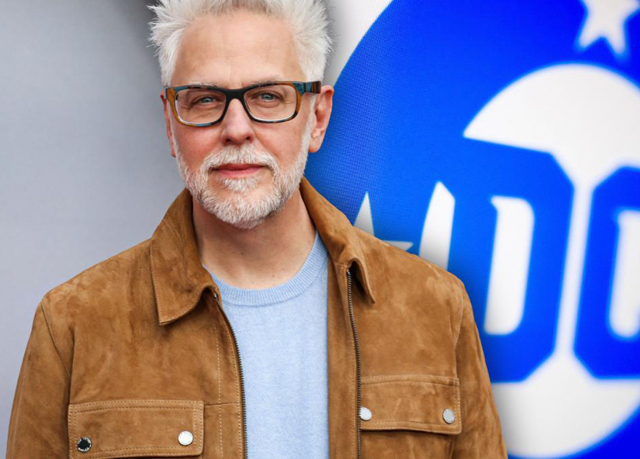
Despite the studios best efforts to keep things afloat, it’s undeniable that we are in an era where comic book movie fatigue has set in. While it hasn’t gone away completely, and still manages to produce a hit here and there (this summer’s record breaking Spider-Man performance for example), the genre is undoubtedly not anywhere the dominance it once had during the peak of the 2010’s. In the latter part of the last decade, it seemed like you couldn’t lose if you had a super hero movie on you schedule, and it was a high tide that was lifting all boats. Marvel of course was leading the charge with their MCU, but their cross town rivals DC was also starting to hit their stride with big hits such as Wonder Woman (2017) and Aquaman (2018). But nothing lasts forever. Over the last few years, the genre has been in steady decline. While not dead per say, it is clear that the genre is no longer the golden goose that it once was, and that has led to the studios that enjoyed the money train they had been on to reconsider what the future of comic book movies may look like. This was certainly the case at DC, which put an end to the waning DCEU and rebooted their cinematic universe under another vision. The man who would lead that new era was James Gunn, a filmmaker who has had the distinction of having played in both the Marvel and DC sandboxes. Gunn definitely seemed like the ideal choice; a clear eyed visionary filmmaker who could indeed reinvigorate the DC universe with a whole new bold and unique direction. He would take on the creative direction of DC Studios, while his business partner Peter Safran would oversee the management side of the reshaped studio. And for a while, it did look like things were looking up for DC. Gunn would take on the directorial duties of launching this cinematic universe with their first film, which naturally would be centered on DC’s most iconic super hero; Superman. Meanwhile, Gunn would also oversee the development of multiple other projects under the DC umbrella for both the big and small screen. Superman (2025) took off and became a box office success, and television projects like Creature Commandos, Peacemaker Season 2, and Lanterns all premiered to great acclaim. But just as it seemed like things were rolling again at DC, we have come to learn that it’s already coming to an abrupt end.
Regime change at the head of DC’s parent studio Warner Brothers is undoubtedly one of the reason’s it’s had a shaky history over the last couple years. The DCEU saw it’s management change multiple times, from the ownership of AT&T during the early 2010’s to the rebranding into WarnerMedia after the telecom giant’s departure to the merger with Discovery in the early 2020’s. Warner Brothers has been passed around multiple times in such a short period, that it’s been nearly impossible to ground the vision of the company into anything concrete. This has been what has led to the identity crises that DC studios has found itself in multiple times. While Marvel has had a steady stewardship over at Disney, DC has had to course correct multiple times to suit whatever vision the new people at the top of Warner Brothers had in mind. After the Warner Brothers Discovery merger, the studio came under the oversight of David Zaslev, who was eager to put his own stamp on the legendary studio. Unfortunately, his tactic was to ruthlessly slash and burn anything that was leftover from the last regime. Not only did he put an end to DCEU, which was frankly on it’s way towards dying out anyway, but he also erased from existence movies that were already filmed and nearly completely. Warner Brothers Animation’s Coyote vs. Acme (2026) thankfully managed to survive to be seen by audiences, but DC’s Batgirl wasn’t so lucky, making it one of the costliest cancelled films in history; an $80 million budgeted film turned into a tax write off. But, Zaslev also was the one who gave the reigns over to James Gunn and Peter Safran to re-imagine what the future of the DC Universe would be. While it was dubious to completely bury the past so abruptly at DC, it was nevertheless wise to give someone like James Gunn the chance to steer the studio into a new direction. Gunn was the man who took an obscure comic book series in the Marvel library called the Guardians of the Galaxy and made it into a massive franchise on the same level as Iron Man and Captain America. Gunn clearly loves comic books, especially the stranger and more obscure parts, and that was what he wanted to bring to new era at DC. His introduction to DC came with his adaptation of The Suicide Squad (2021), which managed to create compelling characters out strange DC characters such as King Shark and Polka-Dot Man. There was a lot of excitement surrounding the future of DC under Gunn’s vision, but once again the foundations were about to be shaken at Warner Brothers.
After their already multi-billion dollar takeover of Paramount, the Ellison family’s media conglomerate Skydance now had their sights on taking over Warner Brothers as well. Given that by law a company must declare it is up for sale once a major offer has been announced, David Zaslev had to consider Skydance’s offer in order to please the shareholders. The door was open for other suitors, and for a moment it looked like Netflix was going to steal Warner Brothers away from the Ellisons. But Skydance was hell bent on getting control of Warner Brothers and they took on a massive amount of debt to overtake Netflix’s substantial offer. Netflix bowed out and the merger between Paramount and Warner Brothers was completed. Once again, the studio fell under new management with Zaslev taking his massive commission on the way out and giving the reigns over to David Ellison. For a moment, people wondered if James Gunn was going to survive this shake-up at the top. Initially, it was announced that Gunn and Safran were going to stay on as heads of DC Studios. They even made it on the list of corporate leaders on Skydance’s first post-merger press release. What was even more surprising was that they were given an autonomy that other film and television departments at Warner Brothers were not granted post-merger, as those departments were getting consolidated with those at Paramount. It led people to believe that not only were Gunn and Safran staying put, but that they were being given special creative freedom to keep doing what they wanted. But then came the announcement this week that both Gunn and Safran were leaving DC after their contracts were complete in the next year. Immediately there was widespread speculation as to why this occurred. How could it seem like Gunn and Safran were safe and secure under the new regime and then in a matter of weeks look like they were being shown the door. There are a lot of conspiracies being floated about, and some of it has been fueled by some genuine shenanigans going on in the Skydance offices right now. But what is certain is that this will undoubtedly change the direction of DC Studios forever, and not exactly in the way that is ideal.
One thing people have been wondering about is how James Gunn is handling the situation. He has been mostly diplomatic in the last few days, using his social media presence to spin an optimistic tone about his time at DC and his hopes for the future. He hasn’t spoken out with regards to the management of Skydance overseeing DC Studios, mainly because he still has a couple projects he needs to finish there at DC before he’s gone completely, including the Superman sequel Man of Tomorrow, releasing next summer. What we do know is that Peter Safran was already orchestrating his exit from DC and Warner Brothers, as his contract expires at the end of the year, and it seems that Gunn was not keen on continuing on without his right hand man overseeing the business end. There has been a lot of speculation that Gunn was not happy in the leadership role at DC, as it left him spread too thin and without a lot of free time to pursue his own creative ventures. Gunn is first and foremost a filmmaker, and that’s where his strengths definitely lie. While his unique vision made him an ideal candidate to oversee the direction of the DC studio, it also put a lot on his plate and was probably taking him away from the creative process that has worked out so well for him in the past. The sad thing is that even though the job was taking it’s toll on him, Gunn was still delivering on his vision for the studio. For the first time in a while, we were seeing DC find it’s identity, and not seeing them live under the shadow of Marvel. In fact, in the last year, James Gunn’s Superman outperformed all three of Marvel’s films in that year, showing that Gunn may indeed have helped DC become a competitive player again. But, just as things started to look up for DC, it came crashing down pretty quickly after. The first film follow-up to Superman was a movie based around the character Supergirl. The Supergirl movie did not land as well as the Superman movie, and it became the biggest box office flop of the year. Some have speculated that this had something to do with Gunn’s departure, which is ridiculous because one he didn’t direct the movie himself (that was Craig Gillespie) and two it was one box office disappointment amongst a sea of successes that DC has been enjoying. Supergirl was definitely not good, but it wasn’t a franchise killer, and it was part of a larger trend of box office failures this year for Warner Brothers in general, which may have been due to their imminent takeover causing Zaslev and company to just neglect what movies they had left on their schedule. Regardless, James Gunn’s departure was probably bound to happen, it just came as a shock that it was this soon.
One of the other speculations that began to swirl around was that Gunn was out at DC because he did not fit in with the values of the new regime in charge at Warner Brothers. Gunn has been very upfront about where he stands on the political spectrum, and it runs contrary to where the Ellison family is. Gunn is a very vocal critic of President Trump and Larry Ellison, father of David and founder of tech giant Oracle, is one of Trump’s biggest donors. It’s also been pretty clear that David Ellison has been making moves to shift the political winds across his media empire to be less critical of the administration, as demonstrated by his overhaul of the CBS newsroom and his aims at changing the guard over at CNN. With DC now under that same tent, it was thought that James Gunn’s values were not going to fit in with the new culture being implemented by David Ellison. There was a possibility that David Ellison may have recognized that despite their political differences that he could see Gunn’s talent as a filmmaker being too valuable an asset to let that friction get in the way. But the speculation that politics may have been involved in Gunn’s departure were stirred up more when it was announced that Gunn and Safran’s positions were going to be replaced with Jeremy Latcham. Latcham is a former executive from Marvel Studios, having worked on films from the early days of the MCU like Iron Man (2008) and Captain America: The First Avenger (2011). He even had a hand in the making of Gunn’s Guardian of the Galaxy. But Latcham is not a creative in the same way that James Gunn is. He is very much an executive, concerned more about the brand than the storytelling. The fact that this guy is taking over the roles of both Gunn and Peter Safran is a little concerning, given that it doesn’t demonstrate a clear vision for the future direction of the franchise. What people believe helped get Latcham the job was the fact that he also shares the same conservative values as the Ellison family. Latcham raised a few eyebrows with a statement he made about making creative decisions for super hero movies, which was that he approached them with the insight of “would my grandmother want to watch this.” The fact that he’s using his grandmother’s tastes as a barometer for how to build a franchise has left a lot of people rightly worried about the future direction of the DCU. Sure, not everyone shares James Gunn’s politics, but it’s undeniable that he tells great stories. Perhaps the fact that Gunn is such a potent storyteller when it comes to delivering a politcal statement made him too incompatible with the new direction under the Ellison’s regime.
The discourse around Gunn and Safran’s exit from DC has been pretty mixed. There have been many people cheering for Gunn’s firing; mainly the Snyder Bros who never were going to accept James Gunn’s tenure anyway. There is also many more who are upset about the way that James Gunn’s firing represents the continued destruction of Warner Brothers as we know it post merger. That, more than anything is the troubling aspect of this recent move by Skydance. It’s another sign that David Ellison is not going to be a hands off executive at Warner Brothers. He is going to be micro-managing every aspect of the studio’s future, and that could end up leading to disastrous ends. A studio doesn’t flourish when it’s under the heel of a single mogul. While not perfect, Disney has demonstrated better control of it’s empire by allowing it’s different departments to run with some kind of autonomy. That’s how studios like Marvel and Pixar have managed to flourish under the Disney banner, because they are able to maintain their identity even as part of a conglomerate. David Ellison on the other hand is using his influence to change the cultures across the entire media empire he has quickly assembled together. This kind of abrupt regime change is already having a dangerous effect, as demonstrated by the loss of talent that is already happening in the offices of CBS and Paramount. CNN is already bleeding with departures of longtime anchors like Chirstie Amanapour, who had been with the news giant for over 30 years. And just as the merger closed this fall, David Ellison fired Warner Brothers executives Michael DeLuca and Pamela Abdy, the duo responsible for greenlighting huge hits for the studio that included Barbie (2023), Sinners (2025), Weapons (2025), and the Oscar-winning One Battle After Another (2025). Yes of course they also greenlit huge flops like The Bride! (2026) and Digger (2026) as well, but their track record was seriously still impressive, so their firing may come back to bite Skydance in the end, especially if a competitor like Disney or Universal scoops them up. James Gunn being set loose as well may also be another costly mistake for Ellison’s new media empire.
It will take time to fully understand what really happened behind closed doors at DC, but what we know for sure is that what was once a promising future for the DC Universe will now come to an end. We still have a James Gunn directed Man of Tomorrow movie in the can, but it’s a question now if people are even going to show up for it, given that we now know it’s not going to lead anywhere. We never even got to see what James Gunn’s DC Universe was going to do with characters like Batman and Wonder Woman, as those projects are likely dead in the water now; as is any chance at a Justice League movie. And forget it Snyder Bros; Zach Snyder is not going to resurrect his vision for DC either, as it’s more likely that Jeremy Latcham’s just going to reboot the DC franchise yet again, or just piggyback on what James Gunn already built but without the same vision. It’s just sad that DC has never had the foundational strength to actually get their franchise off the ground the same way that Marvel has had. Marvel has been going at this now for almost 20 years, and after a couple of rough years it actually looks like they are back in their groove again, with the excitement for Avengers: Doomsday now hitting a fever pitch. DC could have had a worse time for this to happen, and it is unlikely to get any better. Given the absolutely insane amount of debt that Skydance took on to purchase Warner Brothers, there is going to be a lot of bloodletting at both Paramount and Warner Brothers just to bring some solvency to the studio in order to manage that mountain of debt. That means budgets slashed across the board, and significant losses of labor, which means that the studios are going to cut loose a lot of great talent. If there are more DC movies made in the future, they are going to need to be done on the most shoe-string of budgets, which will make the movies look very minor in comparison to the well funded Marvel movies. This is more than anything why Latcham has been brought on board to oversee DC; he’s there to make sure that everything they make is on budget as well as safe and predictable. Gunn’s more experimental and ambitious approach just wasn’t going to fly under this new structure. Skydance, despite David Ellison’s attempts to excite people about their ambitious future, is sadly for a long time going to be churning out a lot of unremarkable entertainment because they can’t be risk takers unless they can get that debt crises under control. And that’s going to only put DC even further behind.
This whole debacle with James Gunn and Peter Safran’s firing could have been avoided. Before the merger was sealed, Ellison should have been upfront about Gunn and Safran’s vision not fitting in with the direction he wanted to take the studio, but he instead tried to string along the idea that DC was going to be spared from the wrath of their corporate takeover. Alas, we now know that DC Studios will also be part of the shake-up at Warner Brothers post merger, and that all of that excitement around seeing James Gunn’s vision for the studio’s future was for not. This was all handled in the messiest sort of way, and all it does is show just how disorganized things already are under the new Skydance conglomerate. This sudden shake-up has led to so much speculation about what actually happened behind the scenes; some of it complete fiction while others may be sadly pretty close to the truth. For the most part, what David Ellison has done appears to be a costly mistake. James Gunn and Peter Safran clearly had a clear idea about what they wanted to do at DC, and while it was up in the air about whether they could actually execute it all perfectly, it nevertheless was off to a good start. Now, DC’s future is uncertain and unlikely to improve as Skydance is going to be forced to do some belt-tightening. There’s even the extreme but not unlikely chance that DC may even be put up for sale in order to free up assets for Skydance’s debt management. So where does that leave James Gunn and Peter Safran? Well Safran has already been approached by Netflix for a potential studio chief position; with many speculating that their recent corporate shake-up was due to them making room to welcome new free agents like Safran, DeLuca and Abdy to join their ranks. It’s debatable whether or not James Gunn will follow Safran over to Netflix, as he seems to want to continue making comic book movies and shows, which is not currently on their plate. Guardians of the Galaxy star Chris Pratt has already floated the idea of Gunn coming back to Marvel, as he said he would do another Guardians film with him in a heartbeat. But that’s only up to James Gunn and Marvel head Kevin Feige to decide, and neither have them have weighed in. It might be that James Gunn decides to be freelance for a while, as his passion really lies in filmmaking, and he may end up setting up his own independent studio on his own. Looking at it now, the future looks better for Gunn than it does for DC, because at least he’s free to choose his own next chapter. The sad thing is that we will never know what the ulitmate endgame for Gunn’s DCU was going to look like, since he only had a couple of years and a handful of movies and TV shows to actually show what it was going to look like. It was brief, but very promising, and the biggest tragedy of all is that these fleeting examples of what could have been are just going to sit around detached from whatever DC turns into from here out.