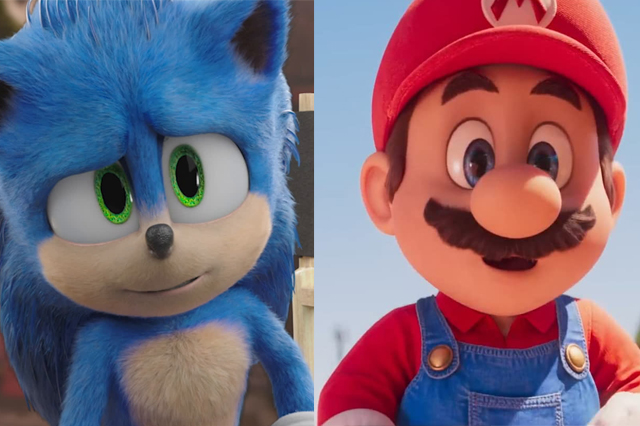
Rivalries go back even to the earliest days of video games. Before the industry settled on the big three consoles that led into the console war era of the new milennium, households were divided mostly into two factions. Were you a Nintendo household, or a Sega household? After the fallout of the video game crash in the early 80’s, two game console manufacturers emerged out of Japan and revolutionized the industry forever. Nintendo, which had existed all the way back to the 1880’s as a game card company, made the move to electronics in the late 70’s. They mostly develop games for arcade cabinets, such as the enormously popular Donkey Kong, but in 1985 they made the move to create a game console that could bring the arcade experience into the home. This was the year that the Famicom released in Japan, which then soon made it’s way to North America as the Nintendo Entertainment System, or NES. This innovation became the newest must own item in households across the world. The technology behind the console was impressive enough, but what really made the NES a breakout hit were the games themselves. Developed by the legendary Shigeru Miyamoto, the NES found it’s signature game with Super Mario Brothers, released the same year as the system. Video games enjoyed a resurgent Renaissance with the success of the NES, but game manufacturers were not content on leaving things at just the limit of 8 bit graphics. At the same time in Japan, another electronics company began developing their own console that was capable of 16 bit graphics, doubling up the power of what the NES could do. This company was called Sega, and their machine (naturally marking the start of a new beginning) would be called the Genesis. The Sega Genesis would itself become a hot selling item, and they too had their own signature game about a fast running rodent named Sonic the Hedgehog. Nintendo responded to the challenge with a 16 bit console of their own called the Super Famicom, or Super Nintendo as we know it in America. And for a period of time in the late 80’s and early 90’s, the world of video games were dominated by these two giants and their popular mascots; Mario and Sonic.
It’s hard to believe that the most famous video game characters of all time are a short, rotund Italian plumber and a blue hedgehog that can run really fast. But their status as video game icons is due to the legacy of this early console war that would come to define the gaming industry as a whole. What the two games had in common was their easy entry point for gamers of all ages. They are both simple, side-scrolling platformers that are easy to figure out and rewarding as you play them. Their colorful graphic style also helped to make them beloved by gamers through multiple generations. As the games themselves continued to make multi-millions of dollars for Nintendo and Sega, Hollywood was trying to determine what to do with this video game craze. In the case of Super Mario Bros., Hollywood tried and spectacularly failed to turn the game into a big blockbuster adventure, starring Bob Hoskins and John Leguizamo as the titular plumber duo. Super Mario Bros. (1993) became a cautionary tale in Hollywood about how not to adapt a game into a movie, and it halted further development on video game adaptations on the big screen for a long time after. Sonic the Hedgehog had more success on the smaller screen. The blue blur starred in not one but two simultaneously running Saturday morning cartoon shows in North America, with TV’s Steven Urkel Jaleel White providing the voice of Sonic on both shows. But for the longest time, mainly due to the failure of the original Mario Bros. movie, you couldn’t see any video game character brought to the silver screen. But in the late 2010’s, that was finally going to change. After being left off the big screen for many years, even long after Sega stopped manufacturing consoles all together, Sonic was finally going to make his movie debut. Paramount Pictures was giving him a long overdue big budget movie adaptation that could hopefully undo the video game curse that the Mario Brothers movie caused. And then, people saw the trailer. The initial reaction to the trailer for the Sonic the Hedgehog movie was disastrous to say the least. What everyone pointed out as the problem was the completely off model look of the CGI Sonic in the movie. This “Ugly Sonic” as he became known was condemned for his unappealing design and his weirdly human teeth. The backlash was so severe that Paramount took the movie off the schedule and had the animation team completely overhaul Sonic’s design to make him look like he does in the games. The movie was delayed another 4 months and the budget swelled. But Sonic the Hedgehog finally made it to theaters in February 2020. The only question remained if the fix actually worked.
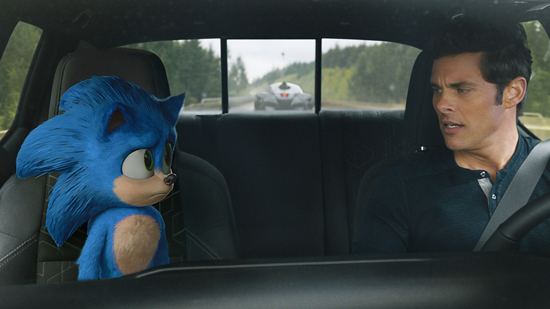
“I was forced from my home. Your home is perfect, and you’re leaving it. Why would you do that?”
To everyone’s surprise, the movie not only worked, but it became a surprise hit. For Paramount, the extra time and money was worth the effort because audiences fully embraced this “live action” Sonic the Hedgehog because he more closely resembled the Sonic they knew and loved from the games. And while the story itself was not exactly groundbreaking, mainly following a lot of family movie tropes with Sonic settling into our real world while also befriending a small town do-gooder played by James Marsden, it resonated with long time fans as well as young kids who were being introduced to Sonic. A month into it’s release, the movie had grossed a healthy $148 million at the box office, and probably could have gone higher had Covid not shut down movie theaters across the country in the middle of it’s run. But even with the Covid shutdown affecting it, Sonic the Hedgehog had still made a statement, showing that video game adaptations were not box office poison. It also showed that it’s better to stick closer to the games and not re-design the main character to make him appear more “Hollywood.” This proven success with Sonic helped to convince Nintendo that it was time to try again with their own icon, and give the Mario Bros. another chance at the box office. Instead of going the live action/animation hybrid route, Nintendo rightly figured that it was best to keep Mario an entirely animated project. They enlisted Illumination Animation, the same people behind the Minions, to bring the world of Mario to life on the big screen. A lot of fanfare surrounded the development of the film, but one thing did raise a lot of eyebrows; namely the voice casting choices. While some supported the castings of Anya Taylor-Joy as Princess Peach and Charlie Day as Mario’s brother Luigi, people were not so happy with the choice of Chris Pratt as Mario himself. Pratt seemed like an ill fit for the character, especially as people have gotten used to the longtime vocal performance of Charles Martinet as the character in all the previous games. Still, The Super Mario Bros. Movie released to a lot of hype in the Spring of 2023, and it became an instant box office juggernaut. It shattered every single record for a video game movie at the box office and grossed well over a billion at the worldwide box office. Even still, the success of Mario didn’t dampen Sonic’s success at the box office, as the movie went on to spawn two sequels with a fourth coming in the next year. Once again both Mario and Sonic are leading the way for a new revolution in gaming history, with this time being about making video game adaptations mainstream successes on the big screen. But, the question remains, which one holds up better as a movie.
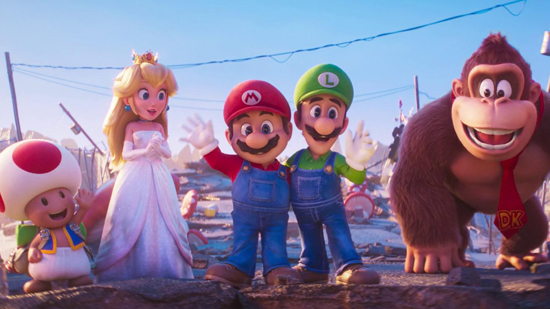
“That was incredible. He kept beating you senseless and you just kept getting back up? You just don’t know when to quit.”
When it comes to visuals, there is no question that the Mario Brothers’ movies are that much stronger. While Paramount had to completely re-work their visuals in order to get the movie just to an acceptable level for long time fans, the team at Illumination clearly knew their assignment from the beginning. The Super Mario Bros Movie very much tried to emulate the visual style of the Super Mario video games from Nintendo, especially the latter 3D ones. The Mushroom Kingdom definitely looks like it should, as does Peach’s castle and Bowser’s flying fortress. It helps that Nintendo was involved through ever aspect of the development of the movie, and made sure that everything in the movie, from the environments to the character designs, matched what could be seen in the games themselves. Even Mario’s original creator, Shigeru Miyamoto was deeply involved in the process of the film’s creation, acting a one of the film’s producers. There’s no doubt that a love and care went into the animation of the movie. Even though the movie has a lot of other faults, the visuals are definitely not one of them, as the worlds of the Mario games come to life on an epic scale. Sonic the Hedgehog on the other hand is very basic in it’s design. There isn’t a lot of worldbuilding; at least in the first Sonic movie. Sonic basically lives in our world, and much of the movie is built around that conceit. Those who wished for a big screen recreation of the worlds of Sonic from the video games may come away fairly disappointed, as none of those worlds have made it into this movie; not even the corkscrew loop hills. It’s clear that the film production shot this film cheaply in Canada, in order to save on costs, with the film’s setting giving off a very suburbs of Vancouver vibe. This would only be a major detriment if the intent was to recreate the feel of the games themselves in the movies, like what the Mario Bros. movie did. But the Sonic films are different in that way, because the main focus was instead put on Sonic himself, making his character development more important than faithfully adhering to the gaming experience. So, when it comes to faithfully making the movie feel like the experience of playing the game, Mario definitely wins out.
Where Sonic comes out on top though is in the depiction of it’s central character. The Sonic the Hedgehog movie could’ve easily sought out Jaleel White to voice the character again, as he is still capable and available. But the filmmakers instead wanted to start fresh with the character. They instead formed the character around his new voice actor, Ben Schwartz. Schwartz had made a name for himself as a sitcom actor, appearing on popular shows like Parks and Recreation and House of Lies. He also had made a name for himself as a voice actor, with his unique nasally tenor being well suited for shows like DuckTales and Bojack Horseman. He’s also known for being a fast talker, which naturally suited a character best known for moving fast. Schwartz’s vocal performance goes a long way in helping to endear us to Sonic as a character. He’s wacky and wisecracking, but never to a point of being obnoxious. And the remodeling of the character during it’s eleventh hour fix-up really helped to enhance the performance as well. Can you imagine this voice coming out of the “ugly Sonic” we saw in the first trailer. Schwartz’s performance more naturally fits the way the character looked from the video game, and the movie managed to avert a disaster by actually listening to what the fans actually wanted. Surprisingly, Schwartz’s performance also bounces perfectly off of James Marsden’s live action performance as Sonic’s human guardian. Marsden, a long underrated actor, just feels natural when performing against an animated hedgehog, and that’s no small feat. If there was anything that helped to buoy the movie to success, it was in how well they handled the characterizations in the movie. Sadly this was also the weakness of the Mario Bros. film. The Super Mario Brothers movie unfortunately fell victim to the trend that plagues most animated features which is getting a big celebrity name to voice the characters, whether or not they are right for the role, just so they can sell the movie of name recognition alone. While some of the voices in the Mario Bros. movie work, like the previously mentioned Charlie Day and Anya-Taylor Joy, a lot of others are distractingly off, and none more so than Mario himself. Unfortunately, Mario is the most miscast character in the movie, with Chris Pratt never quite working as the character. It is possible for Chris Pratt to deliver a great vocal performance in a movie, as The Lego Movie (2014) and Pixar’s Onward (2020) have proven, but he sounds nothing like what Mario should sound like and he just plays him with absolutely no character at all. It’s in stark contrast to Ben Schwartz’s Sonic performance, which is full of energy and personality. You remove that, and the movie inevitably suffers.
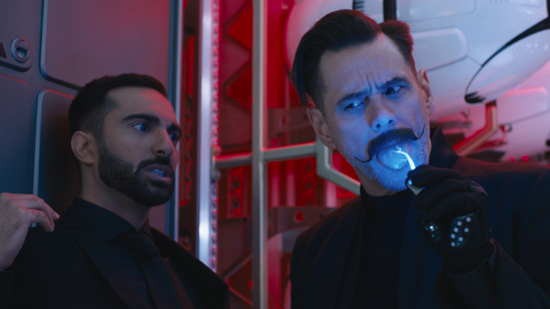
“Look at that. I was right. Note the lack of surprise.”
Where the two movies become more evenly matched is in the portrayals of the villains. There is no doubt that the villains in both Sonic the Hedgehog and The Super Mario Brothers Movie are the best parts of the films, but in very different ways. First of all, the Sonic the Hedgehog movie pulled off a major coup by getting Jim Carrey to agree to play the villainous Dr. Ivo Robotnik. Carrey has largely been leaving Hollywood behind in recent years; choosing to live a more quiet life away from the industry and choosing his projects more carefully. Which makes his presence here all the more surprising. Apparently he saw an opportunity with the character and took on the challenge. To the credit of the filmmakers, they gave Jim the creative freedom to do whatever he wanted with the character and it paid off big time. The Jim Carrey performance we get in the Sonic movies feels a like a return to form to the kind of mad cap acting we fondly remember him for from his early days as a movie star. It is a wild, physical and hammy performance that harkens back to the kind of performance Carrey gave us in Ace Ventura (1993) or The Mask (1994). And thankfully, it fits with the tone of the movie as well. Carrey’s Robotnik matches the same kind of tone set by Schwartz’s eccentric performance as Sonic, which makes sense in that you have a cartoon character facing off against a foe who is acting as equally cartoony. There’s no doubt that Carrey’s Robotnik steals the movie, and he’s managed to return to the franchise in every film since. In fact, the Sonic movies are the only films that Jim Carrey has made in this decade, which probably says a lot about what they actually mean to him as a performer. Likewise in the Super Mario Bros. Movie, the film’s best asset is it’s villain as well. To bring the character of Mario’s main foe Bowser to life, the filmmakers cast Jack Black in the role. While Black may not have been everyone’s first choice to play a fearsome fire-breathing dragon, he nevertheless took the reigns of this role and made it his own. Black gives a wonderfully growly performance to the character of Bowser, making him feel authentic to the menace of the original game character, but also silly enough to play to his own strengths as an actor. The movie even gives Bowser his own song, a hilarious love ballad called “Peaches” which the Tenacious D alum takes over the top in a laugh out loud way. In the cases of both Bowser and Dr. Robotnik, each movie gave us the ideal big screen adaptations that these larger than life baddies deserved.
There’s also a big difference in the stories being told in the movie. Adapting a video game into a movie can be tricky, given that you have to condense what usually can be a 20+ hour gaming experience into a very short 90-100 minute run time for a movie. This limits what your able to do with the characters and the worldbuilding that is needed to tell the story. In the case of both Sonic and Super Mario, the stories weren’t that complex to begin with. The gameplay was simply about running from one side of the level to the other, dodging obstacles in between. Even still, there is a lore behind both Sonic and Super Mario that the films had to take into consideration. For the filmmakers who made Sonic, they wisely chose to keep the game references at a minimum, so that they could focus on Sonic as a character. The Sonic movie is mainly there to help us understand our main hero and how he fits in our world. There are game elements to be sure, like the golden rings, which act as portals in this film. A lot of the more game related stuff comes from the Robotnik side of the story, with the mad scientist’s robotic drones very much resembling the enemies that Sonic would’ve encountered in the games. The Sonic sequels have done more to build out the world of Sonic that we know from the games, with characters like Tails, Knuckles and Shadow getting introduced, as well as the concepts of the chaos crystals. But it’s been a benefit to the series that they’ve laid out these world-building elements slowly after first establishing a solid foundation in that first film. The Super Mario Brothers movie on the other hand doesn’t do it’s story many favors. The filmmakers seemed more concerned about throwing as many game Easter eggs into the mix as they could. It’s not just the original Mario video games that get referenced in the movie, but also Donkey Kong and Super Mario Kart as well. The movies definitely pander a lot to the long time fans of the games, getting them excited for every little detail that can be found in the foreground and background. Even in the movie’s intro to the characters of Mario and Luigi, in their original New York home setting, the movie includes a nod to the side scrolling look of the original gameplay. It’s fun for the longtime fans, but alienating for people who are not familiar with the games, and unfortunately there isn’t enough interesting going on within the story to compensate and make the movie welcoming to newcomers. While Mario Bros. may be a technical marvel, the Sonic movie just works more naturally as a film experience in general.
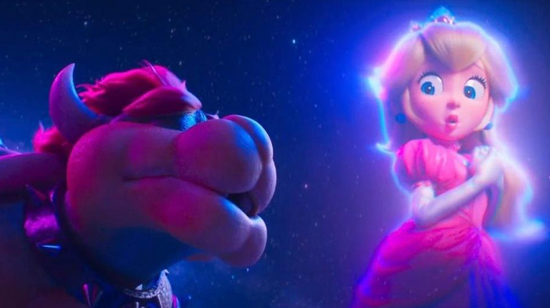
“Peach. You’re so cool. And with my star, we’re gonna rule. Peach. Understand. I’m gonna love you ’til the very end.”
What both Mario and Sonic have both demonstrated is that this decade is that the video game movie curse is finally and truly dead. Each has become a massively successful movie franchise on their own with no signs of slowing down and it is even helping to elevate video game adaptations of all kinds on the big screen. Last year, we saw The Minecraft Movie (2025) become a huge box office phenomenon, and this year we’ve seen Mortal Kombat, Street Fighter, and Resident Evil all reach varying levels of success with their movie adaptations. Next year, we will also see one of the most iconic video games ever get it’s big screen debut with The Legend of Zelda (2027). But it definitely seems fitting that the ones who led the charge of this new golden age of video game movies are the same ones who led the great revolutionary revival of video games in the first place. Things have certainly changed in all those years. Nintendo still is producing hardware specifically geared for their catalogue of games, with the popular Nintendo Switch being the latest model. Meanwhile, Sega stopped producing game consoles in the late 1990’s, after the failure of the Sega Dreamcast and decided to focus on game software instead. It was probably best for their future, given that they likely would of struggled if they continued to compete with Nintendo on the hardware front, especially with Sony and Microsoft starting to enter the arena with their own consoles; the Playstation and XBox. After Sega stopped making their own hardware, they began to partner up more with their one time rivals, and there have been a handful of games in which Sonic and Mario have appeared together. It’s unlikely we’ll see that crossover happen on the big screen, since different studio hold the movie rights to the characters; Sonic at Paramount, and Mario at Universal. But, never say never. We may get a Smash Bros. movie in the future which could be a monumental crossover event. As of right now, Sonic and Mario have definitely proven that they can hold their own on the silver screen while also remaining fun to play with in our video games. While both movie adaptations have their flaws, the Sonic movies manages to overcome them a bit more based on it’s stronger handling of the characters themselves. They seem to have been made more with the idea of cinematic storytelling in mind, rather than the empty reference heavy string of events that the Mario Brothers movie embodies. Mario looks amazing, but it’s got a hollow center at it’s core. Sonic wins with more heart, but as we’ve seen in the last couple of years it is far from game over for both Mario and Sonic on the big screen.
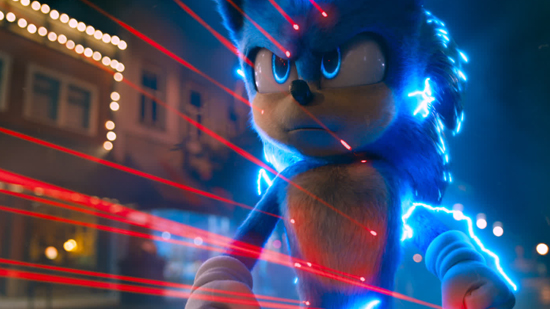
“This is MY power, and I’m not using it to run away anymore.”